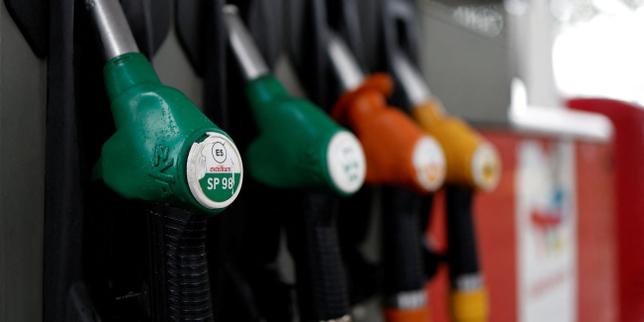
France is currently grappling with a sharp acceleration in consumer prices as the month of March comes to a close. While official statistics point toward energy costs as the primary engine of this inflation, the reality on the ground suggests a much more complex web of structural failures and geopolitical vulnerabilities. The surge in oil prices is not just a statistical blip; it is a direct hit to the purchasing power of every household from Marseille to Lille, signaling that the era of relatively stable overhead is over.
For months, the narrative focused on food prices, but the focus has shifted back to the pumps and the power grid. As Brent crude climbs, the French "shield" that previously protected citizens from the worst of global volatility has begun to show significant cracks. This isn't just about the cost of a full tank. It is about how those costs cascade through a supply chain that has no more room to absorb hits.
The Crude Reality of Energy Dependency
The sudden spike in French inflation is being driven by a volatile mix of global oil market tightening and the removal of domestic subsidies. We are seeing a convergence of factors that most analysts failed to predict with accuracy. The production cuts from OPEC+ nations have finally bitten hard into global supply, and France, as a major importer, is feeling the friction immediately.
When oil prices rise, the impact is instantaneous at the pump, but the secondary effects take weeks to manifest in the cost of goods. We are currently in that lag period. Every kilogram of produce transported across the country now carries a higher logistical surcharge. Logistics firms that were already operating on razor-thin margins have no choice but to pass these costs onto retailers, who in turn pass them to the consumer.
The government’s previous strategy of "tax shields" is becoming unsustainable. You cannot subsidize your way out of a global commodity shortage forever. As the state scales back its support to balance the national budget, the consumer is left exposed to the raw volatility of the Brent crude market. This is the "true" price of energy finally making its way to the French doorstep.
Beyond the Pump and Into the Pantry
While energy is the headline, the underlying pressure on services and manufactured goods remains stubbornly high. We are witnessing a phenomenon where inflation becomes "sticky." Once a baker raises the price of a baguette because their oven costs more to run and their flour delivery is more expensive, they rarely lower that price when energy dips slightly.
This stickiness is what keeps the European Central Bank awake at night. In France, the service sector accounts for a massive portion of the GDP. When transport, heating, and lighting costs rise, every hair salon, restaurant, and consultancy firm is forced to adjust its pricing structure. We aren't just looking at a temporary spike; we are looking at a fundamental recalibration of the French cost of living.
The Myth of the Soft Landing
Many economists have spent the last year talking about a soft landing—the idea that inflation would cool down without a significant recession. March data suggests this might have been wishful thinking. The persistent rise in energy costs acts as a regressive tax. It hits the lowest earners the hardest, as a larger percentage of their income goes toward basic survival.
When the price of heating a home and driving to work increases, discretionary spending vanishes. The French retail sector is already reporting a cooling of demand in non-essential categories. If people are spending their euros on gas and electricity, they aren't spending them on new clothes or home renovations. This slowdown in consumer activity is the precursor to a broader economic stagnation that could haunt the country for the remainder of the year.
Geopolitics as a Local Economic Driver
The French consumer is now a hostage to events happening thousands of miles away. The instability in the Middle East and the ongoing conflict in Ukraine continue to provide a floor for energy prices. Any hope that oil would return to pre-2022 levels has been effectively extinguished.
France’s nuclear fleet, often touted as the solution to energy independence, has faced its own set of challenges. Maintenance cycles and technical issues have meant that the country still relies on the broader European energy market more than many would like to admit. When the European gas price fluctuates, it still impacts the French grid, regardless of how many reactors are online.
The Labor Market Friction
Workers across France are watching their real wages shrink. This has led to a new wave of wage negotiations across various sectors. Unions are pointing to the March inflation figures as justification for double-digit pay increases.
This creates a potential "wage-price spiral." If companies raise wages to keep up with the cost of living, they must raise prices again to cover the increased payroll. It is a vicious cycle that is incredibly difficult to break once it gains momentum. We are seeing early signs of this in the transport and construction industries, where labor shortages are already giving workers more leverage than they have had in decades.
Structural Vulnerabilities in the French Model
The French economic model relies heavily on state intervention, but the state is running out of room to maneuver. The national debt is a growing concern, and the ability to dampen the blow of global inflation through fiscal policy is reaching its limit.
Investments in the "green transition" are necessary but expensive. In the short term, moving away from fossil fuels actually adds to inflationary pressure. Building out renewable infrastructure and retrofitting buildings requires immense amounts of raw materials and specialized labor—both of which are currently at premium prices. The transition is a long-term play, but the inflation crisis is a right-now problem.
The Retailer’s Dilemma
Supermarket chains in France have been under intense pressure from the government to keep prices low. However, their suppliers are facing the same energy hikes we see at the pump. There is a limit to how much a retailer can squeeze its suppliers before the supply chain simply breaks.
We are seeing a shift in consumer behavior. "Hard-discount" stores are seeing record foot traffic as middle-class families migrate away from traditional high-end grocers. This shift isn't just about saving a few cents; it’s a survival strategy. The "shrinkflation" trend—where products get smaller but prices stay the same—has also become a major point of contention, leading to new transparency laws that, while helpful, do nothing to actually lower the cost of the raw materials.
The Euro Factor
The strength of the Euro against the Dollar also plays a silent but critical role. Since oil is priced in Dollars, a weaker Euro makes every barrel of oil even more expensive for French refineries. The European Central Bank’s hesitation to cut interest rates, while intended to fight inflation, also keeps borrowing costs high for French businesses looking to expand or innovate their way out of this crisis.
Strategic Realignment or Managed Decline
Companies that rely on heavy transport are having to rethink their entire business models. We are seeing a move back toward rail and a desperate search for efficiency gains that were ignored during the era of cheap oil. But these changes take years to implement. In the meantime, the French economy is being forced to swallow the bitter pill of high energy costs.
The data from March is a wake-up call. It proves that the inflation monster hasn't been tamed; it has merely changed its shape. The transition from food-led inflation to energy-led inflation is more dangerous because energy is the "master resource." It is the input for every other good and service in the modern world.
Investors are now looking closely at French industrial output. If the cost of manufacturing in France becomes too high due to energy prices, we may see a flight of capital to regions with more stable or subsidized energy markets. This would be a catastrophic blow to the government’s "reindustrialization" goals.
The path forward requires more than just temporary subsidies. It requires a brutal honesty about the cost of energy and a rapid acceleration of domestic production capabilities. France cannot control the price of Brent crude, but it can control how vulnerable its economy is to those fluctuations. Without a radical shift in energy policy and a serious look at supply chain resilience, the March inflation numbers will not be an outlier—they will be the new baseline.
Stop looking for a return to the old "normal." That world, defined by cheap imports and bottomless energy, has evaporated. The businesses and households that survive this decade will be those that stop waiting for prices to fall and start restructuring their lives around the reality that expensive energy is here to stay.