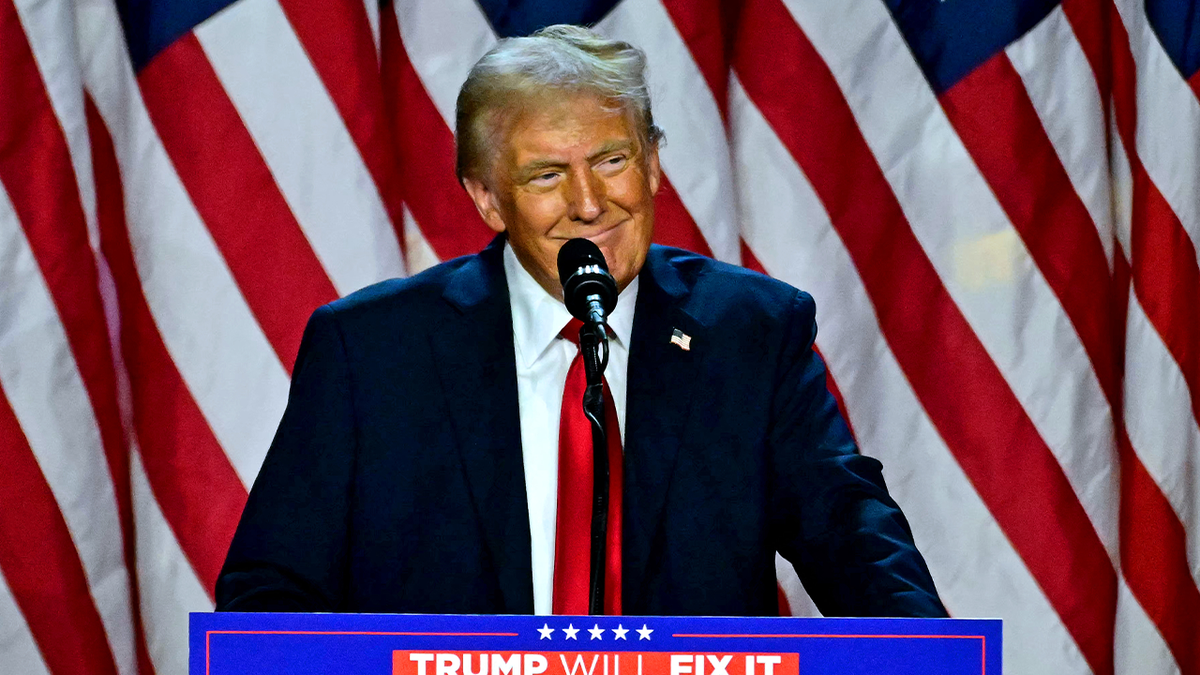
The air in Mar-a-Lago usually smells of expensive jasmine and sea salt, but lately, it carries the sharp, ozone scent of a storm breaking. Inside those gold-leafed walls, history isn't just recorded; it is retroactively edited. We are watching the ultimate author of modern political theater try to rewrite the opening credits of a war that has already begun to bleed.
Donald Trump has a gift for the "we." He uses it when the crowds are cheering and the polls are climbing. But when the dust of conflict settles into the lungs of a nation, that "we" evaporates. It becomes "you." Specifically, it has become Pete Hegseth.
The former president sat for an interview that felt less like a political briefing and more like a deposition for a crime he claims he didn't want to commit. He pointed a finger at his former Secretary of Defense, the man he plucked from the glowing screens of Fox News to lead the world’s most powerful military. The narrative is simple, if you believe the man in the suit: Hegseth was the one with the itch for battle. Hegseth was the one who said, "Let’s do it."
Imagine a young lieutenant sitting in a Humvee in the desert right now. Let’s call him Miller. Miller doesn’t care about the fine print of a Florida interview. He cares about the sand in his teeth and the fact that the horizon is glowing for all the wrong reasons. For Miller, the "why" of this war is a theoretical abstraction. For the men in the high-backed chairs, the "why" is a shield.
By framing Hegseth as the catalyst, Trump is attempting a feat of political alchemy. He is trying to turn the Commander-in-Chief into a passive bystander.
The Architecture of an Instruction
A President does not simply "agree" to a war like one agrees to a lunch reservation. The machinery of the American state is designed to be heavy. It is designed to be slow. To bypass those gears requires a forceful, singular hand at the wheel. Yet, in this new retelling, the gears turned because a subordinate whispered the right magic words at the right time.
Trump’s claim rests on a specific psychological lever: the idea of the "True Believer." He portrays Hegseth as a man possessed by a vision of American dominance that even Trump found startling. It is a brilliant, if cynical, bit of character work. By casting Hegseth as the protagonist of the escalation, Trump casts himself as the reluctant follower—a man who merely gave the people, or at least his generals, what they wanted.
But power doesn't work that way. Accountability is a one-way street that always leads to the Resolute Desk. You can delegate authority, but you cannot delegate the moral weight of a body bag.
Consider the timeline that led us here. The tension with Iran wasn't a sudden spark; it was a slow-motion car crash that took years to impact. There were sanctions. There were scrapped deals. There were fiery tweets that served as the kindling. Hegseth may have provided the match, but the bonfire was built long before he took his oath of office.
The Fox News Feedback Loop
The relationship between these two men was always a strange mirror. Hegseth was the physical embodiment of the rhetoric Trump championed. He was the decorated vet who spoke the language of the base with the polish of a broadcaster. When Trump looked at Hegseth, he saw a younger, more militaristic version of his own brand.
When the rhetoric turned into reality, however, the brand became a burden.
The Iranian conflict is not a television segment. It cannot be turned off when the ratings dip. It is a grinding, visceral reality involving drone swarms, regional instability, and the terrifyingly real possibility of a nuclear threshold being crossed. When the consequences moved from the digital space to the physical one, the alliance between the showman and the soldier fractured.
Trump’s insistence that he was "pushed" into the conflict by Hegseth serves a dual purpose. First, it preserves his image as the "anti-war" candidate, the man who wants to bring the troops home. Second, it creates a convenient scapegoat for the strategic quagmires that inevitably follow the first strike.
The Invisible Stakes of a Scapegoat
What does it do to the morale of a military when the person at the very top says he was talked into a war by his cabinet?
It creates a vacuum of trust. If the orders coming down the chain are the result of a President who can be easily swayed or "tricked" into a kinetic conflict, the entire structure of command begins to wobble. The lieutenant in the desert—our Lieutenant Miller—needs to believe that the orders he follows are the result of a clear, sober vision, not a momentary lapse in judgment or a persuasive pitch from a TV personality.
The tragedy of this blame game is that it treats the Iranian people and the American soldiers as secondary characters in a personal drama. The stakes are not just political survival in the 2026 midterms or the legacy of a particular administration. The stakes are the stability of the global oil market, the lives of millions in the Middle East, and the very definition of American reliability on the world stage.
The Strait of Hormuz doesn't care who started the argument. The missiles don't check to see if the Secretary of Defense was the one who pushed the button or if the President just nodded his head in a moment of distraction.
The Sound of Silence
Hegseth’s response to being thrown under the metaphorical bus has been tellingly quiet. In the world of high-stakes politics, silence can be a form of dignity, or it can be a form of survival. To cross Trump is to invite a storm that few can weather. But for a man whose entire brand was built on "de-swamping" the government and speaking hard truths, this public abandonment must sting with a particular coldness.
We are seeing a pattern. It is the pattern of an architect who, upon seeing the building lean, blames the man who mixed the cement.
The reality is that no one "makes" a President do anything. The office is a lonely one for a reason. Every piece of intelligence, every dissenting opinion, and every hawkish suggestion filtered through a dozen hands before it reached Trump’s ears. He had the power to say no. He had the power to fire the hawks. He had the power to walk away from the brink.
He chose to stay.
The Human Cost of the "You Said" Defense
Behind every headline about "Trump blames Hegseth," there is a family waiting for a phone call. There is a mother in Ohio who watches the news with a knot in her stomach. There is a father in Tehran looking at the sky.
When leaders squabble over who is responsible for a war, they are essentially admitting that the war was avoidable. That is the most haunting realization of all. If it was Hegseth’s fault, then it didn’t have to happen. It was a choice made in a room, over a desk, perhaps during a commercial break.
This isn't just a story about a political falling out. It’s a story about the fragility of peace when it’s placed in the hands of men who view leadership as a series of transactions. If the transaction goes south, you simply demand a refund and blame the salesman.
The problem is that in war, there are no refunds.
The ghosts of the decisions made in the early days of this administration are beginning to gather. They don't care about the "I told you so" or the "he made me do it." They are the cold, hard facts of history.
As the sun sets over the Florida coast, the man in the private club can tell whatever story he likes. He can paint himself as the peacemaker held hostage by his own advisors. He can point to Hegseth and say, "You said, let’s do it."
But the ink on the orders is already dry. The planes are already in the air. The story is no longer his to write. It belongs to the people who have to live through the chapters he initiated, regardless of whose idea he claims it was.
The lights of the Humvee flicker in the dark. Lieutenant Miller checks his watch. He doesn't know who said what in the Oval Office. He only knows that he is here, and the "why" doesn't change the weight of the rifle in his hands.
In the end, the blame doesn't matter to the people doing the dying. It only matters to the people trying to live with what they’ve done. Or, more accurately, to the people trying to convince us they never did it at all.