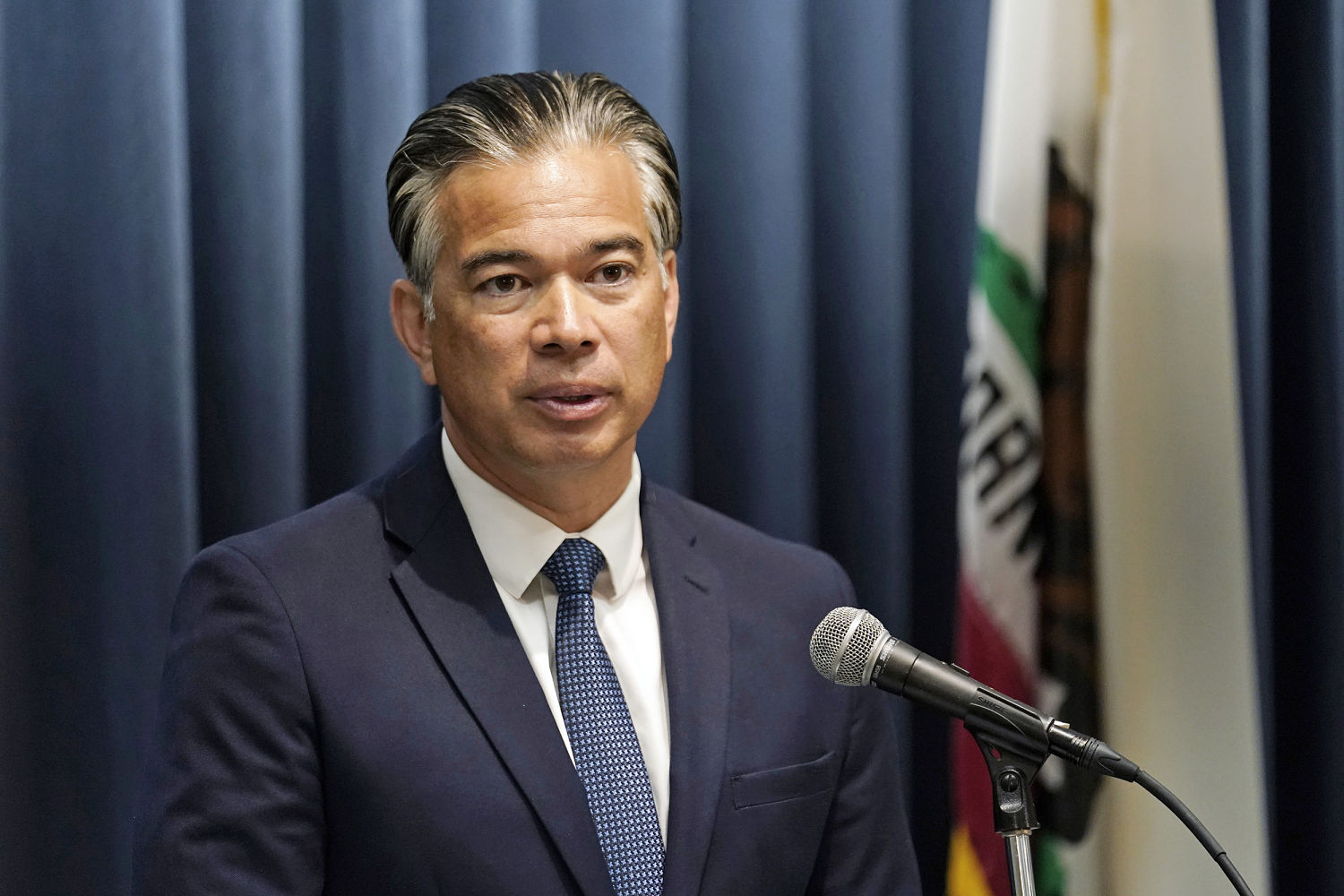
The sudden, aggressive legal intervention by eight state attorneys general to freeze the Nexstar-Tegna merger reveals a fundamental breakdown in how the United States regulates its airwaves. While the Federal Communications Commission (FCC) initially signaled a green light for this massive consolidation, the coalition of states—led by a rare bipartisan front—argues that the federal government has ignored the devastating impact on local news competition and consumer pocketbooks. This isn't just a squabble over corporate paperwork. It is a desperate attempt to stop a deal that would place a staggering percentage of local television stations under a single roof, effectively creating a private gatekeeper for the information millions of Americans rely on every day.
Local broadcasting is dying a death of a thousand cuts, and this merger represents the sharpest blade yet. When Nexstar, already the largest local television station owner in the country, moves to absorb Tegna’s portfolio, the resulting entity gains unprecedented power over cable providers and advertisers. This power translates directly into higher monthly cable bills for families who have no say in the negotiations. The "emergency" nature of the states' motion underscores a terrifying reality: once these companies merge and integrate their operations, unscrambling the egg is nearly impossible.
The Retransmission Consent Trap
To understand why eight states are currently in a legal knife fight with the FCC and two media giants, you have to look at the mechanics of retransmission consent. This is the invisible fee that cable and satellite companies pay to broadcasters like Nexstar to carry their local signals. In theory, it is a fair market exchange. In practice, it has become a legalized shakedown.
When a single company owns multiple stations in a single market or dominates the national landscape, they hold all the cards. If a cable provider refuses to pay a 20% or 30% increase in fees, the broadcaster pulls the signal. The screen goes black right before the Super Bowl or a local election. Subscribing viewers, frustrated and confused, blame the cable company, not the broadcaster hiding behind a corporate logo.
The Nexstar-Tegnapact would give the combined company the leverage to demand even higher fees across a wider footprint. These costs are never absorbed by the corporations. They are passed directly to the consumer. The states realize that the FCC's "public interest" mandate has been hollowed out, replaced by a hands-off approach that favors boardroom efficiency over the financial health of the average citizen.
The Ghost Newsroom Phenomenon
The most insidious part of these mega-mergers is what happens to the journalists on the ground. Proponents of the deal claim that "scale" is the only way to survive the onslaught of Big Tech and streaming services. They argue that by combining forces, they can invest more in digital infrastructure. History suggests otherwise.
In almost every major media merger of the last twenty years, scale has been a euphemism for "synergy," and synergy is a euphemism for layoffs. We are seeing the rise of the "ghost newsroom." This is a station that maintains a local brand and a local weather team but relies on centralized "hubs" hundreds of miles away for its actual reporting.
Centralized Scripts and Manufactured Consent
When Nexstar or a similar conglomerate takes over, they often implement "must-run" segments. These are pre-produced packages sent from a central corporate office that every local station is required to air. Suddenly, a viewer in rural Iowa and a viewer in downtown Seattle are watching the exact same editorial content, framed as local news. This erodes the unique editorial voice of the community.
If Tegna’s stations fall under the Nexstar umbrella, the diversity of perspective in dozens of markets will vanish overnight. The eight states filing the motion—including heavyweights like California and Illinois—rightly fear that a monopoly on local information is a monopoly on the local political narrative.
Why the FCC Folded
The question that haunts this entire saga is how the FCC, an agency tasked with protecting the public interest and ensuring media diversity, could allow this to reach an emergency court filing. The answer lies in the shifting definitions of "market competition."
For decades, the FCC operated under strict ownership caps. No single company was allowed to reach more than 39% of the national audience. However, the industry has successfully lobbied for "loopholes" like the UHD (Ultra High Definition) discount and the "sidecar" agreement.
- Sidecar Agreements: A company "sells" a station to a friendly third party but continues to run the station's advertising, newsroom, and operations through a Shared Services Agreement (SSA).
- The UHF Discount: An archaic rule that counts certain stations as only half of their actual reach, allowing companies to technically stay under the 39% cap while actually reaching 60% or 70% of the country.
The states’ emergency motion explicitly calls out these accounting tricks. They argue the FCC didn't just make a mistake; they willfully ignored the math to facilitate a corporate marriage. The commissioners who voted for the merger are betting that the public doesn't understand the jargon. They are betting that as long as the 6:00 PM news still comes on, nobody will care who owns the camera.
The Economic Ripple Effect
The damage isn't limited to the newsroom or the cable bill. Local businesses rely on local television advertising to reach their customers. In a competitive market, three or four different station owners compete for those ad dollars. This keeps prices down for the local hardware store or the neighborhood car dealership.
Once a market becomes a duopoly or a monopoly, those prices skyrocket. A small business that can no longer afford to advertise on the local news loses its primary way to compete with national big-box retailers. By allowing Nexstar and Tegna to merge, the FCC is effectively placing a tax on every small business in the affected regions.
A Crisis of Accountability
We are at a tipping point. If the courts do not grant the stay requested by the states, the merger will close, the assets will be shifted, and the legal battle will become academic. The "emergency" in the motion is literal.
The states are not just fighting for a set of regulations; they are fighting for the idea that a local community should have some control over its own information ecosystem. If this deal goes through, we move one step closer to a world where a handful of CEOs in New York and Irving, Texas, decide what every town in America thinks is important.
The legal standard for an emergency stay is "irreparable harm." It is hard to imagine a more perfect definition of that phrase than the permanent silencing of independent local voices in favor of a corporate mono-culture. The FCC has failed its primary mission. It is now up to the judiciary to decide if the "public interest" is a real requirement or just a nostalgic suggestion.
Check your next monthly cable or streaming bill for "Broadcast TV Surcharge" or "Local Channel Fee." That number is the price of silence.