Kim Min-jun didn’t need to check the terminal to know something had broken. He could hear it in the air of the Yeouido district—Seoul’s equivalent of Wall Street—where the usual hum of caffeinated productivity had curdled into a sharp, jagged silence. It was a Monday morning, the kind that usually smells like expensive roast coffee and ambition. Instead, it smelled like ozone and panic.
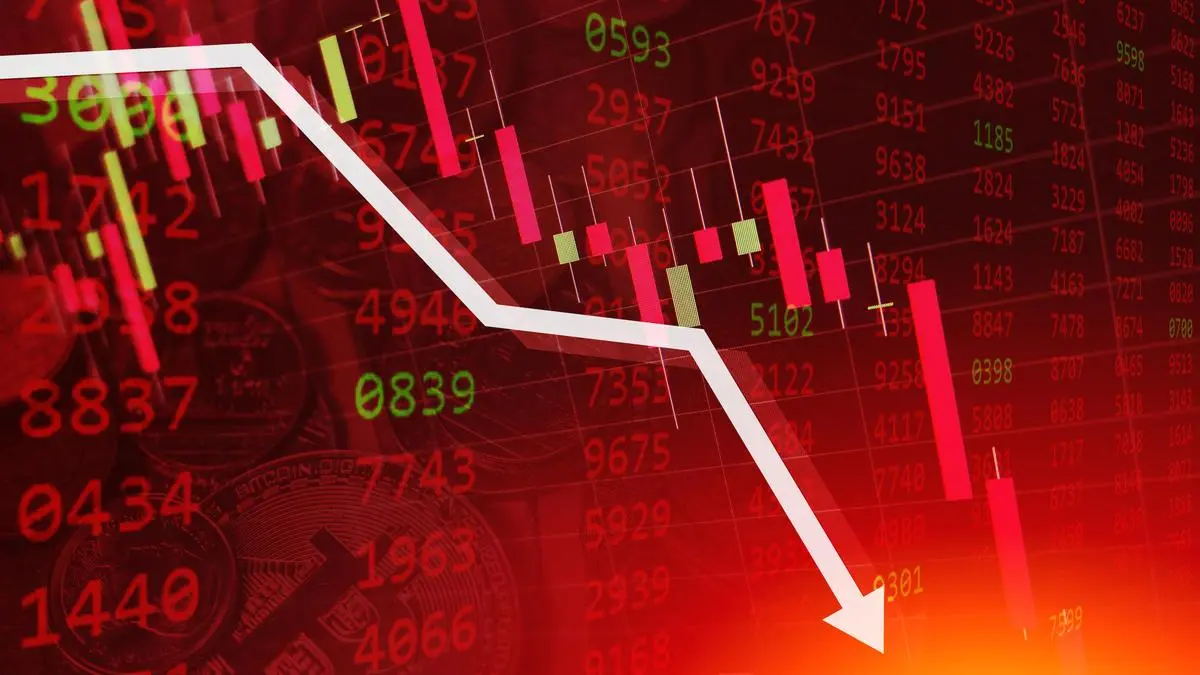
By 10:00 AM, the KOSPI index wasn’t just dipping. It was cratering.
To a casual observer, a stock market crash is a series of flashing red numbers on a glass building. To Min-jun, a mid-level trader who has spent fifteen years watching the heartbeat of the South Korean economy, it felt like a physical weight. Every tick downward represented a decade of someone’s life being erased. The "steepest selloff since 2008" isn't a statistic when you are the one holding the phone, listening to an elderly client ask if their daughter’s tuition money is still there.
It wasn't. Not all of it.
The Ghost of the Great Recession
The numbers were brutal. The KOSPI plummeted nearly 9%, a freefall so violent that "sidecar" trading curbs—the financial equivalent of emergency brakes—were triggered almost immediately. But brakes only work if there is friction. This market was sliding on black ice. Not since the global financial wreckage of 2008 had the floor dropped out with such cold, mechanical efficiency.
Why now? The world likes to point to the "carry trade"—a dry, technical term for a global game of musical chairs. Investors had spent years borrowing cheap Japanese yen to buy higher-yielding assets elsewhere, including South Korean tech giants. When the Bank of Japan flicked the lights on by raising interest rates, everyone scrambled for the exit at the same time.
The exit, unfortunately, was a narrow door.
Imagine a theater where everyone realizes simultaneously that the rafters are on fire. They don’t walk out in an orderly line. They trample. In the digital age, this trampling happens at the speed of light. Algorithms, programmed to protect capital, began selling automatically. Their cold logic fed into a loop: the more the market fell, the more they sold, which made the market fall further.
A Currency in Exile
While the stocks were hemorrhaging, the Korean won was fighting its own war. The currency tumbled to levels that made importers wince. For a nation that survives by buying raw materials and selling sophisticated machines, a weak won is a double-edged sword that has lost its handle. It cuts the person holding it.
Min-jun watched the USD/KRW exchange rate flicker. Every time the won weakened, the cost of the oil powering the country’s factories and the wheat feeding its people effectively went up. It is a quiet, creeping kind of theft. You don’t notice it until you’re at the grocery store in Mapo-gu, staring at a bag of apples that costs twice what it did three years ago.
The irony of the South Korean economy is its sheer brilliance. This is the land of Samsung, SK Hynix, and Hyundai—powerhouses that define the modern world. But these giants are tethered to the whims of global sentiment. When the United States fears a recession, or when Japan shifts its monetary policy by a fraction of a percentage, Seoul feels the tremors first. We are the canary in the global coal mine. And that morning, the canary wasn't singing.
The Human Cost of a Basis Point
Consider a hypothetical woman named Hana. She isn't a trader. She doesn't know what a "basis point" is, and she certainly doesn't care about the Bank of Japan. She owns a small fried chicken shop in Incheon.
Hana’s life is governed by interest rates. Her shop was renovated using a loan tied to market benchmarks. When the KOSPI shatters and the won devalues, the central bank is backed into a corner. They want to cut rates to help the economy, but they can't because they have to protect the currency. If they don't, the cost of Hana’s imported cooking oil will skyrocket. If they do, her debt becomes a mountain she can no longer climb.
This is the invisible stake. It isn't about billionaires losing a zero on their net worth. It is about the friction of daily life becoming unbearable for the people who actually build the country.
The panic of 2024 feels different than 2008. Back then, the world felt like it was ending because the banks were hollow. Today, the world feels like it is ending because everything is too connected. A butterfly in Tokyo flaps its wings, and a retirement fund in Suwon vanishes.
The Logic of the Void
The most terrifying part of a selloff is the lack of a "why" in the moment.
In the heat of the crash, the "why" is irrelevant. There is only the "now." Traders like Min-jun become shells. They stop eating. They forget to breathe. They watch the blue chips—the Samsungs and the LGs—be treated like penny stocks. These are companies that build the future, yet in a moment of systemic fear, they are treated as liabilities to be discarded.
The South Korean government eventually stepped in, promising "market stabilizing measures." It’s a phrase designed to sound like a warm blanket. In reality, it’s a bucket of water thrown on a forest fire. It helps, eventually, but the landscape is already charred.
By the time the closing bell rang, the damage was done. The KOSPI had suffered its worst points-drop in history. Billions of dollars in market value had evaporated into the humid Seoul afternoon.
The Silence After the Bell
When Min-jun finally left his office, the sun was setting over the Han River, casting a long, golden glow that felt suspiciously peaceful. The city looked the same. The buses were running. The neon signs for karaoke bars were flickering to life.
But beneath the surface, the math of thousands of lives had changed.
A market crash is often described as a "correction." It’s a clinical word. It implies that the market was wrong and is now being made right. But for the people whose savings were the "error" being corrected, there is nothing right about it. They are left to navigate a world where the floor can turn into a trapdoor without a moment’s notice.
The screens in Yeouido eventually went dark, but the glow stayed behind Min-jun’s eyelids. He knew that tomorrow, the pundits would talk about "valuation gaps" and "rebound potential." They would analyze the 2008 comparison until the numbers lost all meaning.
They would miss the point entirely.
The story of a crash isn't found in the depth of the red candle on a chart. It is found in the way a man grips his steering wheel in traffic, wondering how he’ll tell his wife that their "safe" investments just took a 10% haircut in six hours. It is found in the sudden, sharp realization that the global economy is not a machine we control, but a weather system we merely endure.
The red ink eventually dries. The volatility settles. But the trust—that fragile, invisible thread that holds a society together—takes much longer to mend.
In the quiet of the evening, the only sound was the distant hum of a city trying to convince itself that tomorrow the numbers would behave. But Min-jun knew better. He had seen the void, and he knew that once the floor has vanished once, you never quite trust the ground beneath your feet again.