The unilateral declaration of a ceasefire by the Kremlin for the Orthodox Easter period functions as a calculated maneuver within the broader theater of hybrid warfare, rather than a genuine shift in humanitarian policy. This 36-hour cessation of kinetic activity creates a structural asymmetry: it forces the Ukrainian command to choose between violating a religious observance or granting Russian forces a critical operational window to rotate personnel and fortify defensive lines. By examining the logistics of frontline replenishment, the psychological mechanics of domestic Russian signaling, and the historical pattern of "frozen" intervals, one can quantify the strategic value of this pause beyond the rhetoric of religious piety.
The Tripartite Framework of Unilateral Ceasefires
To understand why a state actor initiates a non-bilateral pause, one must analyze the move through three distinct lenses: operational recuperation, international narrative positioning, and domestic legitimacy. Discover more on a connected subject: this related article.
1. Operational Recuperation and Logistics
Modern high-intensity conflict induces a high rate of attrition on hardware and psychological exhaustion on personnel. A 36-hour window provides a specific set of tactical advantages:
- Safe Extraction of Casualties: Removing wounded soldiers from the zero-line without the immediate threat of FPV (First-Person View) drones or artillery strikes.
- Ammunition Stockpiling: Moving heavy ordnance from rear depots to forward firing positions, which is usually restricted by the need for concealment and rapid movement under fire.
- Technical Maintenance: Conducting field repairs on armored vehicles and electronic warfare (EW) systems that cannot be serviced during active engagement.
The "rest and refit" cycle typically requires weeks for full effectiveness, but a 36-hour pause serves as a localized reset for units at the edge of combat effectiveness. Russian forces often utilize these pauses to integrate mobilized reserves into frontline units, a process that is dangerously chaotic during active shelling. Further reporting by Al Jazeera delves into related perspectives on the subject.
2. International Narrative Positioning
The timing of the ceasefire, aligned with Orthodox Easter, targets the Global South and specific European factions that prioritize traditionalist values. By framing the conflict in religious terms, the Kremlin attempts to occupy the moral high ground. This creates a trap for the Ukrainian administration. If Ukraine continues defensive operations, the Russian propaganda machine characterizes them as "godless" or "unwilling to seek peace." If Ukraine adheres to the ceasefire, they lose the momentum of their current counter-battery operations.
3. Domestic Legitimacy and the "Protector" Image
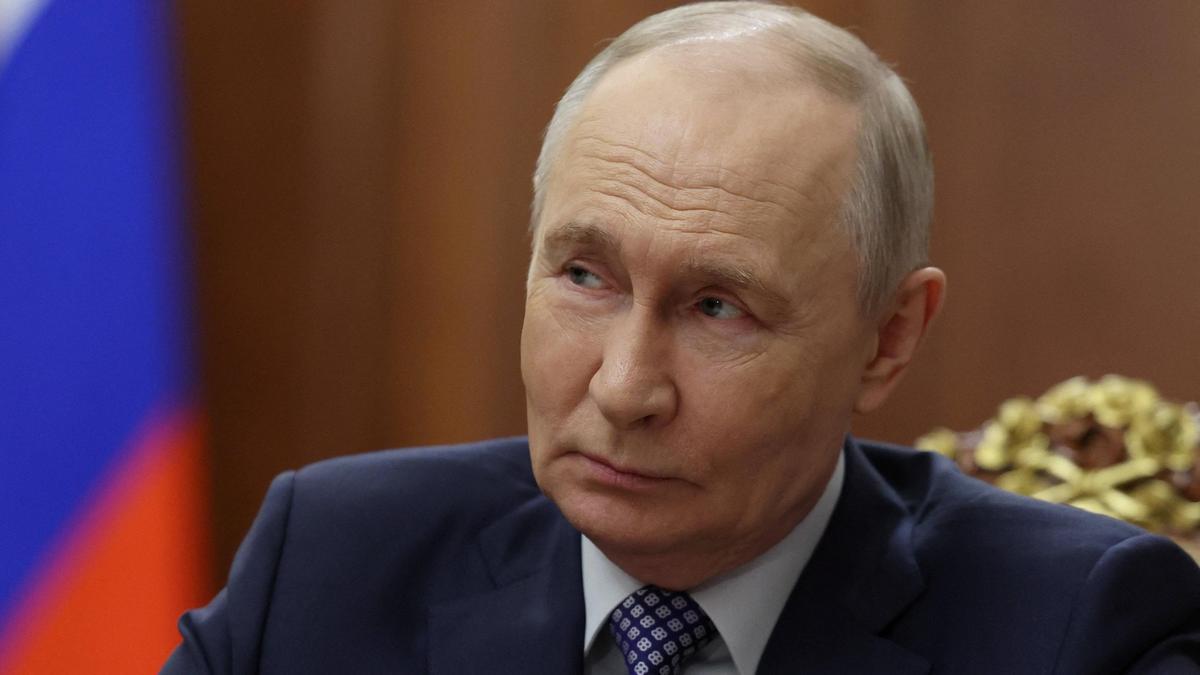
For the Russian internal audience, the ceasefire reinforces the image of Vladimir Putin as the defender of the faith. This is essential for maintaining social cohesion during prolonged mobilization. The move signals that the state remains in control of the pace of the war, capable of dictating the terms of engagement based on its own cultural calendar.
The Probability of Violation and Kinetic Lag
Ceasefires in the Russo-Ukrainian war have historically been porous. The primary reason for this is the Kinetic Lag, the time required for a command to disseminate a "stop fire" order through a fragmented chain of command. Even with the best intentions, localized skirmishes are inevitable.
Russian tactical doctrine often uses the "Reconnaissance-Strike Complex." During a ceasefire, the "Reconnaissance" phase does not stop. Small units and drone operators continue to map Ukrainian positions, identifying targets for the exact moment the clock expires. This leads to a surge in violence immediately following the ceasefire’s end, as both sides act on the intelligence gathered during the "peaceful" interval.
Resource Allocation and Opportunity Costs
From a strategy consultant's perspective, the ceasefire is a play for time—the most valuable resource in an attrition-based war. The cost of a 36-hour pause is the loss of offensive momentum. The benefit is the reduction in the Attrition Gradient, the rate at which a force loses its capability relative to the enemy.
The Ukrainian response must be viewed through the lens of Strategic Ambiguity. By refusing to officially recognize the ceasefire while maintaining a defensive posture, Ukraine mitigates the risk of being labeled the aggressor while preventing Russian forces from moving entirely in the open.
The Bottleneck of Trust
The failure of previous agreements—such as the Minsk I and II protocols—creates a "trust deficit" that makes any unilateral gesture mathematically suspect. In game theory, this is a repeated Prisoner's Dilemma where both players have already established a pattern of defection. The dominant strategy for Ukraine, therefore, is to ignore the political declaration and focus on the tactical reality: Russian artillery pieces remain in position, and Russian drones remain in the air.
Measuring Success: Metrics of a "Fake" Peace
Success for the Kremlin is not measured by the absence of gunfire. It is measured by:
- Video Documentation: Capturing footage of Ukrainian strikes during the holiday to use in information operations.
- Personnel Rotation: The successful movement of fresh battalions into high-pressure zones like Bakhmut or Avdiivka sectors.
- Signal Intelligence: Monitoring how Ukrainian communications change during the "pause" to identify command nodes.
The ceasefire is a tool of statecraft, a temporary recalibration of the battlefield. It does not signal an end to the conflict, but rather a transition to a different mode of engagement.
Strategic Forecast: The Post-Easter Surge
The cessation of hostilities is a precursor to a higher-intensity phase. Data from previous "holiday pauses" in the Donbas conflict (2014-2022) shows a sharp 15-20% increase in kinetic events in the 48 hours following the resumption of combat. Forces that have spent 36 hours resting and rearming are immediately deployed in localized "shock" operations.
Commanders must anticipate a heavy bombardment at the exact minute the ceasefire expires. The Ukrainian High Command should utilize this interval not for rest, but for defensive hardening and the repositioning of mobile SAM (Surface-to-Air Missile) units. The most effective counter-strategy is to treat the "ceasefire" as a period of heightened readiness, assuming that the enemy is using the quiet to prepare for a more violent storm.
The tactical move for Ukraine is to maintain its "active defense" protocol:
- Do not initiate new offensive maneuvers to avoid the "sacrilege" narrative trap.
- Respond with overwhelming force to any Russian movement that seeks to improve tactical positioning under the guise of the pause.
- Use the interval to conduct deep-field electronic mapping of Russian radio-silence zones, which often betray the location of high-value command centers being replenished during the lull.
Victory in this phase will go to the side that remains the most disciplined in its refusal to believe the silence.