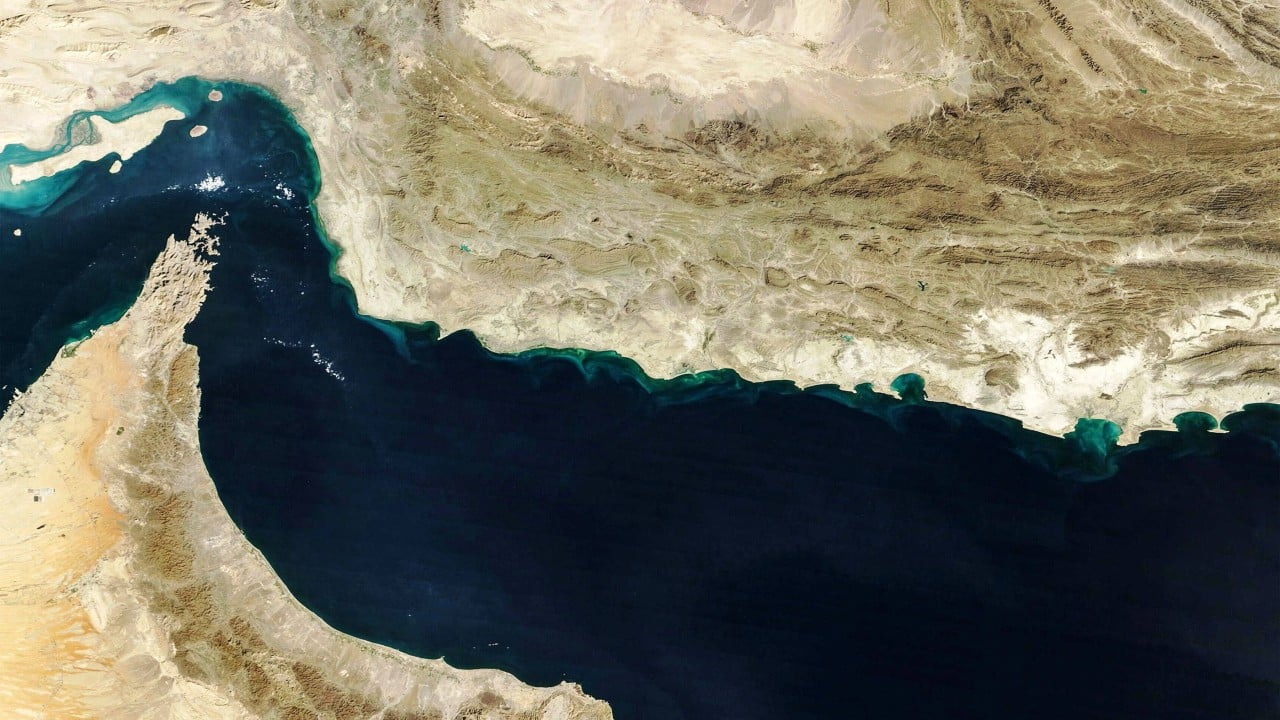
Geopolitics is currently obsessed with a ghost. The mainstream media is vibrating with anxiety over the prospect of a Trump-led blockade of the Strait of Hormuz and China’s public pleas for "maritime stability." They frame it as a looming global catastrophe—a chokepoint ready to snap, plunging the world into a dark age of $300 oil and collapsed supply chains.
They are wrong. Recently making headlines lately: Why Trump’s Feud With Pope Leo XIV Is a Risky Bet for 2026.
The "Strait of Hormuz crisis" is the most overplayed hand in modern statecraft. While pundits treat the 21-mile-wide waterway as the world’s jugular, the actual mechanics of global energy trade and naval power suggests something far more cynical. China isn't worried about the oil; they are worried about the precedent. The United States isn't planning a blockade; it's performing a stress test on a system that is already becoming obsolete.
The Myth of the Unclosable Chokepoint
Every freshman foreign policy analyst loves to point at the map and shout about the 20 million barrels of oil passing through Hormuz daily. They treat the Strait as a physical switch that can be flipped "off." Further details regarding the matter are covered by Associated Press.
It doesn't work that way.
Closing the Strait of Hormuz is not a "blockade" in the Napoleonic sense. It’s a suicide pact. If the U.S. or a regional proxy actually attempted to shutter the waterway, the first victim wouldn't be the Chinese economy—it would be the global insurance market. The moment a single hull is breached by a mine or a drone, Lloyd’s of London doesn't just raise rates; they stop writing policies.
But here is the reality I’ve seen from decades of tracking cargo flows: The world has built a massive, expensive, and largely silent "Plan B." Saudi Arabia’s East-West Pipeline (Petroline) can shift five million barrels a day to the Red Sea. The Abu Dhabi Crude Oil Pipeline bypasses the Strait entirely, dumping 1.5 million barrels directly into the Gulf of Oman. When you strip away the hysteria, the "unclosable" chokepoint has already been partially bypassed by the very people who live there.
China’s Performance of Vulnerability
Why is Beijing acting so concerned? It isn't because they think their factories will go dark next Tuesday.
China has spent the last decade building a strategic petroleum reserve (SPR) that dwarfs the American equivalent. They have nearly 100 days of consumption tucked away in underground caverns and massive tank farms. They aren't panicked; they are posturing.
By calling for an "open" Strait, China is positioning itself as the adult in the room—the champion of "global interests" and free trade—while painting Washington as the erratic arsonist. It’s a masterful reversal of the 20th-century status quo. Washington used to protect the commons; now, Beijing claims to be the one protecting the commons from Washington.
The math of a blockade also ignores the "dark fleet." We’ve watched Iran move millions of barrels under the nose of "maximum pressure" sanctions for years. They use ship-to-ship transfers, spoofed AIS (Automatic Identification System) signals, and a rotating cast of shell companies. If you think a few US destroyers can stop 5,000-ton tankers from moving in a congested waterway without sinking them and causing the largest environmental disaster in human history, you haven’t been paying attention to the limits of naval power in the 21st century.
The Physics of a Modern Blockade
Let’s talk about the actual variables. A blockade in 2026 isn't about wooden ships and iron men. It’s about the cost-per-intercept.
$$C_{total} = (N \times C_{ops}) + (M \times C_{missile})$$
In this equation, $N$ is the number of days on station, $C_{ops}$ is the staggering daily cost of maintaining a carrier strike group, $M$ is the number of incoming cheap asymmetric threats (drones), and $C_{missile}$ is the cost of the $2 million interceptors used to shoot down $20,000 drones.
The U.S. Navy is currently on the wrong side of that math. The "blockade" is actually a financial drain on the blockader. China knows that for every day the U.S. tries to "close" or "police" the Strait, the Pentagon burns through a week’s worth of procurement budget. Beijing isn't afraid of the blockade; they are laughing at the overhead.
The Hydrogen and Nuclear Elephant in the Room
The most egregious flaw in the "Hormuz is Crucial" argument is the assumption that the world’s energy mix is static. It’s not.
While the media focuses on oil tankers, they miss the massive shift toward electrified industrial bases. China is leading the world in the installation of ultra-high voltage (UHV) DC power lines. They are moving energy from wind and solar farms in the west to the manufacturing hubs in the east.
Every megawatt of nuclear or solar power China brings online is a drop of oil they don't need from the Persian Gulf. By the time a hypothetical "Trump blockade" could even be fully implemented, the strategic value of that oil will have dropped by double digits. We are witnessing the geopolitical equivalent of fighting over a coal mine in the age of the internal combustion engine.
The Intelligence of the "Madman Strategy"
The competitor article suggests that a blockade would be an irrational move by a chaotic administration. That is a lazy take.
If Washington threatens a blockade, it isn't to stop the oil. It’s to force a renegotiation of the entire trade relationship. It’s "leverage" (to use a term I despise, but which fits the crude mindset of the actors involved).
The goal isn't to stop the tankers; it's to make the cost of the tankers so volatile that Chinese manufacturers can't price their exports with any certainty. It’s a tax on stability. If you can’t guarantee the price of your energy inputs for the next six months, you can’t sign a long-term supply contract with Walmart or Amazon.
That is the real war. It’s not about ships in the water; it’s about the spreadsheets in the boardroom.
Why the Market is Calling the Bluff
If the Strait of Hormuz were truly at risk of a permanent, catastrophic closure, Brent crude wouldn't be sitting where it is. The markets are cynical, but they are rarely stupid. They see the "looming blockade" for what it is: a seasonal piece of political theater.
Traders know that:
- Direct confrontation is bad for business: Even the most hawkish elements in Washington know that a global depression doesn't help get you re-elected.
- The "Chokepoint" is wide: The deep-water channels are more than enough to handle traffic even with localized disruptions.
- Alternative Logistics: The "Belt and Road" isn't just a catchy slogan; it's a series of land-based pipelines and rail links designed specifically to make maritime blockades irrelevant.
The Brutal Reality of Energy Independence
People often ask: "Won't a blockade destroy the American economy too?"
Here is the inconvenient truth: The U.S. is now a net exporter of energy. A spike in global oil prices actually benefits large swaths of the American economy, from the Permian Basin to the Bakken. While high gas prices hurt at the pump, the "energy superpower" status of the U.S. means a blockade of Hormuz hurts China, Japan, and Europe infinitely more than it hurts Texas or North Dakota.
This isn't 1973. The U.S. isn't a victim of the Middle East; it is a competitor.
The theater of the Strait of Hormuz will continue. There will be "harassment" of tankers. There will be "protests" from the Chinese Foreign Ministry. There will be "stern warnings" from the White House.
But there will be no total blockade. There will be no collapse of the global order.
The Strait of Hormuz is no longer the center of the world. It’s just a narrow piece of water surrounded by people who have already figured out how to live without it.
Stop looking at the ships. Look at the UHV power lines and the inland pipelines. The "blockade" is a ghost story told to people who still think the world runs on 1990s logic. The future of energy security is being built on land, while we waste our breath arguing about a 21-mile gap in the sand.
The Strait is open, even when it's closed.