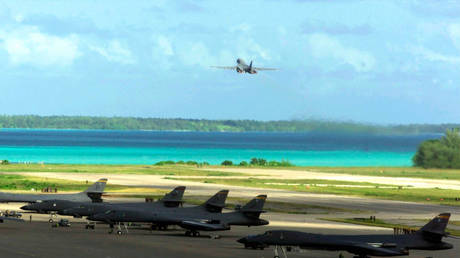
The US military can technically shut down the Strait of Hormuz by tomorrow morning if the President gives the order. It’s not a question of "can they." Between the carrier strike groups, the advanced sub-surface capabilities, and the sheer volume of land-based air power in the region, the Pentagon has the keys to the world's most vital energy gate. But once you turn that key and lock the door, you realize the house is still full of people—and the kitchen is on fire.
By mid-April 2026, the rhetoric around a blockade has shifted from "theoretical deterrent" to "active military operation." While the goal is to choke off Iran's remaining "dark fleet" exports, the secondary effects are hitting global markets like a sledgehammer. Brent crude is already flirting with $105 a barrel, and that’s with the blockade only partially in effect. If this goes full-scale, we aren't just looking at expensive gas; we’re looking at a $2 trillion hole in the global GDP.
The physical reality of the choke point
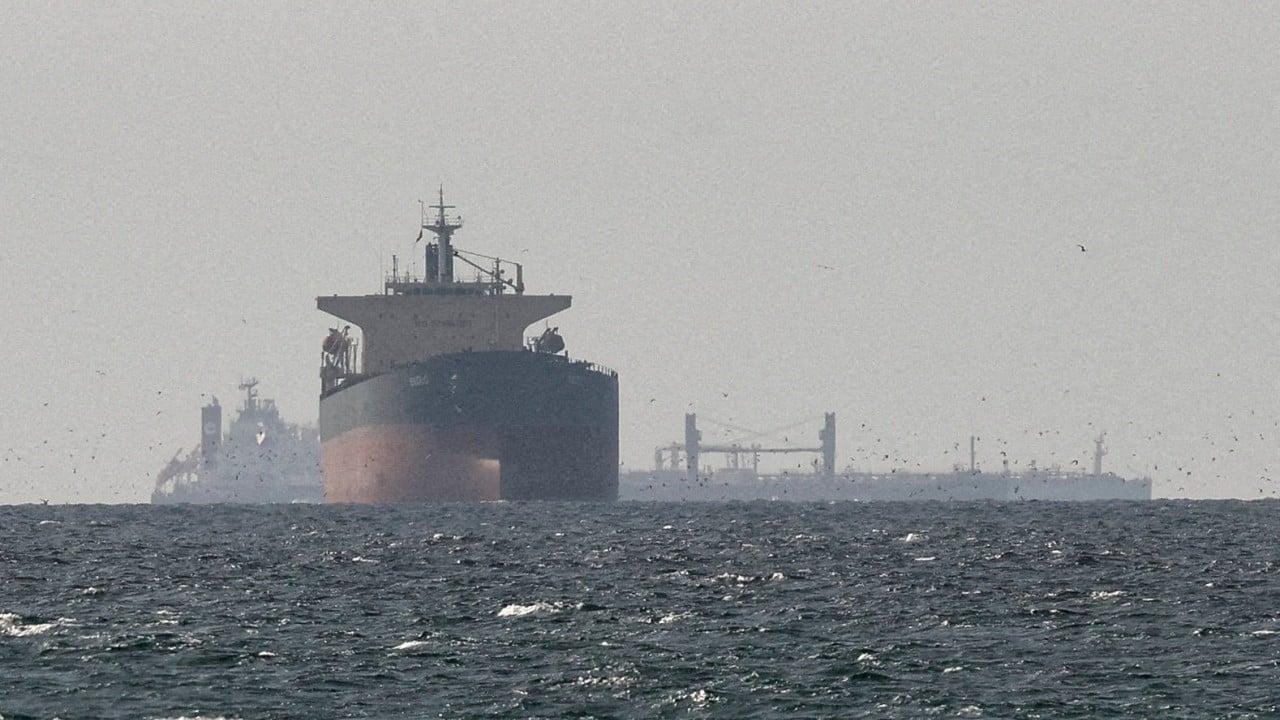
The Strait of Hormuz is tiny. At its narrowest, the shipping lanes are only about two miles wide. You don't need a massive fleet to block it; you just need to make it too dangerous for insurance companies to let tankers through. The US navy is currently attempting a "selective blockade," targeting Iranian-linked vessels while trying to keep the lanes open for everyone else.
It sounds good in a briefing room. In the water, it’s a mess.
Iran isn't just sitting back. They’ve spent decades preparing for exactly this. Their strategy relies on "asymmetric" warfare—using cheap drones, fast-attack boats, and sea mines to make the cost of entry too high for anyone. When the US blocks an Iranian tanker, the IRGC responds by harassing a neutral ship or dropping mines that take weeks to clear. You can't just "police" a strait this narrow when the other side is willing to turn it into a graveyard.
Why the $2 trillion figure matters
Most people think a blockade only hurts the country being blocked. That's a massive mistake. The International Energy Agency (IEA) has already called the current 2026 crisis the largest supply disruption in history.
- The Oil Gap: We're talking about 20 million barrels of oil a day. Even with Saudi Arabia and the UAE using their limited bypass pipelines, about 15 million barrels are effectively stranded.
- The LNG Factor: Qatar supplies 22% of the world's liquefied natural gas. They have no pipelines. If the Strait stays closed, Europe and Asia freeze.
- The Domino Effect: For every 10% rise in oil prices, global GDP drops by 0.2%. If we hit $150 or $200 a barrel—which some analysts think is inevitable in a 3-month blockade—the global economy enters a period of "stagflation" that makes the 1970s look like a minor hiccup.
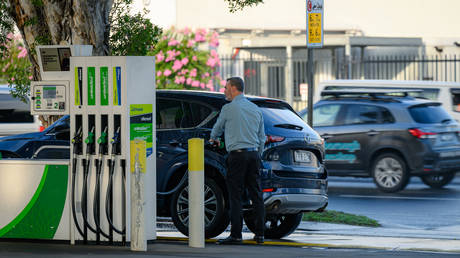
Vietnam is already seeing panic buying at petrol stations. India, which gets 80% of its oil through the Strait, only has about three weeks of strategic reserves. This isn't just a US-Iran problem. It’s a "how do we keep the lights on in Delhi and Tokyo" problem.
The legal and diplomatic nightmare
The US claims it's conducting a legal blockade to stop "piracy" and nuclear proliferation. Iran calls it piracy. Under the UN Convention on the Law of the Sea (UNCLOS), the Strait is an "international strait." This means ships have the right of "transit passage."
Even if you aren't a fan of international law, the diplomatic cost is real. Allies like the UK and France are already distancing themselves. While they want the Strait open, they aren't signed on for a blockade of Iranian ports. They know that if the US pushes too hard, the "no-win" scenario becomes reality: a permanent state of war in a body of water that the world cannot live without.
What happens next
If you're tracking this for your portfolio or just your wallet, stop looking at the daily price of oil and start looking at the "dark fleet" movements and the "Force Majeure" declarations from QatarEnergy.
- Monitor the 72-hour window: Markets usually take three days to fully price in a major disruption. If the blockade hasn't eased by the end of the week, expect a massive spike in shipping insurance rates.
- Watch the pipelines: Keep an eye on the East-West Pipeline in Saudi Arabia. Its capacity is the only thing standing between us and total energy collapse.
- Check reserve levels: Watch the US Strategic Petroleum Reserve (SPR) releases. If the administration starts dumping millions of barrels to keep prices down, it’s a sign they expect the blockade to last longer than a few weeks.
The US can win the military battle in the Strait. They can sink every Iranian ship and clear every mine. But winning the battle might mean losing the global economy. It's an expensive way to prove a point.
Don't wait for the evening news to tell you things are bad. If you're in a sector sensitive to energy costs—logistics, manufacturing, or travel—it’s time to hedge your fuel exposure now. The "cheap oil" era of 2025 is officially dead.