The United States has watched $3 billion in high-end military hardware vanish into the dirt and sea over the last several months. This isn't a theoretical accounting error or a projected budget shortfall. It is the cold, hard reality of losing MQ-9 Reaper drones to Houthi missiles, seeing advanced interceptors burned through at millions of dollars per shot, and watching aging airframes succumb to the crushing operational tempo of a world on fire. While headlines focus on the sheer dollar amount, the deeper crisis lies in the collapse of the American "exquisite" hardware model. We are spending millions to kill drones that cost thousands, and the math has finally reached a breaking point.
The $3 billion figure represents more than just a list of crashed aircraft and expended munitions. It marks a shift in how modern conflict devalues traditional American strengths. For decades, the U.S. relied on having the most expensive, most capable platform in the sky. If you have the best jet, you win. But in the current landscape, "best" is being redefined by "available" and "cheap." When a $30 million drone is downed by a missile that cost a fraction of that, the strategic victory belongs to the side that spent less. This is the asymmetric trap that is currently draining the Treasury and thinning the fleet.
The Reaper Problem and the Myth of Total Air Supremacy
The loss of multiple MQ-9 Reapers over Yemen and the Black Sea is the most visible puncture in the Pentagon's shield. These aircraft were designed for a world where the U.S. held total control of the skies. They are slow, loud, and relatively defenseless against even mid-tier surface-to-air missile systems. Yet, the military continues to deployment them in contested environments because the alternative—manned fighter jets—is even more expensive and politically risky to lose.
Each Reaper lost is a $30 million hole in the budget. But the loss isn't just financial. It’s a loss of "persistent stare" capability. When a Reaper goes down, the eyes of the commander on the ground go dark. Replacing that capability isn't as simple as clicking a button. The production lines for these platforms are not designed for rapid, wartime replacement. We are losing assets faster than we can build them, creating a vacuum in intelligence and reconnaissance that adversaries are eager to exploit.
The vulnerability of these platforms highlights a fundamental flaw in current defense procurement. We built a fleet of Ferraris for a world that has decided to fight with sledgehammers. The Reaper was a masterpiece of counter-insurgency, but in a world of near-peer competition and proliferating missile tech, it has become an expensive target.
The Arithmetic of Attrition
War is, at its most basic level, an accounting exercise. Currently, the U.S. is on the wrong side of the ledger. In the Red Sea, the Navy has been forced to use Standard Missile-2 (SM-2) interceptors to take out low-cost suicide drones. An SM-2 costs roughly $2 million. The drone it hits might cost $20,000.
You do not need a degree in economics to see where this ends.
This is what the $3 billion bill really represents: a mismatch between the threat and the response. It is the cost of being unprepared for the shift in warfighting. The Pentagon has been slow to adopt "attritable" systems—those cheap, numerous, and semi-disposable. Instead, the focus remains on "exquisite" systems that are too expensive to lose and too few to risk.
This creates a paradox. We have the most advanced military on Earth, yet we are being bled by the cheapest tech on the battlefield. The $3 billion figure isn't a one-time loss. It is a recurring subscription to a model of war that is rapidly becoming obsolete.
Replicating the Threat
The solution being floated is the "Replicator" program, which aims to field thousands of low-cost, autonomous systems. The goal is to flood the zone with cheap drones that can perform the tasks currently assigned to the Reaper and other high-end platforms. This would shift the cost curve back in favor of the U.S.
However, "Replicator" faces a massive bureaucratic wall. The Pentagon is not built for speed or for buying things that are meant to break. The acquisition cycle for a new drone can take a decade. In that time, the tech it was meant to counter has already evolved. To truly address the $3 billion drain, the military must fundamentally change how it buys, deploys, and values its hardware.
The Invisible Cost of Combat Hours
Beyond the drones lost and missiles fired, the $3 billion includes the hidden toll of accelerated wear and tear. When the U.S. surges carriers and air wings into the Middle East to deter regional escalation, those hours aren't free. They are carved out of the future life of the airframe.
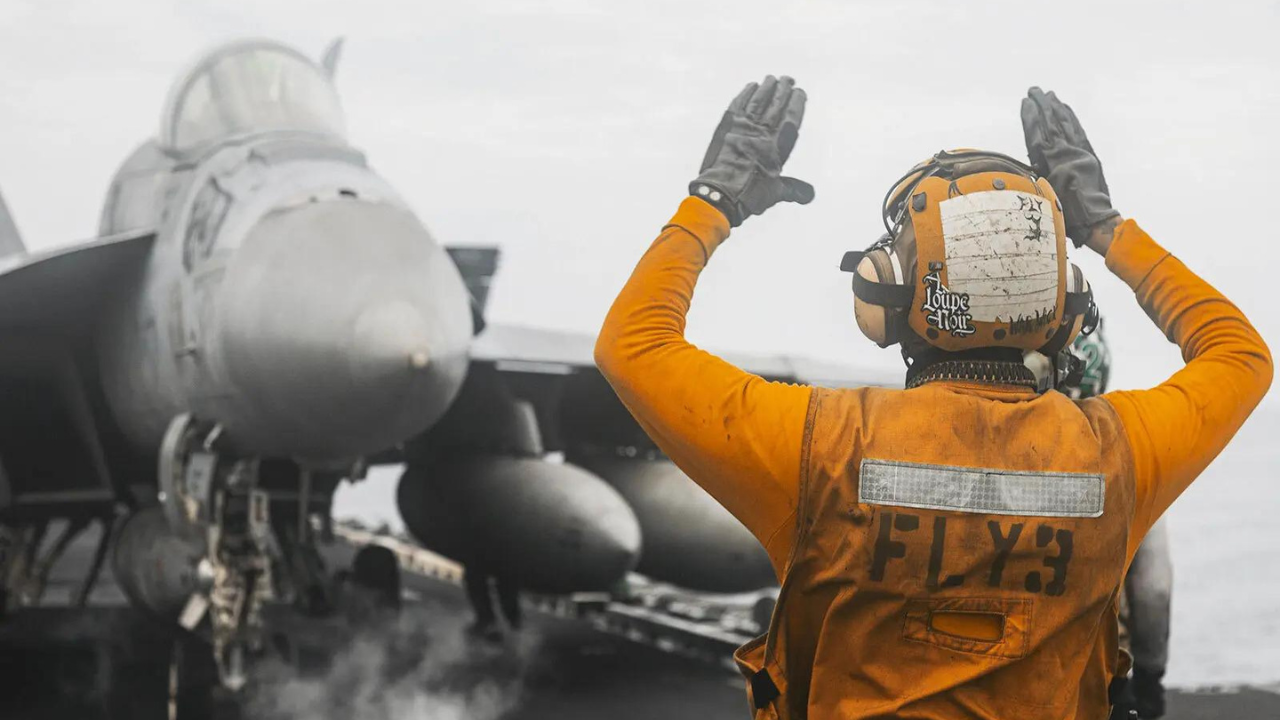
The F/A-18 Super Hornet fleet, for example, is being flown harder than ever. Each hour in the air brings a jet closer to its eventual retirement. These are not infinite resources. When the Navy burns through its flight hours today, it is effectively borrowing from its readiness five or ten years from now.
This isn't just about fuel and oil. It’s about the massive maintenance backlog that builds up with every carrier deployment. The $3 billion doesn't just represent hardware that is gone—it represents the massive, looming bill for the hardware that is left behind, strained to its breaking point.
The Maintenance Nightmare
Maintaining a global presence requires a supply chain that is currently under immense pressure. Spare parts for older airframes are increasingly difficult to source. In some cases, the military is forced to "cannibalize" one aircraft to keep another in the air. This is a desperate measure that reduces the total number of available jets.
The $3 billion is the sound of a system being pushed past its design limits. We are trying to maintain a global footprint with a fleet that was built for a different era and a smaller number of missions. The result is a cycle of repair and deployment that is both unsustainable and incredibly expensive.
The New War of Systems
The $3 billion lost is a wake-up call that the era of uncontested American power in the air and at sea has ended. Our adversaries have realized that they don't need to match us plane-for-plane or ship-for-ship. They just need to make it too expensive for us to show up.
This is the "war of systems." It’s not about which side has the better technology, but which side has the more resilient system. Right now, the U.S. system is brittle. It depends on a small number of very expensive assets that take years to replace.
To fix this, the Pentagon needs to stop buying $100 million solutions for $50,000 problems. This means moving away from the "one-size-fits-all" platform and toward a more diverse mix of hardware. We need the F-35s and the carriers, but we also need thousands of cheap, disposable drones and missiles that we can afford to lose.
Breaking the Procurement Cycle
The real enemy isn't the Houthi missile or the Iranian drone—it’s the procurement process itself. The way the U.S. buys weapons is geared toward large, multi-year contracts with a few major defense contractors. This system is great for building carriers, but it’s terrible for building drones.
If the U.S. wants to stop losing $3 billion every few months, it has to learn to buy like a tech company, not like a government agency. This means rapid prototyping, frequent updates, and a willingness to let systems fail and be replaced.
The $3 billion toll is a clear signal that the old way is dead. The only question is how many more billions will be lost before the Pentagon finally accepts that the math has changed forever. The next move is to flood the zone with our own low-cost tech, making the adversary's missiles as economically irrelevant as their drones currently make our interceptors.