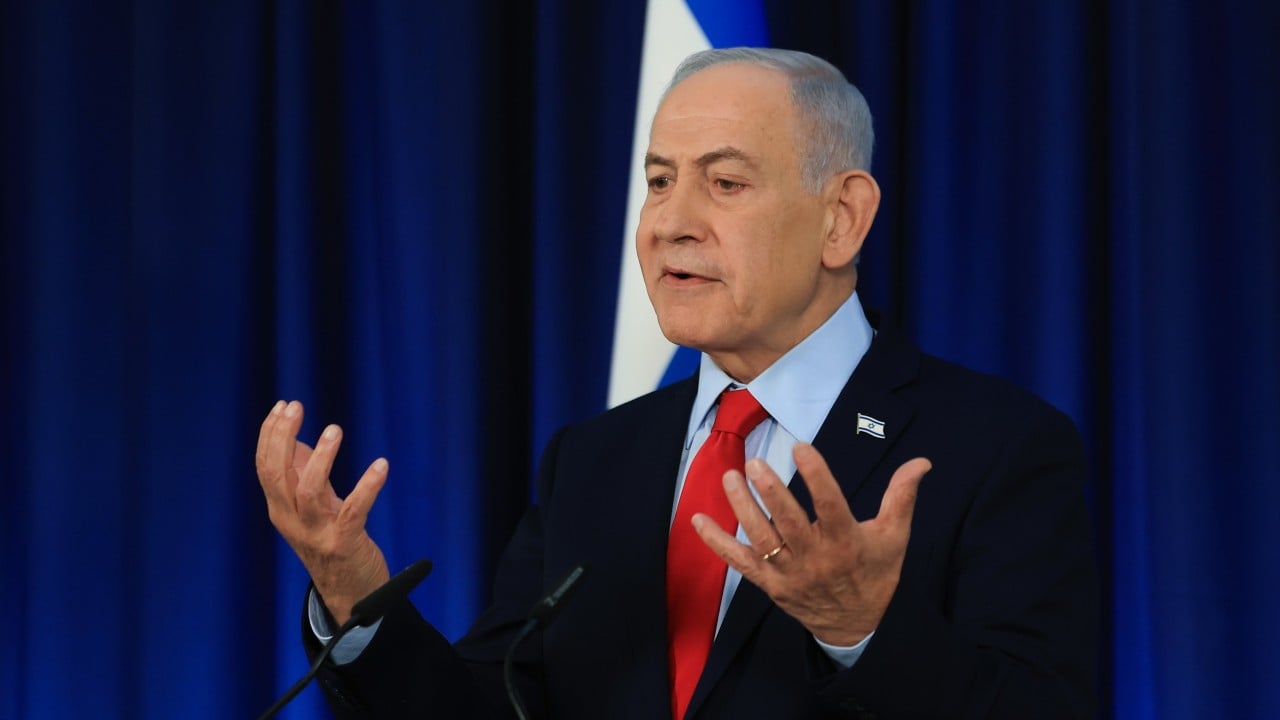
Benjamin Netanyahu knows how to command a room, but his recent speech regarding the ongoing conflict with Iran might have pushed the historical analogies a bit too far. In a high-stakes address aimed at rallying international support and steeling the Israeli public for a prolonged confrontation, the Prime Minister invoked the names of Jesus and Genghis Khan. It was a move intended to illustrate the scale of the "civilizational struggle" Israel claims to be leading. Instead, it triggered an immediate wave of diplomatic cringing and theological debate.
You don't usually hear a Jewish world leader bring up Jesus as a strategic reference point in a military briefing. Yet, Netanyahu did exactly that, framing the current geopolitical tension as a repeat of historical moments where "the foundations of the West" were under threat. By lumping a figure of peace and a Mongol conqueror into the same rhetorical bucket, he managed to confuse his allies and give his critics a massive amount of ammunition.
The Shocking Comparison That Stunned Diplomats
The core of the controversy lies in how Netanyahu used these figures to describe the "barbarism" he attributes to the Iranian leadership. He didn't just mention them in passing. He built a narrative where the world is currently facing a threat similar to the one Genghis Khan posed to the Khwarazmian Empire, while simultaneously suggesting that the values typically associated with the life of Jesus are what's currently at stake in the Middle East.
It’s a bizarre mix. On one hand, you have Genghis Khan, a man who built the largest contiguous empire in history through sheer military brilliance and, frankly, a lot of bloodshed. On the other, you have Jesus, whose name carries immense weight for billions of Christians worldwide. When Netanyahu linked them, he wasn't trying to be a historian. He was trying to create a "good vs. evil" dichotomy that would resonate with Western audiences, particularly evangelical voters in the United States who remain a cornerstone of his international support.
The backlash was almost instantaneous. Critics from the Vatican to the halls of the European Union pointed out that using religious figures to justify 21st-century warfare is a dangerous game. It’s messy. It’s imprecise. Most importantly, it risks turning a political and territorial conflict into a holy war. That's a line most modern leaders try very hard not to cross.
Why Netanyahu Chose This Specific Rhetoric
If you've followed Netanyahu's career, you know nothing he says is accidental. He's a master of the soundbite. He knew this would cause a stir. So, why do it?
First, he’s playing to a specific gallery. By mentioning Jesus, he's sending a direct signal to the Christian Zionist movement. These groups provide significant political and financial backing to Israel. They view the survival of the Jewish state through a biblical lens. For them, hearing the Israeli Prime Minister acknowledge the central figure of their faith in the context of a "righteous war" is a powerful validation.
Second, the Genghis Khan reference serves a different purpose. It’s meant to evoke fear. Netanyahu wants the world to see Iran not as a rational state actor, but as a marauding force that cannot be negotiated with. By comparing the Iranian threat to the Mongol invasions, he’s suggesting that the only response is total resistance. He’s essentially saying, "You didn't negotiate with the Golden Horde, and you can't negotiate with Tehran."
It’s a clever strategy on paper. In practice, it feels desperate. When a leader starts reaching for 13th-century conquerors and 1st-century religious figures to explain a drone strike, it suggests the current political justifications aren't sticking.
The Problem With Using Jesus as a Shield
The most intense criticism came from religious scholars and leaders who felt the name of Jesus was being exploited for political gain. Christianity, at its core, emphasizes "turning the other cheek" and "blessed are the peacemakers." Using that name to bolster a military campaign against Iran feels like a massive contradiction to many believers.
It also puts Western leaders in an awkward spot. If they agree with Netanyahu's framing, they're essentially signing on to a crusade. If they denounce it, they risk looking like they're abandoning a key ally during a time of war. Most chose to stay silent, which in the world of diplomacy, is a loud "please stop doing this."
History shows us that whenever world leaders try to wrap their military goals in the cloak of ancient religion, things get ugly. It narrows the path for peace. It makes compromise look like heresy. Netanyahu's speech didn't just target the Iranian government; it fundamentally altered the language of the conflict in a way that makes it harder for secular diplomats to do their jobs.
Genghis Khan and the Art of the Bad Analogy
The Genghis Khan part of the speech was equally problematic, though for different reasons. Modern historians have a much more nuanced view of the Mongol Empire than the "barbarian" trope Netanyahu used. The Mongols were known for religious tolerance and opening trade routes like the Silk Road. Using them as a shorthand for "pure evil" is an outdated 19th-century view of history.
Moreover, comparing a modern nation-state like Iran to a nomadic empire from the Middle Ages is just bad analysis. Iran has a complex bureaucracy, a professional military, and a population that is highly educated. It’s not a horde on horseback. By using such a hyperbolic comparison, Netanyahu actually makes the threat seem less real because it sounds like a caricature.
What This Means for the War with Iran
This speech marks a shift in how Israel is presenting its case to the world. The focus is no longer just on nuclear enrichment or regional proxies. It’s now about a clash of civilizations. This is a much harder argument to win in the 2020s. The world is weary of "forever wars" justified by grand historical narratives.
Netanyahu’s gamble is that the emotional weight of his words will override the logical inconsistencies. He’s betting that people will remember the names Jesus and Genghis Khan more than they'll remember the specific details of a ceasefire proposal. It’s a high-risk move that might shore up his base at home and among certain groups abroad, but it risks alienating the very people he needs to keep the global coalition against Iran together.
If you’re looking for a takeaway, it’s this: watch the language. When leaders start swapping policy for prophecy, the conflict is entering a much more volatile phase. We aren't just talking about borders or uranium anymore. We're talking about identity, faith, and the ghosts of history.
The next few weeks will show if this rhetoric helps Netanyahu or if he’s finally talked himself into a corner. For now, the world is left wondering why a war in 2026 needs metaphors from 1221. It’s a question that won't go away anytime soon. If you want to understand the real stakes, look past the names he dropped and look at the military movements on the ground. That's where the real story is. Keep your eyes on the de-escalation efforts in the coming days, as that will be the true test of whether this speech had any impact beyond the headlines.