The Kremlin just slammed the door on any hope for a quiet Easter in Ukraine. It's a move that feels as cold as it is calculated. While millions hoped for a brief pause in the shelling to mark the holiday, Moscow made its stance clear: there's no truce without total submission. They aren't interested in humanitarian gestures right now. They want Kiev to accept their terms, or the missiles keep flying.
This isn't just about a holiday. It’s a message to the West and to President Zelensky. By refusing the Easter truce, the Kremlin is signalling that they've moved past the phase of symbolic diplomacy. They’re betting on exhaustion. They think if they keep the pressure high enough for long enough, the cracks in Ukrainian resolve—and Western support—will finally give way. Building on this topic, you can also read: The Easter Ceasefire Illusion and the Weaponization of Sacred Time.
The price of a failed ceasefire
Ceasefires are usually built on a tiny shred of mutual trust. Right now, that trust is at zero. Russia’s refusal to pause for the Orthodox Easter period highlights how deep the animosity runs. In previous years, these pauses were used to exchange prisoners or allow civilians to move safely. Not this time. By tying a temporary truce to political "realities," the Kremlin has essentially weaponized the holiday.
They’re demanding that Ukraine recognizes its territorial losses as permanent. Kiev, obviously, won't do that. It’s a classic deadlock. But the human cost is what stays with you. Families who wanted to gather in churches are now forced to stay in basements. It’s a grim reminder that in this conflict, even the most sacred days are just another day on the frontline. Analysts at The Washington Post have also weighed in on this situation.
Russia’s strategy here is basically "all or nothing." They don't see the value in a 24-hour or 48-hour break if it doesn't lead to a strategic win. From a military standpoint, pauses can be dangerous. They allow the enemy to regroup, resupply, and dig in. Moscow clearly doesn't want to give Ukraine that breathing room, especially with the current rhythm of the fighting.
Why the Kremlin is doubling down on its conditions
You have to look at the internal politics in Moscow to understand this. Putin can't afford to look weak to his own hardliners. A truce without concessions would be framed as a sign of hesitation. So, the Kremlin insists on "recognizing the situation on the ground." That's diplomatic speak for "what we've taken, we keep."
Ukraine’s government sees this as a non-starter. For Zelensky, agreeing to these terms would be political suicide and a betrayal of the soldiers who have died defending the Donbas and southern regions. So, we're stuck. The Kremlin knows these conditions are unacceptable to Kiev. That’s the point. By setting the bar impossibly high, they justify the continuation of the war to their own people.
It's also about timing. Russia is trying to capitalize on delays in Western military aid. They know that every day they keep the pressure on while Ukraine waits for new shipments of shells and air defense systems is a day they might gain a few hundred meters of ground. A truce would slow that momentum. They aren't going to let that happen for the sake of a few candles and prayers.
The role of the Orthodox Church
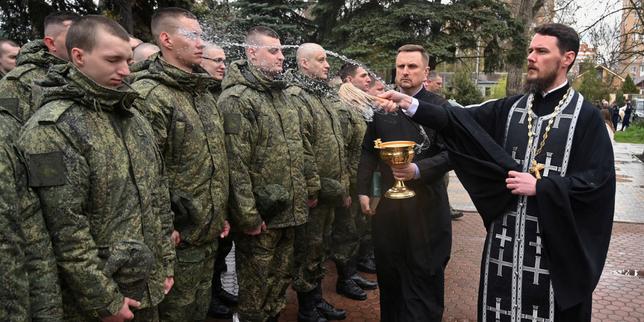
The religious element here is complicated. Both sides share the same Orthodox roots, but the churches have split along political lines. The Russian Orthodox Church has largely supported the "special military operation." This creates a bizarre situation where the spiritual leaders are often calling for victory rather than peace.
When the head of a church supports the war effort, the traditional "Easter Truce" loses its moral weight. It becomes just another piece on the chessboard. For many Ukrainians, the religious appeal from Moscow feels hollow. They see it as hypocrisy. If you're bombing cities on a Tuesday, nobody believes you're pious on a Sunday.
Beyond the rhetoric of the frontline
What happens when the talking stops and the fighting continues? We see a shift in how the war is managed. Russia is moving its economy to a full-time war footing. They're ramping up production of drones and missiles. They're digging in for a long fight. This rejection of the truce is a preview of the coming months. It’s going to be a grind.
Ukraine is in a tough spot. They have to balance the need for defense with the reality of a tired population. The refusal of a truce is a psychological blow. It tells the people in the trenches and the cities that there is no relief coming. Not this weekend. Not next weekend.
Western analysts are watching this closely. The consensus is that Russia feels it has the upper hand right now. You don't reject peace gestures when you're desperate. You reject them when you think you're winning—or at least when you think you can outlast the other guy.
The geopolitical ripple effect
This isn't happening in a vacuum. China, India, and the Global South are all watching how these diplomatic overtures fail. Russia’s hardline stance tells the world that they aren't looking for a "middle ground" mediated by third parties. They want a direct capitulation from Kiev.
This makes it harder for neutral countries to push for peace talks. If one side won't even agree to a religious holiday pause, how can they agree on borders, reparations, or security guarantees? It essentially freezes the diplomatic process while the military conflict stays red hot.
The logistics of a permanent stalemate
Let's talk about the reality of the "conditions" Moscow is pushing. They aren't just asking for territory. They want a neutral Ukraine, meaning no NATO. They want a limited military. Basically, they want a neighbor they can control. Kiev knows that any "peace" on these terms is just a timer until the next invasion.
Historically, wars like this don't end with a neat treaty. They end when one side can't physically continue or when the internal political cost becomes too high. By refusing the Easter truce, Russia is signaling that they haven't reached that point yet. They have the resources and the political will to keep the machine running.
- Military attrition: Russia is banking on having more men and more metal.
- Economic resilience: Despite sanctions, the Russian economy hasn't collapsed.
- Political control: Putin has silenced most of his internal opposition.
Ukraine has to counter this by proving that the cost for Russia will only go up. That means more precision strikes on logistics, better air defense, and keeping the international coalition together. It's a tall order when the news cycle keeps moving on to the next crisis.
What this means for the coming weeks
Expect the intensity to ramp up. Typically, when one side rejects a ceasefire, they follow it up with an offensive to prove why they didn't need the break. We’re likely to see more drone strikes on infrastructure and more localized ground assaults in the east.
The Kremlin's refusal is a clear "no" to the international community's pleas for de-escalation. It shows that the traditional levers of diplomacy—faith, tradition, humanitarianism—aren't working here. Only power and leverage matter.
If you're looking for a silver lining, you won't find it in the official statements coming out of Moscow. The only real hope lies in the resilience of the Ukrainian people and the continued support from their allies. The "Easter Truce" was a chance for a breather, a moment to remember the human side of this tragedy. That chance is gone.
Keep an eye on the frontlines near Avdiivka and Chasiv Yar. These are the areas where Russia is pushing hardest. The lack of a truce means the soldiers there won't get a single night of quiet. It’s back to the mud, the drones, and the artillery.
The international community needs to stop hoping for these small gestures and start preparing for the long-term reality of a Russia that isn't interested in stopping. This isn't a conflict that will be solved with a holiday break. It’s a systemic clash that will require a lot more than a weekend pause to resolve.
Stop waiting for Moscow to show a "softer" side. It doesn't exist in the current administration. The goal is clear, the conditions are set, and the war continues. Brace for a violent spring. The window for easy exits has slammed shut, and the path forward is through the fire.
The next move for Ukraine is to secure the skies. Without better air defense, these refusals of truces will only lead to more civilian casualties in cities far from the front. That’s the immediate priority. Everything else is just noise.
Russia’s "conditions" are a wall. You don't climb it with polite requests. You either break it or you find a way around it. Right now, Ukraine is still looking for the hammer. Until they find it, the Kremlin has no reason to change its tune. The refusal of the Easter truce is just a symptom of a much larger, darker reality.