The global economy is currently held hostage by a fundamental misunderstanding of maritime law. When a ship enters the Suez Canal, it pays a toll. When a ship enters the Strait of Hormuz, it does not. On the surface, this looks like a simple matter of geography or national greed, but the reality is dictated by a century of treaties and the rigid, often ignored, definitions of "sovereignty" versus "transit."
The Suez Canal is a man-made ditch. Because it was excavated through Egyptian soil, it is legally an internal waterway, no different from a private driveway or a national highway. Egypt owns it. They maintain it. They have the right to charge for its use. Conversely, the Strait of Hormuz is a natural body of water connecting two open seas. Under the United Nations Convention on the Law of the Sea (UNCLOS), it is an international strait where "transit passage" is a non-negotiable right. Any attempt by Iran or Oman to levy a "toll" there isn't a business move; it is a violation of international law that would effectively count as an act of piracy or war.
The Engineering of Sovereignty
To understand why Egypt can bank billions while Iran can only threaten, we have to look at the dirt. Before 1869, there was no water connecting the Mediterranean to the Red Sea. The Suez Canal exists only because of human intervention. Under international law, specifically the 1888 Convention of Constantinople, the canal is an international waterway, but it remains under the territorial jurisdiction of Egypt.
This creates a unique legal hybrid. Egypt must keep the canal open to all vessels in times of peace and war, but they are permitted to charge "dues" to recover the massive costs of dredging, pilotage, and maintenance. If you don't pay, you don't pass. It is a service fee for a shortcut.
The economics are staggering. In recent years, the Suez Canal Authority has pulled in over $9 billion annually. This isn't just "profit"—it is a critical pillar of the Egyptian state budget. The legality of these fees is never questioned because the alternative is a 5,000-mile detour around the Cape of Good Hope. Shipping companies pay the toll because the math favors the fee over the fuel.
The Natural Strait Trap
The Strait of Hormuz operates under a completely different set of rules. It is a natural waterway. Even though the shipping lanes fall within the territorial waters of Iran and Oman, the legal doctrine of transit passage applies. This doctrine is the bedrock of global trade. It ensures that any vessel—commercial or military—can move through a strait for the purpose of continuous and expeditious transit without being stopped, taxed, or hindered by the coastal states.
If Iran were to suddenly demand $100,000 per tanker to pass through Hormuz, the global response would be immediate and likely kinetic. Why? Because allowing a toll on a natural strait sets a precedent that would collapse the global shipping industry. If Iran charges for Hormuz, does Indonesia charge for the Malacca Strait? Does the UK charge for the English Channel?
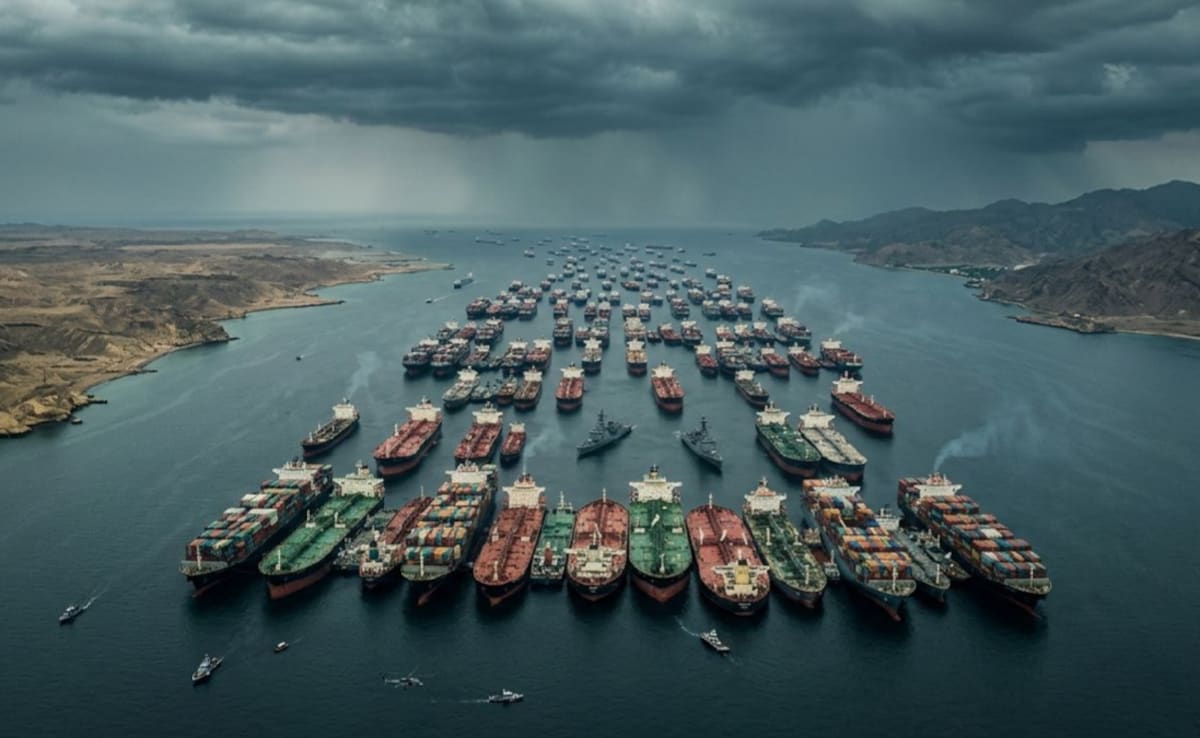
The "right" to pass through Hormuz is not a gift from the coastal nations. It is an inherent right recognized by the international community to prevent regional powers from strangling the world's energy supply. Roughly 20% of the world's liquid petroleum passes through that 21-mile wide gap. The moment a fee is introduced, the water ceases to be a "highway" and becomes a "toll road," which implies ownership that the law does not recognize.
Why the Comparison Persists
The confusion often stems from the Montreux Convention and the Panama Canal Treaty. Critics of the current system point to the Turkish Straits—the Bosporus and the Dardanelles—as a counter-argument. Turkey does not charge a "toll" for passage, but it does charge for sanitary inspections, pilotage, and rescue services. These fees recently saw a massive hike, sparking outrage. However, even Turkey cannot legally stop a ship simply for refusing a "transit fee" that isn't tied to a specific service.
The Panama Canal, much like the Suez, is a man-made marvel. For decades, it was a flashpoint of American and Panamanian tension. The 1977 Torrijos-Carter Treaties eventually handed control back to Panama, codifying their right to manage and charge for the transit. The distinction remains consistent: if humans dug it, humans can charge for it. If nature made it, the world owns the right to move through it.
The Myth of the Service Fee
Iran has occasionally floated the idea of a "transit tax" to pay for maritime security and environmental protection in the Strait of Hormuz. On paper, it sounds reasonable. They argue that they provide the security that allows the tankers to pass safely, so why shouldn't the tankers foot the bill?
This argument fails because security is a sovereign responsibility, not a billable service. When a nation claims territorial waters, it assumes the burden of policing them. You cannot claim the prestige and tactical advantage of owning the water and then invoice the rest of the world for the cost of sitting on it. Furthermore, any fee would require a centralized authority to collect it, verify payment, and clear vessels. This would necessitate stopping ships—a direct violation of "expeditious transit."
The Escalation Ladder
We see the tension play out in "shadow tolls." Instead of a literal invoice, we see ship seizures, "inspection" delays, and hiked insurance premiums. When Iran seizes a tanker, they aren't looking for a check; they are looking for leverage. These actions are a form of extra-legal taxation. The "cost" of passing through Hormuz isn't paid in dollars to a port authority; it is paid in risk.
War risk insurance premiums for tankers in the Persian Gulf can spike by 100% overnight following a single drone strike or boarding incident. This is a toll in everything but name. The money doesn't go to the coastal state, but it leaves the pockets of the consumer. It is a dead-weight loss to the global economy that highlights the fragility of the "free transit" ideal.
The Suez Crisis Precedent
History shows us what happens when the legality of these fees is pushed to the breaking point. In 1956, when Gamal Abdel Nasser nationalized the Suez Canal, he wasn't just taking the land; he was taking the revenue stream. The resulting military conflict wasn't just about territory; it was about who gets to hold the receipt book for global trade. The world eventually accepted Egypt’s right to the tolls, provided the canal remained open.
In contrast, no such "nationalization" can happen in a natural strait. There is no company to buy out, no private infrastructure to seize. There is only the water. If a nation attempts to "nationalize" a natural strait, they are effectively claiming the high seas, an act that traditionally ends in naval intervention.
The Infrastructure Gap
There is a final, practical reason why Suez can charge and Hormuz cannot: maintenance. The Suez Canal Authority is constantly dredging. The "Suezmax" ship size is a moving target because the canal is constantly being widened and deepened. This is an active industrial operation. If Egypt stopped working, the canal would eventually silt up and become impassable. The toll is, in theory, the price of keeping the desert from reclaiming the water.
The Strait of Hormuz requires no such effort. It is deep, wide, and self-sustaining. There is no "work" being done by the coastal states to keep the water wet. Without the "service" component, the legal justification for a fee evaporates.
The Coming Conflict over Chokepoints
As global trade routes shift—specifically with the opening of Arctic passages—the Suez/Hormuz debate will take on new dimensions. Russia already claims the Northern Sea Route as "internal waters," attempting to mirror the Suez model by requiring icebreaker escorts and charging fees. The United States and much of Europe argue it is an international strait, more like Hormuz.
This isn't a pedantic debate for maritime lawyers. It is the frontline of the next century’s economic wars. If the "Suez Model" of paid transit wins out in the Arctic or is forced upon the Straits, the cost of every gallon of gas and every shipping container will rise to satisfy the gatekeepers of the world's chokepoints.
The line is drawn at the shoreline. If the water was there before the nation was, the passage is free. If the nation brought the water to the land, they own the gate. Any attempt to blur that line is an attempt to rewrite the rules of global survival.