The Strait of Hormuz is a twenty-one-mile-wide choke point that dictates the rhythm of the global economy. When a blockade occurs here, the immediate focus of the financial press is almost always the price of Brent crude or the sudden spike in insurance premiums for Lloyd’s of London. But the math of a maritime shutdown is actually written in human lives. Right now, nearly 20,000 seafarers are trapped behind a wall of geopolitical tension, effectively serving as an uncompensated buffer for a global supply chain that was never designed for resilience.
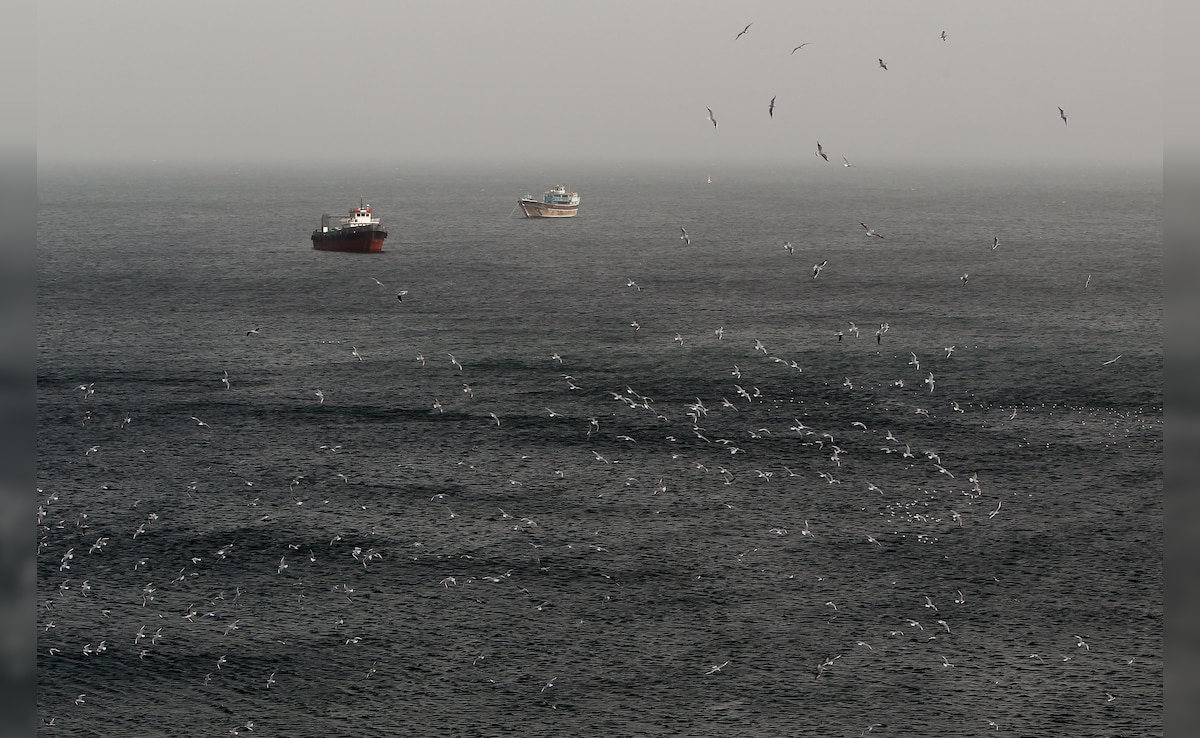
The reality of a Hormuz blockade is not just a ledger of delayed cargo. It is a slow-motion catastrophe for the 2,000 vessels currently idling in the Gulf of Oman and the Persian Gulf. These ships are not static assets; they are complex, floating ecosystems that require constant maintenance, fuel, and—most critically—a crew that is mentally and physically capable of operating under extreme duress. While analysts debate the duration of the bottleneck, the men and women on these ships are running out of fresh water, medicine, and sanity.
The Mechanics of a Maritime Deadlock
A blockade in the Strait is rarely a clean, physical barrier of mines or warships. It is a psychological and legal gridlock. When the "SOS barrage" begins, it signals more than just a distress call. It represents the total breakdown of the maritime insurance framework. Once a high-risk zone is declared, a ship’s P&I (Protection and Indemnity) coverage can be voided or become prohibitively expensive in a matter of hours.
This leaves the captain in an impossible position.
If they push through, they risk the lives of their crew and the total loss of a multi-million dollar asset without insurance. If they drop anchor, they enter a legal limbo. Shipping companies, desperate to avoid the massive daily burn rate of an idle tanker—which can exceed $50,000 a day—often go silent. This silence trickles down to the crew. For the sailors, many of whom are on contracts that have already been extended beyond the legal limits of the Maritime Labour Convention, the blockade is a prison sentence with no release date.
Why the Tech Fix is Failing
There is a common misconception in tech circles that autonomous shipping or remote monitoring will solve these vulnerabilities. That is a fantasy. Modern tankers are massive, temperamental machines that require hands-on engineering. When a ship sits idle in the heat of the Middle East, systems fail. Desalination plants clog. Auxiliary engines overheat.
The current "Dark Fleet" phenomenon—vessels operating with their AIS (Automatic Identification System) transponders turned off to bypass sanctions—adds a layer of lethality to any blockade. In a crowded waterway where 2,000 ships are trying to navigate or hold position without digital visibility, the risk of collision is astronomical. We are seeing a collision of 19th-century geopolitics and 21st-century "just-in-time" logistics, and the friction is generating enough heat to burn the whole system down.
The Economics of Desperation
We must look at the crew demographics to understand why this crisis persists. Most of the 20,000 sailors trapped in these scenarios come from the Philippines, India, and Ukraine. They are the backbone of global trade, yet they possess the least amount of leverage. When a ship is stuck, the flow of remittances to their home countries stops or becomes entangled in banking freezes.
The "human cost" is often framed as a tragedy, but for the industry, it is a calculated externality. It is cheaper for a charterer to let a crew languish on a ship for six months than it is to pay the ransom or the "war risk" premiums required to move the vessel. The SOS calls we are hearing now are not just for food; they are demands for recognition.
The Breakdown of the Hub and Spoke
The global logistics industry relies on a "hub and spoke" model that assumes the hubs—like the Strait of Hormuz—are indestructible constants. They aren't. When the Strait closes, the "spokes" (the ports in Dubai, Kuwait, and Qatar) begin to back up instantly. This creates a secondary crisis: a shortage of berths.
Even if a blockade is lifted tomorrow, the "bullwhip effect" will take months to settle. The ships at the back of the line will have crews that are no longer fit for duty, requiring massive, expensive crew rotations that the regional infrastructure cannot handle. This isn't a pipe that you can just turn back on. It's a delicate web that has been ripped.
The Failure of International Maritime Law
The United Nations Convention on the Law of the Sea (UNCLOS) was supposed to guarantee "transit passage" through straits used for international navigation. In practice, UNCLOS is a toothless suggestion when a regional power decides to exert influence. The naval escorts provided by Western powers are a temporary fix, a "band-aid" on a severed artery.
Escorting 2,000 ships is logistically impossible. You can protect a high-value asset, like a Tier 1 gas carrier, but the bulk carriers and smaller tankers are left to fend for themselves. This creates a tiered system of safety where the lives of some sailors are deemed more "insurable" than others. It is a brutal, mercenary hierarchy that the shipping industry rarely acknowledges in its glossy annual reports.
A Systemic Vulnerability No One Wants to Fund
The solution to the Hormuz problem isn't more warships. It is a fundamental shift in how we value maritime labor and vessel redundancy. We have spent forty years stripping every "unnecessary" cost out of shipping to make consumer goods cheaper. We removed the "slack" in the system. Now, when a crisis hits, there is no buffer.
To fix this, the industry would need to:
- Implement mandatory "blocked transit" insurance that specifically covers crew wages and repatriation, regardless of the ship's status.
- Develop a decentralized "Green Lane" for humanitarian and crew-rotation vessels that is independent of commercial cargo interests.
- Establish international "safe anchorage" zones in the Gulf of Oman that are protected by neutral parties, not just local militaries.
None of this is happening because it costs money. It is more profitable to let 20,000 people sit in the heat and send out an SOS than it is to build a resilient system.
The Psychology of the Long Anchor
Talk to a sailor who has been stuck for ninety days. They describe the "Long Anchor" as a state of sensory deprivation. The horizon never changes. The noise of the generators is constant. The fear of a sudden boarding or a stray drone strike is a low-frequency hum in the back of the mind. This psychological trauma has a direct impact on safety. A fatigued, stressed crew is prone to errors. An error on a ship carrying 2 million barrels of oil is an environmental catastrophe waiting to happen.
We are currently watching a massive experiment in human endurance. The shipping lanes are crowded with "zombie ships"—vessels that are technically functional but manned by people who have reached their breaking point. If a major accident occurs during this blockade, it won't be because of a missile or a mine. It will be because a tired sailor made a mistake that they wouldn't have made three months ago.
The global economy is currently being held together by the frayed nerves of 20,000 people who just want to go home. We are ignoring their SOS at our own peril. The next time you see the price of gas tick up by a few cents, remember that the real cost is being paid in the middle of the ocean, by people who are running out of time.
Stop looking at the charts and start looking at the manifests.