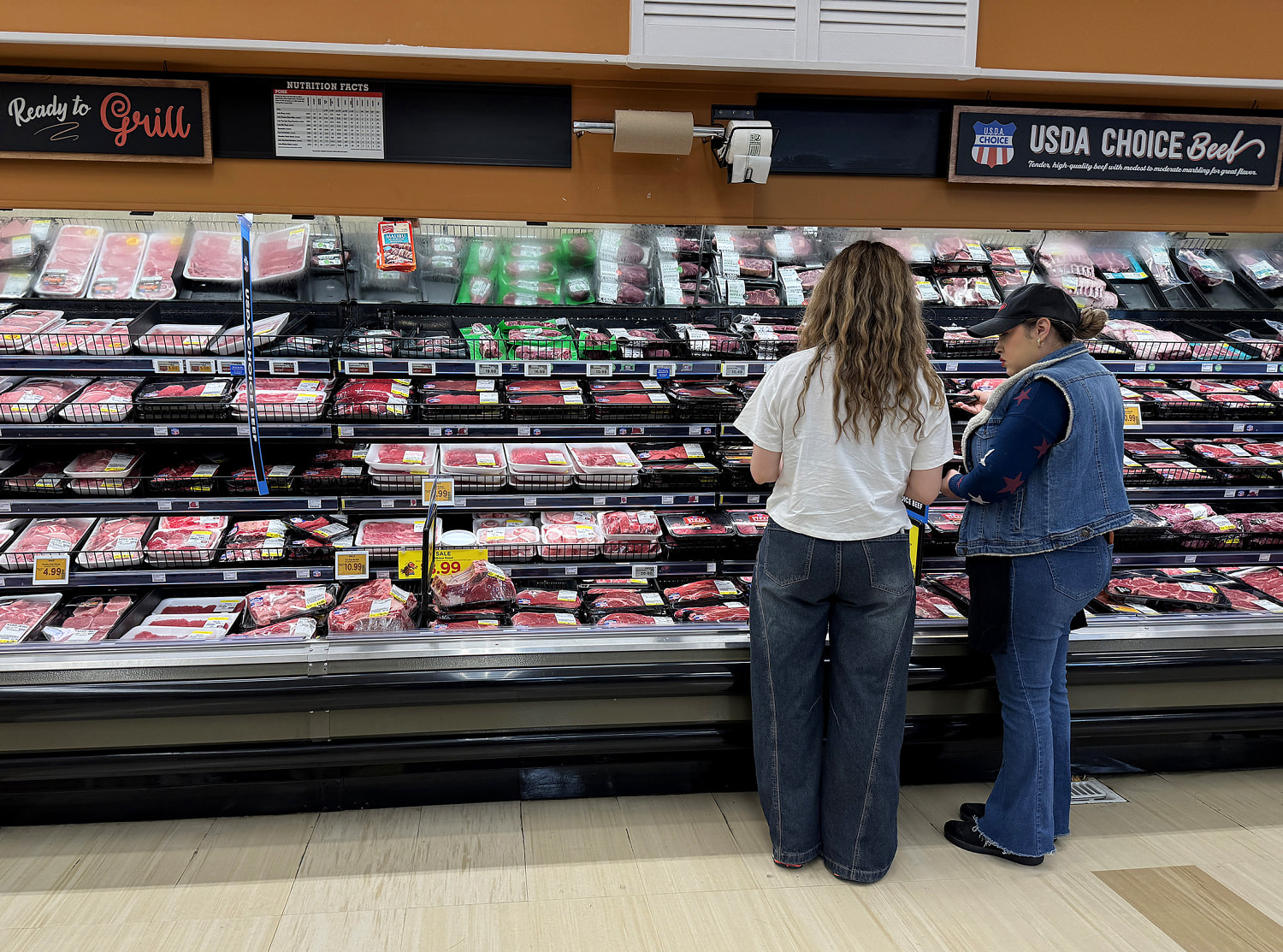
The air inside the local supermarket is chilled, but Elias is sweating. He stands before a wall of olive oil, eyes darting between two glass bottles. One is a brand he has used for twenty years. The other is a generic substitute he barely recognizes. The price tag on his favorite has jumped three dollars in a single month. It isn't just the oil. It’s the gas he burned to get here. It’s the heating bill waiting on his kitchen counter.
Elias represents the millions of people who don’t track the Federal Reserve’s movements on a Bloomberg terminal. He tracks them at the checkout counter. Today, his personal economy is colliding with a geopolitical earthquake thousands of miles away.
The March inflation report arrived this morning like a fever reading for a patient who thought they were finally recovering. For months, the narrative was simple: the pandemic-era supply chain kinks were untangling. Prices were supposed to drift back toward normalcy. But the data shows a stubborn, jagged line that refuses to flatten. The headline Consumer Price Index (CPI) rose 0.4% for the month, pushing the annual rate to 3.5%.
Behind those decimals lies the first real evidence of how a conflict in the Middle East—specifically the escalating tensions involving Iran—is beginning to bleed into the American wallet.
The Ghost in the Pump
To understand why a drone strike in a distant desert changes the price of a carton of eggs in Ohio, you have to look at the energy markets. Oil is the ghost in every machine. It is the fuel for the truck that delivers the produce, the plastic in the packaging, and the power for the warehouse lights.
When the news cycle shifted toward the threat of a wider war involving Iran, the oil markets didn't wait for the first shot. They reacted to the possibility. Brent crude, the international benchmark, surged toward $90 a barrel. It was a preemptive flinch.
Consider the "fear premium." This isn't a line item you’ll see on a receipt, but it’s there nonetheless. Traders bake the risk of a closed Strait of Hormuz into every barrel. If that narrow waterway—where twenty percent of the world’s liquid petroleum passes—were to be throttled, the shockwaves would be instantaneous. Even before a single tanker is blocked, the mere shadow of that event keeps prices high.
For the Federal Reserve, this is a nightmare scenario. They have spent two years trying to cool the economy by raising interest rates, hoping to bring inflation down to their 2% target. They were looking for a "soft landing," a graceful descent where prices stabilize without the floor falling out of the job market.
The Iran conflict is the unexpected crosswind that threatens to stall the plane.
The Shelter Trap
While energy prices capture the headlines because of their volatility, there is a deeper, more domestic rot in the inflation numbers: shelter.
Imagine a young couple, Sarah and Marcus. They have been saving for a down payment for five years. Every time they get close, the goalposts move. The March report showed that housing costs—rent and "owners' equivalent rent"—continue to be the primary engine of inflation.
This creates a paradox. High inflation usually forces the Fed to keep interest rates high. High interest rates mean high mortgage rates. High mortgage rates mean people like Sarah and Marcus stay in the rental market because they can't afford to buy. This increased demand for rentals keeps rent prices high.
The cycle is a closed loop of frustration.
When you add the "Iran factor" to this, the situation turns grim. If energy costs keep the overall CPI high, the Fed cannot justify cutting interest rates. The relief that millions of homeowners and prospective buyers were praying for this summer is evaporating. The March data suggests that the "last mile" of the inflation fight might be the hardest. It is the difference between a wound that is healing and one that has developed a persistent infection.
The Psychology of the Sticker
Inflation is as much a psychological phenomenon as it is a mathematical one. Once people expect prices to rise, they change their behavior. They buy now because it will be more expensive tomorrow. This surge in demand creates the very price hikes they fear.
Elias, still standing in that grocery aisle, feels this instinctively. He isn't thinking about the "base effect" or "core versus headline CPI." He is thinking about the fact that his paycheck, which was once a source of pride, now feels like a dwindling candle.
There is a specific kind of exhaustion that comes with "nickel-and-diming." It is the mental load of recalculating a budget every Tuesday. It is the subtle shift from buying fresh berries to buying frozen ones, from ordering a pizza to making toast. This is the human cost of a 3.5% inflation rate. It isn't a catastrophe; it’s an erosion.
The March report is the first time we can see the geopolitical premium being charged to the American consumer. It is a tax levied by instability.
Economic analysts often speak of "exogenous shocks"—events from the outside that disrupt the system. Usually, these are seen as temporary blips. But the tension between Israel and Iran isn't a momentary flicker. It is a long-burning fuse. As long as that fuse is lit, the energy markets will remain on edge. As long as energy is expensive, everything else stays expensive.
The Tightrope
Jerome Powell, the Chair of the Federal Reserve, is currently walking a tightrope over a canyon, and the wind is picking up.
If he cuts rates too soon to help people like Sarah and Marcus afford a home, he risks letting inflation run wild again. If he keeps rates high to crush the inflation fueled by oil prices, he risks triggering a recession that could cost Elias his job.
The March report took away his room for error.
Before this data arrived, the markets were betting on three interest rate cuts this year. Now? Those bets are being torn up. The timeline is shifting. The "June cut" that many hoped for is looking increasingly like a mirage.
This isn't just about numbers on a spreadsheet. It’s about the collective breath of a nation. We are all waiting for the moment we can stop worrying about the cost of living and start living. But the March report tells us that the world has other plans. The conflict in the Middle East has ensured that the "invisible heat" in our economy isn't going to cool down anytime soon.
Elias eventually reaches for the generic bottle of oil. It’s a small defeat, one of a dozen he’ll face before he gets back to his car. He clicks his tongue, a sound of quiet resignation, and moves toward the checkout.
The drone of the refrigerated cases seems louder today. Or perhaps it’s just the sound of the world getting more expensive, one second at a time. The transition from a domestic struggle to a global one is complete. We are no longer just fighting the ghosts of the pandemic. We are paying for the volatility of a world at war with itself, and the bill is arriving in the most mundane places imaginable.
A receipt is a history book written in real-time. Looking at the March numbers, the chapter we are entering is one of endurance, where the cost of a quiet life is dictated by the noise of a distant conflict.


