The collapse of the Islamabad peace talks on April 12, 2026, was not a failure of diplomacy. It was a calculated pivot to economic warfare.
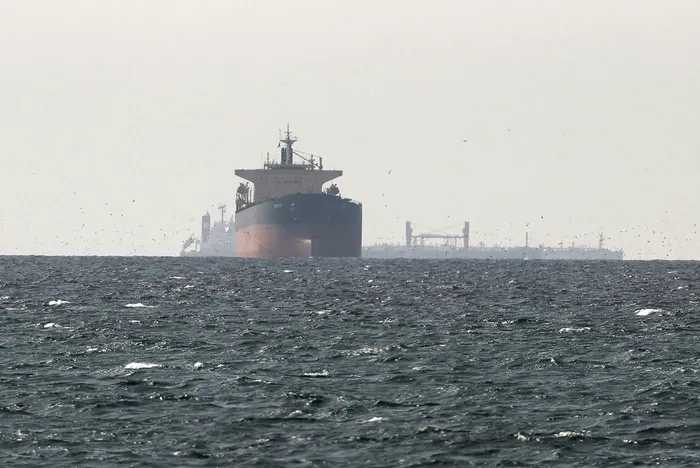
By 10:00 a.m. New York time on Monday, April 13, the United States Navy began enforcing a full naval blockade of the Strait of Hormuz. This was not a general closure of the waterway, as some panicked headlines suggested, but a surgical strangulation of Iranian commerce. The objective is to strip Tehran of its final lever of power: the ability to collect "tolls" for safe passage through the world’s most critical energy chokepoint.
President Donald Trump’s decision to walk away from the table in Pakistan followed 21 hours of grueling negotiations that ultimately broke down over the "Nuclear" clause. While 90 percent of the ceasefire terms were reportedly agreed upon, the refusal of Iranian negotiators to accept a total, permanent cessation of uranium enrichment prompted Trump to trigger what his administration calls the "impartial blockade."
The Mechanics of a Modern Blockade
This is not the broad maritime wall of the 20th century. The U.S. Central Command (CENTCOM) directive is specific. It targets any vessel entering or departing Iranian ports and coastal areas, including those in the Arabian Gulf and the Gulf of Oman.
More significantly, the U.S. is now interdicting any ship—regardless of its flag—that has paid a transit fee to Iran for "safe passage." This moves the conflict from a regional skirmish to a direct challenge of international maritime law. For months, Iran has used the threat of its minefields and drone swarms to force tankers into paying what Washington calls "piracy taxes." By intercepting these vessels even in international waters, the U.S. Navy is effectively attempting to bankrupt the Iranian Revolutionary Guard Corps (IRGC) in real-time.
The immediate casualty is the global energy market. Within hours of the announcement, Brent crude futures surged past $102 a barrel, an 8 percent jump. The "peace dividend" that markets had priced in over the weekend evaporated instantly.
The Nuclear Stalemate in Islamabad
The talks in Pakistan were hosted by Prime Minister Shehbaz Sharif and Field Marshal Asim Munir, providing a neutral ground that many hoped would yield a historic breakthrough. Reports from the delegation indicate that Vice President J.D. Vance delivered a "final and best offer" that included phased sanctions relief and a release of frozen Iranian assets in exchange for a return to the 2015 enrichment limits.
Tehran balked. Iranian Foreign Minister Abbas Araghchi claimed they were "inches away" from a deal but were met with "shifting goalposts."
The "goalpost" in question was the demand for a perpetual ban on enrichment. For Trump, the lesson of the last decade was that any deal with an expiration date is merely a delay of the inevitable. "They want money and, more importantly, they want Nuclear," Trump posted shortly after the collapse. "The meeting went well... but the only point that really mattered was NOT agreed to."
A High Stakes Gamble for Global Shipping
The U.S. military is now dispatching 2,500 additional Marines to the region, specifically trained for amphibious operations. This isn't just a defensive posture. It is a signal that the U.S. is prepared to seize strategic assets like Kharg Island if the blockade is challenged.
However, the strategy is fraught with risk. Several U.S.-aligned nations, including the United Kingdom, Germany, and Japan, have already declined to participate in the blockade. They cite a lack of clear strategic goals and a fear of being drawn into a multi-year regional war. Australia’s Prime Minister Anthony Albanese noted that the decision was "unilateral" and that freedom of navigation must be maintained without escalating to a state of total war.
The Iranian response has been predictably defiant. The IRGC warns of a "deadly vortex" for any enemy ship entering the strait. More tangibly, they have threatened to strike regional power plants and bridges, a move that could "immiserate" the civilian population in a way not seen since the 1980s.
The Economic Toll of $100 Oil
For the average consumer, the Islamabad failure means the era of cheap energy is over for the foreseeable future. With 20 percent of the world’s oil and LNG flowing through Hormuz, even a partial blockade creates a massive supply shortfall.
Supertankers are already reversing course, opting for the long trek around the Cape of Good Hope. This adds 14 days to the journey and doubles shipping costs. While the U.S. is now a net exporter of energy, the globalized nature of the market means American gas stations will still see the "Hormuz Premium" reflected at the pump within days.
This is the brutal truth of the current stalemate. The U.S. is betting that its naval dominance can force a collapse of the Iranian economy before the global economy buckles under the weight of triple-digit oil. It is a race to the bottom where the winner is the one who survives the longest in the dark.
The U.S. Navy destroyers currently entering the Strait of Hormuz for mine clearance are not just clearing explosives. They are clearing the way for a new regional order where "safe passage" is no longer a commodity for sale by Tehran. Whether this leads to a nuclear-free Iran or a scorched-earth conflict depends entirely on who blinks first in the coming 48 hours.