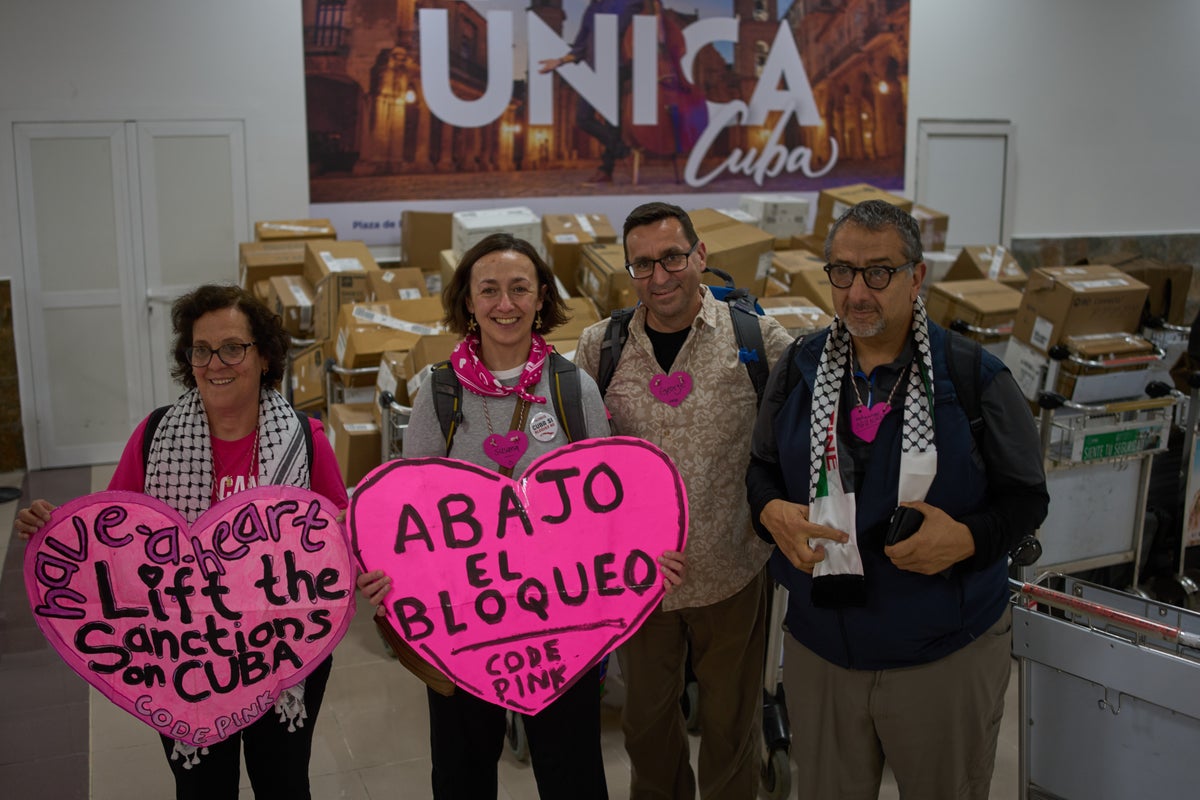
The feel-good footage of aid convoys rolling through Havana is a lie. We see the crates of flour, the medical supplies, and the weeping families, and we tell ourselves a story about global solidarity. It is a fairy tale that masks a brutal economic reality. While the media treats these shipments like a lifeline, they are actually a tourniquet that has stayed on so long the limb is turning black.
If you think sending more rice and used buses to Cuba is "helping," you aren't paying attention. You are participating in the subsidized stagnation of an entire nation.
The Aid-Dependency Trap
Most observers look at a humanitarian convoy and see a solution. I see a market distortion that prevents the very recovery it claims to support. When "free" goods flood a broken economy, the first casualty is the local producer. Why would a Cuban farmer bust his back to grow tubers when a shipment of subsidized grain just landed in the harbor?
This isn't theory. I’ve watched this play out in developing markets for decades. Aid is a short-term fix for an acute trauma, but in Cuba, it has become a permanent feature of the landscape. It creates a perverse incentive for the state to defer the painful, structural reforms required to make the country self-sufficient.
By filling the gaps, international donors are inadvertently funding the status quo. They are providing a pressure-release valve for a system that desperately needs to reach its boiling point to force change. If you keep the lights on with donated fuel, the people running the grid have zero incentive to fix the generators.
The Myth of "Neutral" Distribution
Let’s address the elephant in the room: the logistics of the Cuban state. The naive assumption in the "Tons of Aid" narrative is that these supplies reach the people who need them most through a meritocratic or purely need-based system.
They don't.
In a command economy, every calorie is a political tool. I’ve seen how shipments get diverted. I’ve seen "donated" goods end up in dollar stores (TRDs) where the average Cuban—earning a pittance in depreciated pesos—cannot afford them. When you hand a box of supplies to a government-run distribution network, you aren't feeding the hungry; you are subsidizing the bureaucracy.
The transaction cost of Cuban aid is astronomical. You aren't just paying for the cargo; you are paying the "loyalty tax" required to navigate the port authorities and the neighborhood committees.
The Zero-Sum Game of Charity
People ask: "Shouldn't we just give them what they need so they don't starve?"
It’s the wrong question. The real question is: "Why can't they buy what they need?"
Cuba was once the sugar bowl of the world. It has some of the most fertile soil in the Caribbean. Yet it imports over 80% of its food. This isn't a lack of resources; it’s a total collapse of the price signal.
When a convoy arrives, it creates a temporary illusion of abundance. This hides the fact that the Cuban state’s internal trade policies—specifically the restrictions on private wholesale and the lack of a convertible currency—make it impossible for a middle class to emerge.
Aid is a bandage on a gunshot wound. You can keep applying bandages until the patient is mummified, but they are still going to bleed out if you don't remove the bullet. The "bullet" here is a centralized planning model that treats profit as a crime and competition as a threat.
Capital, Not Consumables
If you actually cared about the Cuban people, you would stop sending cans of beans. You would start demanding the opening of capital markets.
True "humanitarian" work in the 21st century shouldn't look like a truck full of boxes. It should look like:
- Direct Micro-PE (Private Equity): Small-scale investments directly into pymes (small and medium enterprises) that bypass state bank accounts.
- Technical Infrastructure: Providing decentralized internet access that allows Cuban programmers to export their labor for hard currency.
- Logistics Autonomy: Helping private cooperatives build their own cold-storage chains so they don't have to rely on the state’s rotting "Acopio" system.
The current aid model is built on the 1970s logic of "feeding the poor." It is patronizing and ineffective. Cubans don't need your charity; they need your business. They need the right to own the means of their own survival.
The Dark Side of the "Convoy" PR
Look at who promotes these convoys. It’s usually a mix of well-meaning activists and state-aligned organizations. They use these shipments to create a narrative that the island's misery is purely external—a result of the embargo alone.
While the embargo is a massive hurdle, it is not the reason Cuba can't grow its own tomatoes. Using aid as a PR stunt allows the administration to point at the trucks and say, "See? We are being rescued," while they continue to crack down on the very entrepreneurs who could actually fix the supply chain.
I’ve sat in rooms with "development experts" who talk about Cuba like it's a charity case. It’s a dismissal of the Cuban people’s agency. By treating them as permanent recipients of global leftovers, we ensure they never become competitors in the global market.
The Hard Truth About Stability
There is a terrifying possibility that the international community has to face: maybe a certain level of "struggle" is the only thing that will trigger the end of a failed experiment.
When we provide just enough aid to keep the system from collapsing, but not enough to help it thrive, we are prolonging the agony. We are "fostering" (to use a word I hate) a state of permanent "just-barely-surviving."
Is it "humane" to keep a broken system on life support for sixty years? Or is it more humane to let the system fail so something better can be built in the ruins?
Stop the Trucks, Start the Trade
We need to stop celebrating the arrival of convoys. Every truck that rolls into Havana is a monument to a failed economic policy. It is a sign that the local economy has failed to do the one thing a society must do: sustain itself.
The next time you see a headline about "Tons of Aid," ask yourself: who is really being helped? Is it the mother in Matanzas who still won't be able to buy milk tomorrow, or is it the bureaucrat who gets to stay in power for one more month because the "world" stepped in to cover his mistakes?
If you want to help Cuba, stop giving them fish. Stop teaching them to fish. Start letting them own the damn pond.
Everything else is just a photo op for the complicit.
The convoy isn't the solution. The convoy is the symptom. Turn the trucks around. Open the markets. Let the people work, or get out of the way.