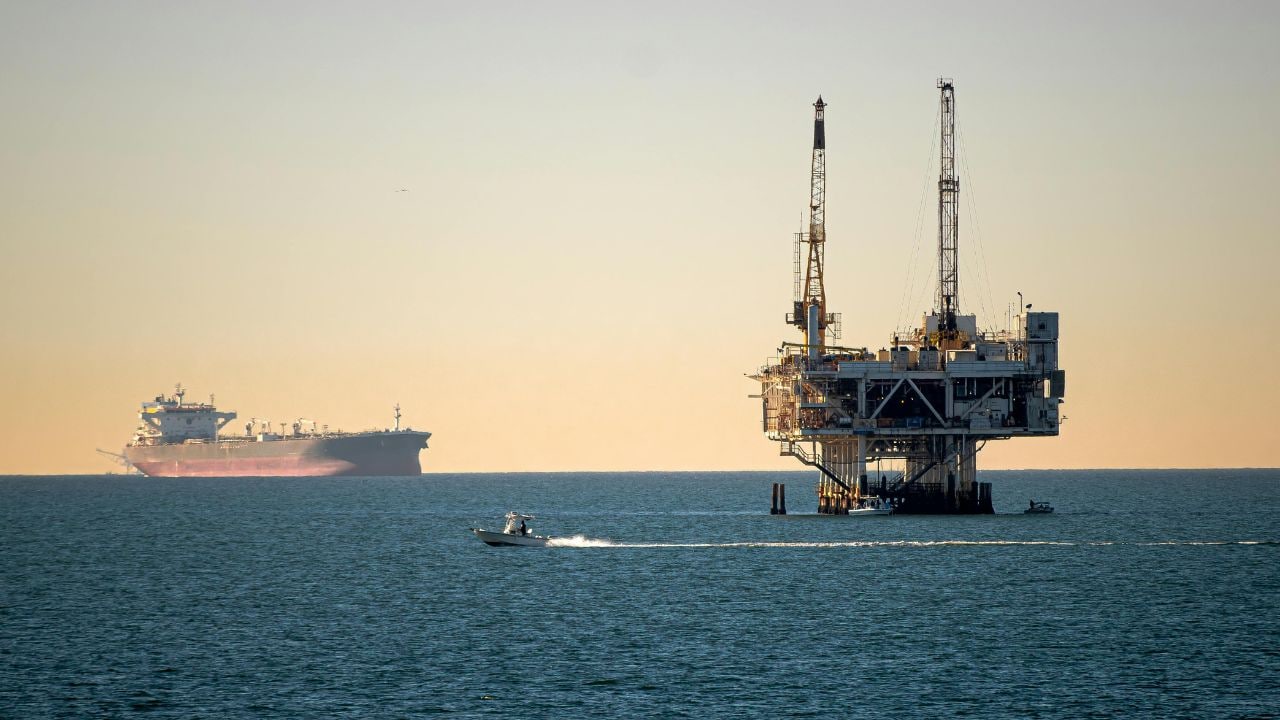
Hindustan Petroleum Corporation Limited (HPCL) is finally shaking up its playbook. For months, the narrative around Indian oil has been dominated by cheap Russian barrels, but the tide's turning. HPCL just locked in a deal for 2 million barrels of West African crude for early May delivery, alongside a historic first-ever purchase of Venezuelan Merey crude.
This isn't just a routine top-up of the tanks. It’s a calculated move to feed the beast that is the newly upgraded Visakhapatnam (Vizag) refinery. If you’ve been following the energy markets, you know that Indian state refiners have been walking a tightrope between geopolitics and the bottom line. With Brent crude dancing around $92 to $103 per barrel this March, every cent of discount matters. Recently making headlines lately: The Jurisdictional Boundary of Corporate Speech ExxonMobil v Environmentalists and the Mechanics of SLAPP Defense.
The end of the Russian honeymoon
Let’s be real. The massive discounts on Russian Urals that fueled Indian refineries for the last couple of years are drying up. Even worse, the geopolitical heat is rising. New Delhi has been quietly signaling to state-run firms to start looking elsewhere to help smooth over trade talks with Washington.
It’s working. HPCL and Indian Oil Corp (IOC) are pivoting back to traditional and "opportunity" crudes. By picking up West African grades like Nigerian Agbami or Angolan Pazflor, HPCL is diversifying its risk. They're also avoiding the headache of increasingly complex sanctions on Russian shipping. It’s a classic case of not putting all your eggs in one basket—especially when that basket is under a microscope. Further details on this are explored by Bloomberg.
Why Vizag and Barmer change everything
You can’t talk about HPCL’s buying spree without talking about their new hardware. The Vizag refinery isn't the same plant it was five years ago. They’ve just commissioned a massive Residue Upgradation Facility (RUF) using LC-Max technology.
Basically, this unit is a "bottom-of-the-barrel" specialist. It takes the heavy, gunk-like residue that used to be low-value and cracks it into high-value diesel and petrol.
- 93% conversion rate: That’s how much of the heavy stuff they can now turn into profitable fuel.
- 15 MMTPA capacity: Vizag has doubled its muscle, now processing over 300,000 barrels per day.
- Complexity score: Their Nelson Complexity Index is up to 11.6, making it one of the most advanced setups in Asia.
Then there’s the Barmer refinery in Rajasthan. It’s slated to start processing crude by the end of this month. Once Barmer is fully online, HPCL will leapfrog Bharat Petroleum to become India’s second-largest state refiner. You don’t build that kind of capacity just to refine easy, light oil. You build it to hunt for the cheapest, heaviest, and most "difficult" crude on the planet—like Venezuelan Merey.
The Venezuelan gamble
HPCL’s decision to take 500,000 barrels of Venezuelan oil—part of a joint 2-million-barrel deal with IOC—is a landmark moment. It’s the first time they’ve ever touched Venezuelan crude.
Why now? Because they finally have the technology to handle it without ruining their equipment. Venezuelan oil is notoriously heavy and sour (high sulfur). It’s basically liquid asphalt. But it also trades at a significant discount—sometimes $6 to $7 below Brent. For a refiner facing squeezed marketing margins at home, that discount is pure oxygen.
What this means for the market
The shift back to West Africa and the foray into South America tells us three things about the 2026 oil market:
- Russian oil is no longer the "only" game in town: Diversification is back in style as trade deals with the US take priority.
- Refining complexity is the new competitive edge: Only the guys with the fancy upgraders can survive high Brent prices by buying "dirty" oil.
- Logistics are stretching: Moving oil from the Atlantic Basin to India’s east coast is more expensive than the short hop from Russia, but the price discounts in West Africa are currently making the math work.
Honestly, it’s a smart play. HPCL is moving from being a "buyer of necessity" to a "buyer of opportunity." They’re leveraging their $10 billion investment in refinery upgrades to play the global market like a pro.
If you’re looking to track how this affects the bottom line, watch the Gross Refining Margins (GRMs) in the next quarterly report. The real test will be how well the Vizag LC-Max unit handles its first taste of Venezuelan heavy crude this May. You should keep an eye on the official tanker tracking data for the VLCC (Very Large Crude Carrier) heading to the Vizag port—it'll be the ultimate proof of this strategy in action.