The tea in Old Damascus still smells of jasmine and woodsmoke, but the steam rises into a different kind of air lately. It is heavy. It carries the weight of a collective breath being held. For over a decade, this city learned the grammar of war—the thud of outgoing artillery, the whistle of the incoming, the jagged rhythm of life lived in the shadows of checkpoints. Now, as the horizon to the south and west glows with the fires of a broadening regional conflagration, the official word from the marbled halls of the government is a desperate, uncharacteristic plea for stillness.
Syria is trying to sit this one out.
It sounds like a paradox. For years, the country was the central theater for every geopolitical grudge match on the planet. Yet, as the conflict between Israel, Hezbollah, and Iran escalates into a frantic spiral, the Syrian state is signaling—quietly, firmly—that its borders are closed to the chaos. This isn't about a sudden conversion to pacifism. It is about the cold, hard math of survival.
Consider a man named Omar. He isn't real, but he is a composite of every shopkeeper in the Al-Hamidiyah Souq who has spent the last year watching the news with a mixture of empathy and terror. Omar has finally restocked his shelves with spices that don't smell like cordite. His children are back in school. He has just enough electricity to keep a single lightbulb humming for four hours a day. To him, "staying out of it" isn't a policy paper or a diplomatic stance. It is the difference between keeping his roof and losing everything for a second time.
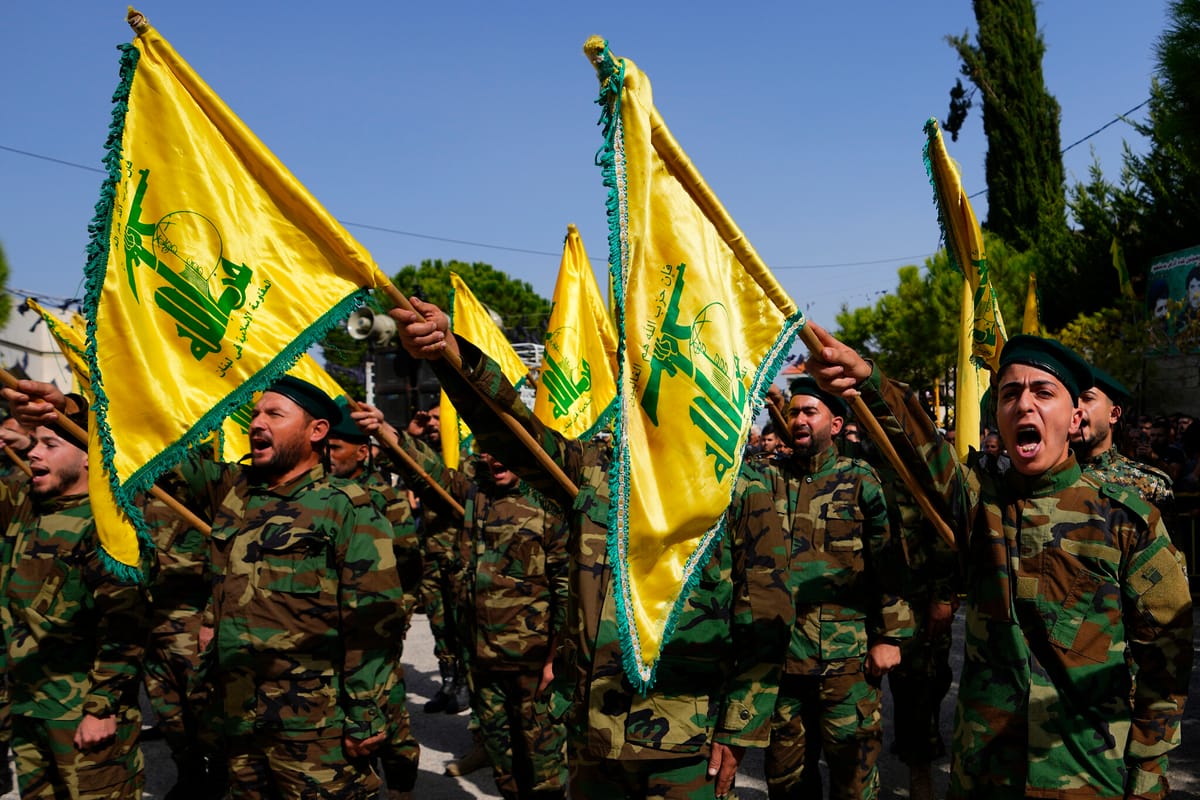
The Syrian government's vow to remain on the sidelines is a high-wire act performed over a pit of bayonets. On one side, there is the long-standing "Axis of Resistance." Damascus has been a vital link in this chain for decades, a bridge between Tehran and Beirut. On the other side is the devastating reality of Israeli airstrikes that have already turned Syrian airports into cratered moonscapes.
The message being sent to internal militias and external allies is clear: do not use this soil as a launchpad.
This restraint isn't born of weakness alone, though the Syrian Arab Army is a shadow of its former self, exhausted by years of internal strife. It is born of a grim realization. The country is a house of cards. A single gust from the regional storm could blow the doors off the hinges. The economy is already in a state of cardiac arrest. The Syrian Pound has plummeted so far that carrying cash feels like carrying wastepaper. Inflation isn't a statistic here; it’s a predator that eats your dinner before you can pick up the fork.
If Syria were to be drawn into a full-scale confrontation now, there would be no "reconstruction" to speak of. There would only be the final erasure of what remains.
Behind the scenes, the diplomacy is frantic. Regional neighbors who once sought the overthrow of the government in Damascus are now the ones whispering in its ear, encouraging this newfound neutrality. They don't want a failed state on their doorstep to collapse even further. They want a buffer. They want the silence to hold.
But silence is expensive.
Israel has made it evident that "neutrality" must be absolute. Every time a shipment moves toward the Lebanese border, or a drone is spotted in the eastern desert, the sky over Damascus ripples with the sonic booms of high-altitude jets. The strikes are surgical, but the psychological impact is blunt force trauma. It reminds every citizen that while they may choose to stay out of the war, the war has a way of finding them anyway.
The stakes are invisible until they aren't. They are found in the nervous glances of soldiers at the border who are told to watch the skies but keep their triggers cold. They are found in the hushed conversations in cafes where people wonder if their oldest allies will respect their need for a breather.
There is a specific kind of exhaustion that comes from being the world’s battlefield for thirteen years. It is a bone-deep weariness that transcends ideology. People are tired of being the "crucial strategic depth" for someone else’s chess game. They want to be a country again. They want to be a place where the biggest news of the day is the price of bread or the result of a football match, not the coordinates of the latest missile strike.
The government's promise to keep Syria out of the fire is a gamble that the fire will respect the line in the sand. But lines in the sand are notoriously difficult to maintain when the wind starts to howl.
The streets of Damascus remain busy for now. The traffic is thick, the vendors are loud, and the jasmine still blooms against the grey stone walls. But look closer at the faces in the crowd. There is a frantic quality to the movement. Everyone is rushing to get things done while the sky is still quiet. Everyone is checking their phones, scrolling through telegram channels, looking for the one headline that might shatter the fragile peace.
It is a strange thing to watch a nation try to make itself invisible. To watch a government that once projected power across the Levant now shrink its ambitions to the simple, desperate goal of not being noticed.
The silence in the capital isn't the silence of peace. It is the silence of a man standing in the middle of a collapsing building, trying not to make a sound, hoping the rafters don't realize he’s there.
Tonight, the moon will rise over the Mount Qasioun, casting a long, silver shadow over a city that has seen too much history and far too much blood. The lights will flicker off as the power grid fails, leaving the streets in a darkness that feels both protective and ominous. Somewhere in the distance, a dog barks. A car backfires, and for a split second, a thousand hearts skip a beat. Then, the silence returns.
For now, the vow holds. For now, the border is a wall. For now, Syria waits in the dark, praying that the storm passes it by, knowing all too well that in this part of the world, the storm rarely asks for permission.
The tea has gone cold. The steam is gone. Only the scent of jasmine remains, clinging to the air like a memory of a life that didn't require such a terrifying, quiet vigilance.