Dubai is currently facing a necessary and predictable cooling period as the global travel market recalibrates. Puneet Chhatwal, Managing Director and CEO of Indian Hotels Company Limited (IHCL), recently pointed toward a six-month window for travel demand to "normalise." This isn't a sign of failure for the emirate, but rather a structural shift as the artificial highs of the post-pandemic era evaporate. The breakneck growth that saw hotel rates soar and occupancy hit record peaks is hitting a ceiling, forced down by a mix of returning global competition, shifting currency values, and a more discerning traveler who no longer feels the "revenge travel" urge to spend at any cost.
For the last three years, Dubai operated in a vacuum. While much of the world grappled with lingering restrictions or slow-to-start tourism infrastructure, the UAE kept the lights on. This created a massive supply-demand imbalance that favored hotel owners and airlines. Now, the rest of the world has caught up. The "normalization" Chhatwal refers to is the sound of the floor meeting the feet of an industry that has been floating on subsidized enthusiasm.
The Mirage of Infinite Growth
To understand why a six-month correction is looming, we have to look at the numbers that defined the 2022-2024 period. Dubai didn't just recover; it exploded. Revenue Per Available Room (RevPAR) reached levels that made veteran hoteliers blink. However, that growth was built on a specific set of circumstances: a closed China, a restricted Europe, and a massive influx of wealth looking for a stable, open jurisdiction.
Those variables have changed. China is back in the game, sending its high-spending tourists to Southeast Asia and Europe instead of just the Gulf. Europe has stabilized its flight schedules. More importantly, the sheer volume of new hotel rooms entering the Dubai market is beginning to weigh on the average daily rate (ADR). When you add thousands of keys to the inventory every quarter, you eventually hit a point where the "exclusive" tag starts to wear thin.
Industry insiders know that "normalisation" is often a polite word for "price correction." We are seeing a move away from the frantic booking patterns of the last twenty-four months toward a more traditional seasonal cycle. The days of charging peak-winter prices in the middle of a scorching July are over.
The Indian Connection and the IHCL Perspective
IHCL, which operates the iconic Taj brand, has a front-row seat to this shift. India remains one of Dubai’s top source markets, but the Indian traveler is becoming more price-sensitive and spoiled for choice. With the expansion of Air India and IndiGo, and the opening of new luxury corridors in places like Vietnam and Azerbaijan, Dubai is no longer the default "quick luxury" getaway.
Chhatwal’s assessment hinges on the idea that the current dip is a temporary stabilization. Yet, there is a deeper mechanical issue at play: the cost of operations. While demand might normalize in six months, the cost of staffing, utilities, and high-end amenities in the UAE has not dropped. Hoteliers are caught in a pincer movement. They are facing pressure to lower room rates to maintain occupancy while their overhead continues to climb. This will inevitably lead to a squeeze on margins that could redefine who survives in the mid-market sector.
The Competition is Getting Aggressive
Saudi Arabia is the elephant in the room. While it is still building its primary tourism infrastructure, the sheer gravity of its "Giga-projects" is starting to pull focus and investment away from the UAE. Travelers who have "done" Dubai five times are now looking at AlUla or the Red Sea. This isn't an immediate threat to Dubai’s volume, but it siphons off the "first-mover" luxury crowd—the people who set the trends and spend the most.
To counter this, Dubai is doubling down on its "lifestyle" and "events" economy. The calendar is packed, from COP28 to various sporting championships. But events provide spikes, not sustained plateaus. A sustainable travel economy needs a consistent baseline. If that baseline is resetting to 2019 levels plus inflation, many of the more aggressive financial models used by new hotel developers might start to look shaky.
Currency Headwinds and the Spending Power Gap
The UAE Dirham’s peg to the US Dollar is a double-edged sword. As the dollar stays strong, Dubai becomes an expensive destination for British, European, and Indian travelers. When the Euro or the Pound weakens, a week in the Maldives or a shopping trip to Dubai suddenly costs 15% more than it did a year ago.
This currency pressure is a silent killer of demand. It doesn't show up as a sudden crash; it shows up as a "normalisation"—a slow thinning of the crowds at the malls and fewer tables booked at high-end restaurants. People still come, but they stay four nights instead of six. They eat at the mall food court instead of the Michelin-starred bistro.
The Mid Market Struggle
While the ultra-luxury segment (the $1,000-a-night suites) remains relatively insulated, the four-star and "lifestyle" hotels are feeling the heat. This is where the bulk of IHCL’s competition sits. In this segment, loyalty is thin and price is everything. If a traveler sees a comparable room in Doha or Muscat for 20% less, they will take it.
Dubai’s response has been to pivot toward "value-plus" offerings, but there is only so much value you can add before the brand begins to dilute. You cannot be the world’s most luxurious destination and a bargain basement at the same time. This identity crisis is a major factor in the six-month window Chhatwal identified. The market needs time to decide what it wants to be in the post-hype era.
Why Six Months is an Optimistic Timeline
The six-month estimate suggests that by late 2024 or early 2025, we will see a steady state. However, this assumes that global macroeconomics remain stable. It ignores the potential for further interest rate hikes in the West or a deeper slowdown in the Chinese economy.
If we look at historical cycles, a correction of this magnitude usually takes twelve to eighteen months to fully wash through the system. We have to account for:
- Contracted Rates: Many large tour operators are still working on rates negotiated a year ago. The real impact of the demand drop won't hit the books until these contracts are renewed at lower prices.
- Airlift Adjustments: Airlines are notorious for lagging behind demand shifts. As they reduce frequency to match the "normalised" demand, ticket prices may stay high, further discouraging the casual traveler.
- The Saturation Point: Every city has a limit to how many "world's largest" attractions it can sustain. Dubai is approaching a point where it must innovate beyond physical scale and start focusing on genuine cultural or experiential depth.
The Shift from Transactional to Experiential
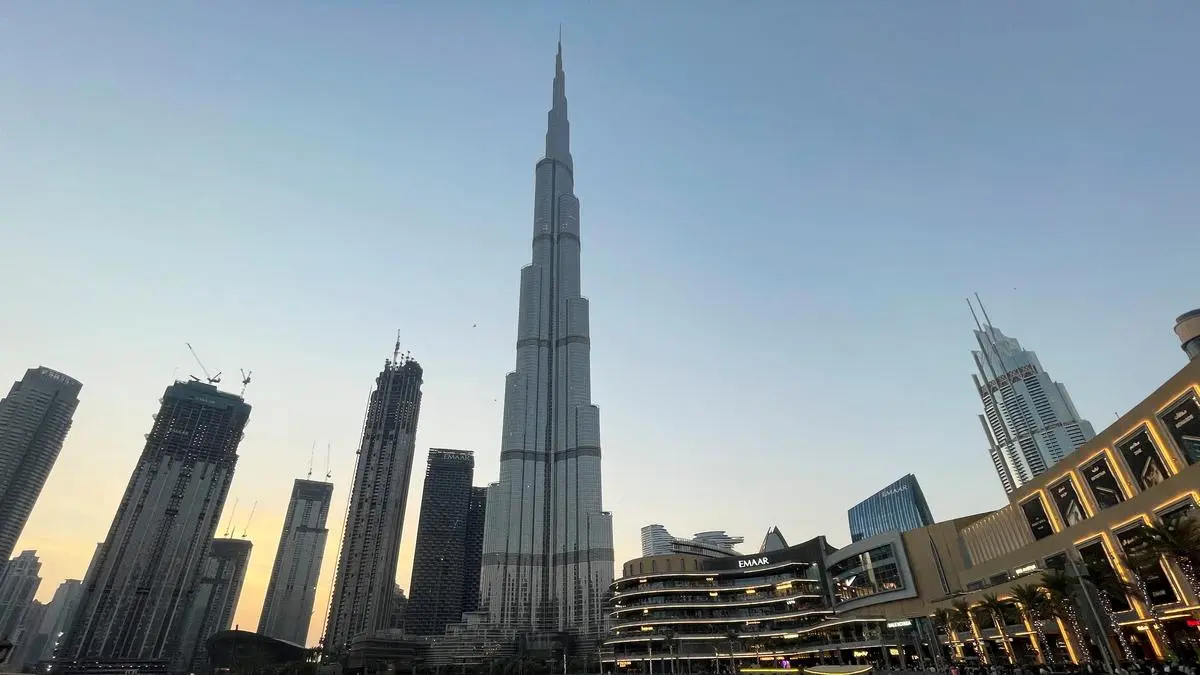
The travelers who will sustain Dubai through this correction are not the ones coming for a photo in front of the Burj Khalifa. They are the ones coming for the burgeoning art scene, the tech conferences, and the professional hubs. The shift from "tourist" to "temporary resident" or "digital nomad" is the real play here.
For IHCL and other major players, the strategy is shifting from filling beds to "owning the guest." This means loyalty programs that actually mean something and service levels that justify the premium. In a "normalised" market, you don't win on price; you win on the fact that the guest doesn't even think about looking at a competitor.
The "Golden Visa" program in the UAE is a massive, often overlooked driver of this. By encouraging long-term residency, the government is creating a built-in audience for its luxury hospitality and F&B sectors. These residents aren't reflected in "tourist arrival" stats in the traditional sense, but they are the ones keeping the high-end hotels' lobby lounges full on a Tuesday afternoon.
The Hard Reality of the Numbers
Let's look at the occupancy data. In the peak of the post-pandemic rush, 90% occupancy was the norm. In a "normalised" market, that figure will likely hover around 75% to 80%. For a 500-room hotel, that 10% drop represents a massive hole in the ancillary revenue—spa treatments, room service, and bar tabs.
To bridge this gap, hotels are having to get creative. We are seeing a rise in "day-cation" packages and local memberships. This is a clear sign that the international tap is not flowing as forcefully as it once was. The industry is looking inward to the local population to fill the void.
Structural Overhang in the Real Estate Sector
You cannot separate the travel industry from the real estate market in Dubai. Many of the new luxury hotels are part of mixed-use developments where the hotel's success is tied to the sale of branded residences. If the travel demand "normalises" too much, it cools the heat in the property market.
Investors buy hotel apartments based on projected yields. If those yields drop because the RevPAR is correcting, the investment capital might move elsewhere—perhaps to Riyadh or even back to a recovering London market. This interconnectedness makes the "six-month" correction a high-stakes period for the entire UAE economy.
Redefining Success
Success in the next phase of Dubai’s evolution won't be measured by how many people flew through DXB, but by how long they stayed and how much they integrated into the local economy. The city is maturing. A mature market doesn't see 20% year-on-year growth; it sees 3% or 4%. This is what "normalisation" actually looks like. It is the end of the gold rush and the beginning of the long, hard work of sustainable brand management.
Hoteliers who built their business models on the frantic energy of 2022 will struggle. Those who, like Chhatwal, recognize the shift and prepare for a more temperate climate will be the ones standing when the dust settles. The correction isn't a crisis; it is a filter. It will remove the speculative players and leave the professionals who understand that hospitality is a marathon, not a sprint.
The market is no longer interested in the "newest" or "biggest" just for the sake of it. Travelers are looking for value, authenticity, and a reason to return. Dubai has the infrastructure to provide all three, but it requires a fundamental pivot away from the high-volume, high-turnover mindset of the last decade.
The next six months will be a period of aggressive soul-searching for the Gulf's hospitality sector. We will see brands being repositioned, projects being delayed, and a renewed focus on the "quality" of the tourist over the "quantity." The party isn't over, but the music has definitely changed tempo.
Stop looking at the arrival gates and start looking at the length of stay and the repeat-visitor rate. Those are the only metrics that will matter in the "normalised" Dubai. If a hotel can't convince a guest to come back a second time without a massive discount, it has already lost the war of the correction.