Diplomacy is the art of saying nothing while looking expensive. When UAE Minister Reem Al Hashimy touches down in New Delhi to discuss "regional security" and "maritime stability," the press treats it like a tectonic shift. It isn't. It is a choreographed performance designed to mask a harsh reality: the traditional concept of a maritime security alliance in the Indian Ocean is dead.
We are watching two nations try to build a bridge out of press releases while the actual water underneath—the trade routes of the Arabian Sea—is being redrawn by actors who don't care about ministerial visits. The "lazy consensus" suggests that high-level talks between India and the UAE will magically secure the Horn of Africa or the Bab el-Mandeb strait. That is a fantasy.
The Geography of Denial
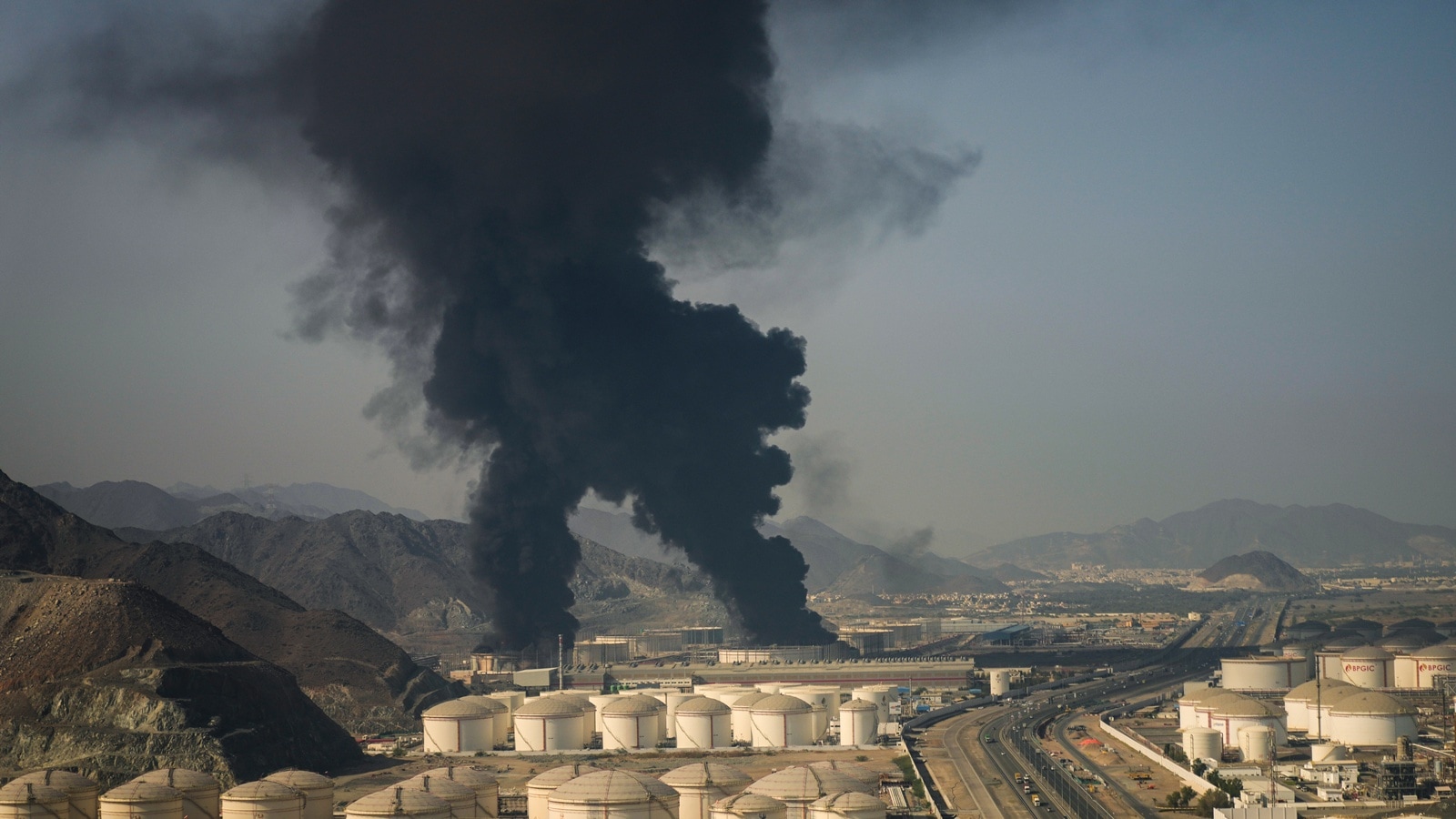
The Indian Ocean is not a lake. It is a series of volatile chokepoints. When officials talk about "maritime stability," they are usually using a euphemism for "we hope the Houthis stop shooting." But hope is not a naval strategy.
India and the UAE share a massive trade volume, yes. They share a desire for energy security, obviously. But their strategic DNA is fundamentally different. India plays the role of a "net security provider," a term used by think tanks to describe a navy that is spread too thin. The UAE, conversely, operates as a nimble, hub-based power that focuses on port control and logistics.
The friction lies in the execution. India wants a blue-water presence that signals superpower status. The UAE wants a pragmatic, multi-aligned network that protects its investments from Aden to Berbera. You cannot "align" these two goals through a bilateral chat in Delhi. They are competing philosophies of power.
Why Your Supply Chain is Still a Target
Business leaders look at these ministerial visits and breathe a sigh of relief, thinking the "corridor" is safe. They are wrong. I have seen logistics firms bake "geopolitical stability" into their five-year plans based on these headlines, only to see insurance premiums double when a single drone hits a tanker.
The reality of 2026 is that state-to-state diplomacy is losing its grip on maritime safety. Non-state actors have democratized disruption. A $2,000 drone can neutralize a $2 billion destroyer. When Reem Al Hashimy and her Indian counterparts discuss security, they are talking about 20th-century solutions for 21st-century chaos.
- The Escort Fallacy: The idea that more naval patrols equal more safety. It doesn't. It just creates more targets.
- The Intelligence Gap: Sharing data between Delhi and Abu Dhabi is great, but it’s useless if you can’t act on it without triggering a regional escalation.
- The Infrastructure Trap: Building ports is not the same as securing them. A port is a static asset in a kinetic world.
The IMEC Hallucination
The India-Middle East-Europe Economic Corridor (IMEC) is the elephant in the room. It’s touted as the "Suez Bypass," a way to link India to Europe via the UAE, Saudi Arabia, and Israel. It’s a brilliant PowerPoint presentation. It’s a logistical nightmare.
To make IMEC work, you need absolute, unwavering stability across four different borders and two seas. You need the UAE and India to not just be friends, but to be the janitors of the Middle East. That is an expensive, thankless job that neither is truly prepared to fund.
While the ministers talk about "maritime stability," China is already there. They aren't talking; they are buying. COSCO and DP World are in a quiet war for the soul of global shipping, and no amount of "discussing regional security" changes the fact that the UAE is hedging its bets. They will talk to India today and sign a port deal with a Chinese state-owned enterprise tomorrow. That isn't betrayal; it’s business.
Stop Asking if the Region is "Stable"
The most common question people ask is: "Is it safe to invest in the India-UAE corridor?"
It's the wrong question. Stability is a lagging indicator. You should be asking: "How much volatility can my margin absorb?"
If you are waiting for a joint communique from New Delhi to tell you the sea lanes are open, you’ve already lost the market. True "maritime stability" in the current era doesn't come from naval cooperation; it comes from redundancy.
The Brutal Truth About "Strategic Partnerships"
"Strategic partnership" is what you call a relationship when you don't have a formal treaty. India and the UAE have a "Comprehensive Strategic Partnership." In plain English, that means they agree on 60% of things and have decided to ignore the other 40% for the sake of trade.
The 40% they ignore is what actually matters:
- Iran: The UAE has to live next to them; India wants to use them for access to Central Asia.
- Pakistan: A historical partner for the UAE, a permanent headache for India.
- The US Presence: Is the US leaving the neighborhood or just hiding? Neither Delhi nor Abu Dhabi knows, but they are both terrified of the answer.
Imagine a scenario where a major conflict breaks out in the Persian Gulf. India’s priority will be evacuating its 8 million citizens living in the region. The UAE’s priority will be the survival of its sovereignty and its status as a global clearinghouse. These are not the same goal. They might even be contradictory.
The Real Actionable Strategy
If you want to understand the future of the India-UAE axis, ignore the ministers. Watch the sovereign wealth funds and the private military contractors.
Security is being privatized. The UAE is increasingly looking at ways to secure its own interests without relying on the cumbersome "joint exercises" that India loves. If India wants to be a real player, it needs to stop acting like a regional policeman and start acting like a venture capitalist.
Investing in port tech, automated defense systems, and cyber-resilience is ten times more valuable than a "maritime security dialogue." We need to move past the era of handshakes and enter the era of hardened assets.
The ministerial visit to New Delhi is a signal, but it’s a weak one. It signals that both parties are worried. If they weren't worried, they wouldn't need to keep telling us how "stable" everything is.
Stop buying the narrative of a unified maritime front. The Indian Ocean is becoming a fractured mosaic of interests, and no amount of diplomatic tea-drinking will glue it back together.
Accept the chaos. Build for it. Because the stability you’re being sold is nothing but a ghost in the machine.
Don't wait for the seas to be calm; learn to sail in the storm.