The humidity in Hong Kong doesn't just sit on your skin; it carries the weight of expectation. For a teenager in Sham Shui Po or Tin Shui Wai, that weight often feels like a ceiling. You grow up in a vertical world where every square foot is a calculation of survival. Success is traditionally measured by the thickness of a textbook or the stability of a desk job. But lately, the air is shifting.
Listen to the sound of a shuttlecock hitting a racket at the Hong Kong Sports Institute. It isn't just a noise. It is a heartbeat.
For decades, elite sports were viewed as a luxury or a gamble—a distraction from the "real" work of commerce and finance. That narrative is dying. In its place, a new infrastructure is rising, one that recognizes a fundamental truth: a city's greatness isn't just found in its GDP, but in the physical resilience of its people. We are witnessing the systematic dismantling of the "starving athlete" myth.
The Boy with the Weighted Dreams
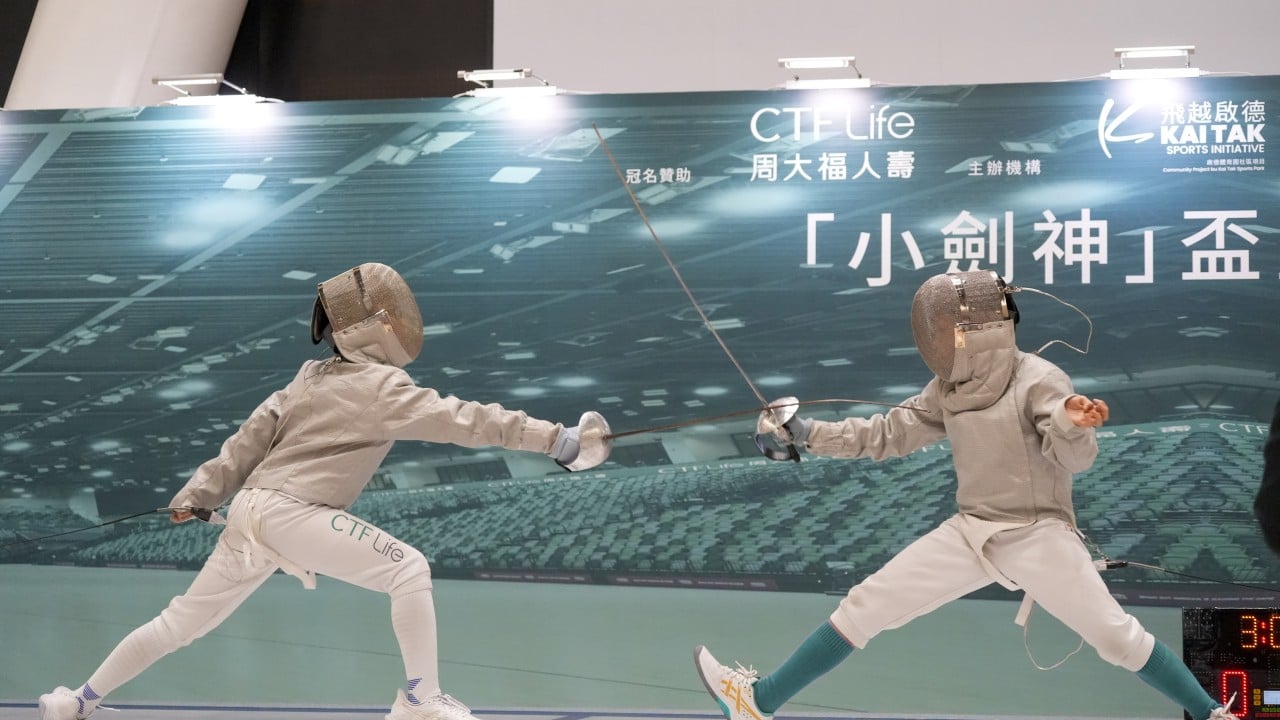
Consider Ka-ho. He is a composite of a dozen young fencers I’ve met in the humid training halls of the New Territories. He is fifteen. He has a geometry test in four hours and a blister on his heel that refuses to heal. He lives in a space so small that he can’t fully extend his foil without hitting a wall.
Until recently, Ka-ho would have had to make a binary choice. He could pursue his sport and risk falling behind in the most competitive education system on the planet, or he could drop the foil and join the sea of white shirts in the MTR every morning.
But the "Elite Athlete Learning Support" programs have changed the physics of that choice.
Through partnerships between the Hong Kong Sports Institute and local universities, the ceiling has become a ladder. Ka-ho doesn't have to choose. He is part of a system that treats his athletic development as a credential, not a hobby. His training counts. His discipline is quantified. When he eventually applies for a university degree, his ability to parry a strike under the pressure of an international tournament is weighted with the same respect as a high mark in economics.
The Invisible Infrastructure of Grit
We often see the gold medals and the podiums. We see the flashbulbs. What we don't see is the quiet, relentless machinery of sports science that makes those moments possible.
Hong Kong is a city that understands data. We track every stock fluctuation and every property value. Now, we are tracking the lactic acid levels and sleep cycles of our youth with the same obsession.
The investment isn't just in stadiums. It's in the specialized dietitians, the biomechanical analysts, and the sports psychologists who sit in the quiet corners of the training centers. These professionals are the architects of a new kind of confidence. They take a kid who has been told all his life to be "realistic" and they show him the math of his own potential.
When a cyclist like Sarah Lee Wai-sze wins, the entire city feels a surge of pride. But the real victory isn't the medal; it’s the shift in the collective consciousness. It’s the parent who sees that victory and, for the first time, doesn't tell their child to "put the ball away and do your homework."
The Cost of a Misunderstood Life
Let’s be honest about the stakes.
A city without a vibrant sports culture is a city that forgets how to lose. And if you don't know how to lose, you never truly learn how to win.
In the high-pressure environment of Hong Kong, the fear of failure is a silent epidemic. It drives the mental health crisis. It fuels the burnout. Sports, in their rawest form, are a laboratory for failure. You miss the shot. You lose the race. You fall.
Then, you get back up.
By integrating elite sports into the lives of Hong Kong youth, the city is building a psychological buffer. We are teaching a generation that a setback is a data point, not a destiny. This is the "hidden curriculum" of the new sports initiatives. It isn't just about producing champions; it's about producing citizens who can handle the volatility of the 21st century without breaking.
The New Architecture of Opportunity
The physical landscape is evolving to match the ambition.
The Kai Tak Sports Park is more than just a construction project. It is a monument to a changing priority. It represents billions of dollars in a bet that the future of Hong Kong is active.
But the real magic happens in the smaller venues—the neighborhood squash courts and the repurposed school halls. It happens when a scout from a professional academy walks into a public housing estate and sees a talent that would have previously been ignored.
The scouts aren't just looking for speed or strength. They are looking for the "lion rock spirit"—that uniquely Hong Kong brand of tenacity.
We used to think this spirit was only found in business. We were wrong. It was always there, waiting for a venue.
A Journey Without a Final Whistle
I remember talking to a young swimmer who had just returned from a junior championship. She didn't win. She came in fifth.
A decade ago, she would have been a footnote. She would have felt like a failure.
Instead, she was talking about her "dual-career pathway." She was discussing her plan to study sports management while continuing to train for the next cycle. She had a roadmap. She had a future that was wide and deep and full of possibilities that didn't involve a cubicle.
She wasn't afraid.
The city is finally beginning to understand that we are more than our productivity. We are our movement. We are our struggle. We are the grace with which we move through the air, even if we are surrounded by concrete.
The doors are open. The lights are on. The court is ready.
The only question left is how far we are willing to run.
Somewhere in a tiny apartment tonight, a kid is practicing his footwork in the hallway. He isn't just dreaming of a medal. He is dreaming of a life where his body and his mind are finally on the same team.
The silence of the city is broken by the rhythmic skip-skip-skip of a jump rope hitting the floor. It is a steady, insistent sound.
It sounds like a beginning.