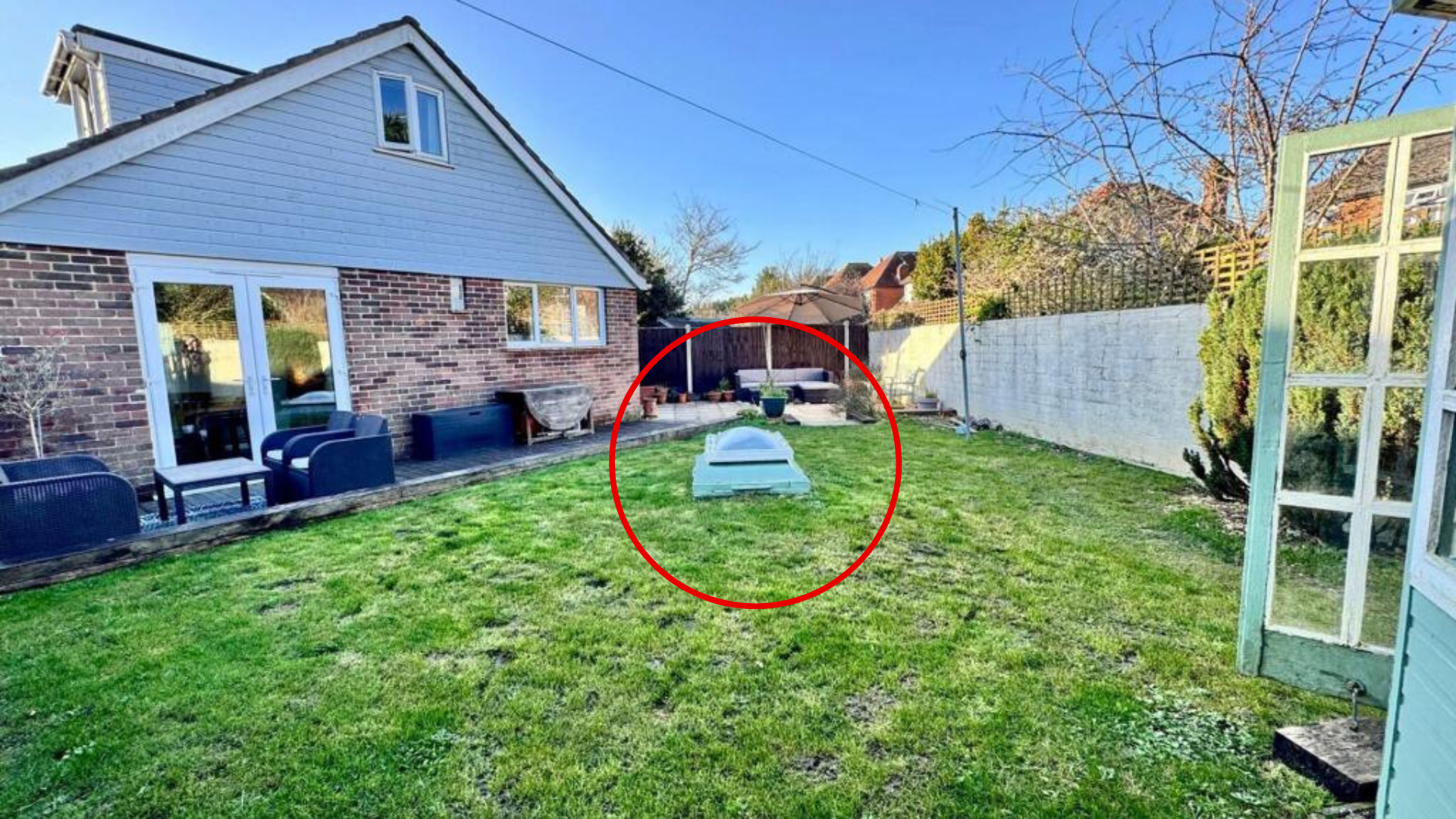
You’re mowing the grass on a Saturday and the mower hits something metallic. Not a rock. Not a sprinkler head. It’s a rusted steel hatch buried under two inches of topsoil. This isn’t a scene from a thriller movie; it’s a reality for homeowners across the United States who buy property only to find they’re the new owners of a fallout shelter.
These structures represent a specific, frantic slice of American history. During the 1950s and 60s, the threat of nuclear conflict wasn't just a political talking point. It was a daily anxiety that led families to spend thousands of dollars on underground concrete cubes. Today, these "backyard relics" are resurfacing as people renovate old homes or clear out overgrown lots. They aren't just holes in the ground. They’re time capsules of a generation that truly believed the world might end before dinner.
Why These Shelters Are Still There
Most people assume that once the Cold War cooled down, these bunkers were ripped out. They weren't. Tearing out a reinforced concrete room buried ten feet deep is an expensive nightmare. It requires heavy machinery, permits, and a lot of cash. Most homeowners simply paved over the entrance or let the grass grow long.
The surge in shelter construction peaked around 1961. President John F. Kennedy actually encouraged Americans to build them. He argued that the "civilian defense" was just as important as the military one. This led to a massive DIY movement. You could buy kits from Sears or follow blueprints from Popular Mechanics. Some were sophisticated, with air filtration systems and bunk beds. Others were basically septic tanks repurposed for humans.
When you find one today, you're usually looking at a corrugated metal tube or a poured concrete box. They were built to withstand the pressure of a nearby blast, but they weren't designed to last eighty years against groundwater and rust. That’s why many of them are now filled with murky water and spiders rather than canned peaches and Geiger counters.
Inside the Backyard Time Capsule
Walking into a preserved shelter feels eerie. It’s cramped. The air smells like wet iron and old dust. If you’re lucky enough to find one that hasn't been flooded, the details are fascinating.
- The Ventilation Crank: Most shelters had a manual air blower. If the power went out, you had to physically turn a handle to keep fresh air moving. It’s a brutal reminder of the physical labor involved in surviving.
- Shelf Life: You'll often find rotted wooden shelves that once held "survival rations." In the 60s, this meant bulk grains, canned fats, and "Multipurpose Food" (MPF), a soy-based protein developed by Caltech.
- The Chemical Toilet: Privacy didn't exist. Most bunkers had a simple bucket system or a small chemical commode tucked in a corner behind a thin curtain.
- Lead Paint and Asbestos: This is the less romantic side. Many of these relics were built with materials we now know are toxic. If you find one, don't just start scraping the walls.
The Cost of Living Underground
In 1960, a basic backyard shelter cost about $1,000 to $2,500. Adjust that for inflation, and you’re looking at $10,000 to $25,000 today. That was a massive investment for a middle-class family. It shows just how deep the fear went. People weren't just buying a room; they were buying an insurance policy for their children's lives.
Civil defense experts back then were divided. Some thought the shelters gave people a "false sense of security." They argued that even if you survived the initial blast, the world you’d emerge into would be unrecognizable. Others insisted that surviving the first two weeks was the only way to ensure the species continued. This debate shaped the architecture of our suburbs more than we realize.
What You Should Do If You Find One
Discovery usually happens during a pool installation or a patio expansion. If you find a hatch, your first instinct is to jump in. Don't.
Old bunkers are death traps for the unprepared. Oxygen levels can be dangerously low. Methane gas can build up from rotting organic matter. The structure itself might be compromised. Steel walls rust through, and concrete can crack under the weight of the soil above it.
Step 1: Structural Assessment
Call a structural engineer before you put any weight on or inside it. You need to know if the roof is about to cave in. If you plan on using it—even just for storage—you’ll need to verify it’s watertight.
Step 2: Hazardous Materials Check
Get an inspector to check for asbestos and lead. Many of the original coatings used in the 60s are dangerous if disturbed.
Step 3: Ventilation
If you're going to spend time down there, you need a modern HVAC solution. The old hand-cranked blowers are cool museum pieces, but they won't keep you safe in a modern context.
The Modern Revival of the Bunker
We’re seeing a weirdly similar trend today. Survivalism has gone mainstream again. But the modern version is different. Instead of DIY concrete boxes, people are buying luxury "survival suites" built in old missile silos. These places have gyms, swimming pools, and hydroponic gardens.
The humble backyard relic is the ancestor of this new industry. It’s a reminder that humans have always looked for a way to hide when things get scary. Whether it’s a rusted tube in a Kansas backyard or a million-dollar condo in a hardened silo, the impulse is the same. We want a door we can lock against the world.
Historical Preservation vs. Property Value
There’s a debate among homeowners about whether a bunker adds value. For some buyers, it’s a "cool factor." It’s a conversation piece. For others, it’s a liability. It’s a hole in the ground that might collapse or attract pests.
Some local governments require you to fill them in with sand or gravel if they’re found to be unstable. This is a tragedy for historians but a necessity for safety. If you’re lucky enough to have a stable one, it can be converted into a wine cellar, a root cellar, or even a unique recording studio. The thick walls provide incredible soundproofing.
Handling the Relic Under Your Feet
If you’ve discovered one of these Cold War shadows, you have a piece of history. Don't just ignore it. Start by checking your local property records. Sometimes the original building permits are still on file, giving you a map of what’s actually under the dirt.
Hire a professional to pump out any standing water. This is the only way to see the true state of the metal or concrete. Once it's dry, you can decide if you're looking at a renovation project or a demolition job. Most people find that with a little bit of lighting and some waterproofing, these unassuming backyard spots become the most interesting part of the property. Just remember that you're standing in a space designed for the worst-case scenario. Treat it with a bit of respect.
Get a metal detector and sweep the area around the hatch. You’d be surprised how many families buried "bug-out bags" or extra supplies nearby because there wasn't enough room inside the bunker itself. Finding a 60-year-old tin of survival crackers might not be a culinary win, but it’s a direct connection to the past that few people ever get to touch.