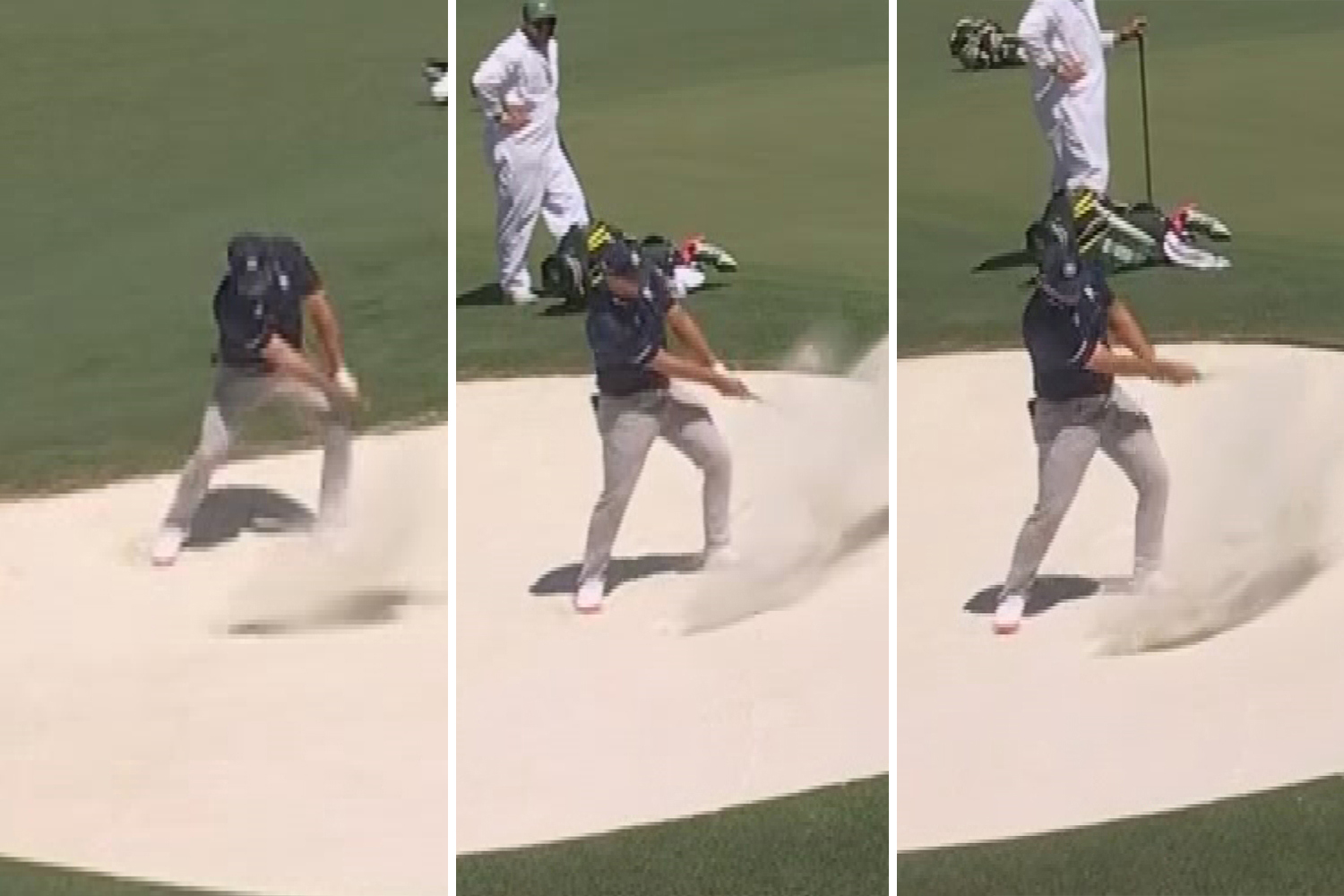
The intersection of elite athletic performance, chronic post-surgical pain, and the pharmacological management of trauma creates a volatility profile that traditional sports commentary fails to quantify. Gary Player’s recent observations regarding Tiger Woods’ reliance on painkillers and the subsequent risks of operating motor vehicles are not merely personal opinions; they are reflections of a physiological bottleneck. When an athlete of Woods' caliber manages a "crushed" lower extremity—sustained in a high-speed vehicular accident—the recovery process is governed by the Law of Diminishing Returns in neural plasticity and chemical tolerance. The central conflict lies in the delta between the neurological demands of a golf swing and the sedative effects of opioid-based or neuropathic pain management protocols.
The Biomechanical Debt of the Post-Traumatic Ankle
The golf swing is a high-torque rotational event that requires precise ground force reaction. In a healthy professional, the lead leg acts as a vertical stabilizer, absorbing forces that can reach up to 1.5 times the golfer's body weight. Following his 2021 accident, Woods’ right leg became a composite of hardware and compromised soft tissue. This creates a permanent biomechanical debt.
- Proprioceptive Erosion: Nerve damage in the lower extremities reduces the brain’s ability to map the foot's position in space. To compensate, the athlete must rely more heavily on visual and vestibular inputs.
- Kinematic Sequencing Failures: Any pain-masking agent, while necessary for mobility, slows the firing rate of motor units. This micro-delay disrupts the timing between the pelvic rotation and the thoracic turn.
- The Loading Constraint: The subtalar joint, if fused or severely restricted, cannot dissipate the sheer forces of a full-speed swing. The energy must go somewhere, typically migrating upward to the knee and lumbar spine, accelerating degenerative changes in those secondary systems.
Gary Player’s critique focuses on the symptoms—the visible limp and the reliance on medication—but the underlying mechanism is a structural inability to manage "peak load" without chemical intervention. This is not a failure of will; it is a hard limit of human biology.
The Pharmacological Catch-22
Managing chronic pain in a high-performance context introduces a chemical paradox. The goal of a professional golfer is to maintain a high "Signal-to-Noise" ratio in their nervous system. Pain is "noise." However, the medications used to suppress this noise, such as oxycodone, hydrocodone, or even high-dose gabapentinoids, act as systemic dampeners. They do not target the pain in the ankle specifically; they lower the excitability of the entire central nervous system (CNS).
The Cognitive Cost Function
The trade-off for physical comfort is a measurable decline in executive function. In the context of driving a car or navigating a complex golf course, the CNS must process a continuous stream of data points. When a person is under the influence of long-term opioid therapy, the following degradation occurs:
- Reaction Latency: The time between stimulus detection (a car braking or a gust of wind) and motor response increases by milliseconds. At 60 mph, a 100-millisecond delay results in several feet of extra travel distance.
- Peripheral Awareness: Sedatives narrow the effective field of vision, a phenomenon often described in clinical settings as "tunneling."
- Decision Fatigue: The metabolic cost of fighting through a "medicated fog" to make high-stakes choices leads to rapid depletion of mental energy reserves.
Player’s assertion that Woods "shouldn't be driving" is a recognition of these neurological realities. The risk profile of an individual on a chronic pain protocol is fundamentally different from a recreational user. For an athlete whose life has been defined by extreme control over their body, the loss of autonomy caused by medication-induced impairment is the ultimate professional friction point.
The Logic of the "Walk" vs. the "Swing"
There is a significant disconnect in public perception regarding Woods' ability to play. The difficulty is not the 72 shots taken during a round; it is the 12 to 15 miles of walking over four days on undulating terrain.
The Total Energy Expenditure (TEE) for a golfer with a reconstructed limb is significantly higher than for a healthy peer. Every step requires compensatory muscular engagement to protect the unstable joint. By the time Woods reaches the 14th hole, his "Physical Capital" is often bankrupt. The pain medication allows him to finish the walk, but it simultaneously degrades the fine motor skills required to execute the shot.
This creates a feedback loop:
- Physical pain requires medication.
- Medication reduces coordination and proprioception.
- Reduced coordination leads to "miss-hits" and awkward stances.
- Awkward stances increase physical strain and pain.
Public Safety and the "Invinicibility" Bias
High-profile athletes often operate within an ecosystem that validates their perceived invincibility. This bias is dangerous when applied to pharmacological management. When Gary Player speaks out, he is piercing the "bubble" of the modern entourage which often prioritizes the athlete's immediate comfort or "return to play" over long-term cognitive and public safety.
The 2021 crash was a data point in a trend of vehicular incidents involving Woods. From a consultant's perspective, this indicates a failure in the Risk Management Framework surrounding the athlete. If the physiological reality involves heavy medication, the operational reality must involve a total cessation of high-risk activities like driving.
The Transition from Power to Finesse
If Woods is to continue competing, the strategy must shift from "Reclamation" to "Adaptation." He cannot reclaim the 125 mph club-head speed of his youth because the foundation—his right leg—cannot support the required torque.
The strategic play involves:
- The Cart Mandate: Professional golf must reconcile its "tradition of walking" with the medical reality of its aging icons. If the goal is to see the greatest players compete, the barrier of the 5-mile walk must be removed for those with documented permanent disabilities.
- Neuro-Centric Training: Shifting focus from muscle hypertrophy to vestibular and visual training to compensate for lower-limb proprioceptive loss.
- Pharmacological Optimization: Moving away from systemic opioids toward localized interventions, such as nerve blocks or advanced neuro-stimulation, which do not cross the blood-brain barrier and thus do not impair driving ability or cognitive sharpness.
The "Tiger Woods" problem is a case study in the limits of modern medicine. We can rebuild the limb, but we have yet to find a way to silence the resulting pain without also silencing the very reflexes that made him a champion. Player’s comments are not an attack on Woods’ character; they are a cold assessment of a human system operating outside of its safe parameters. The final move for Woods isn't finding a better swing—it's acknowledging the hard ceiling of his current biological recovery and adjusting his lifestyle to the reality of his chemistry.