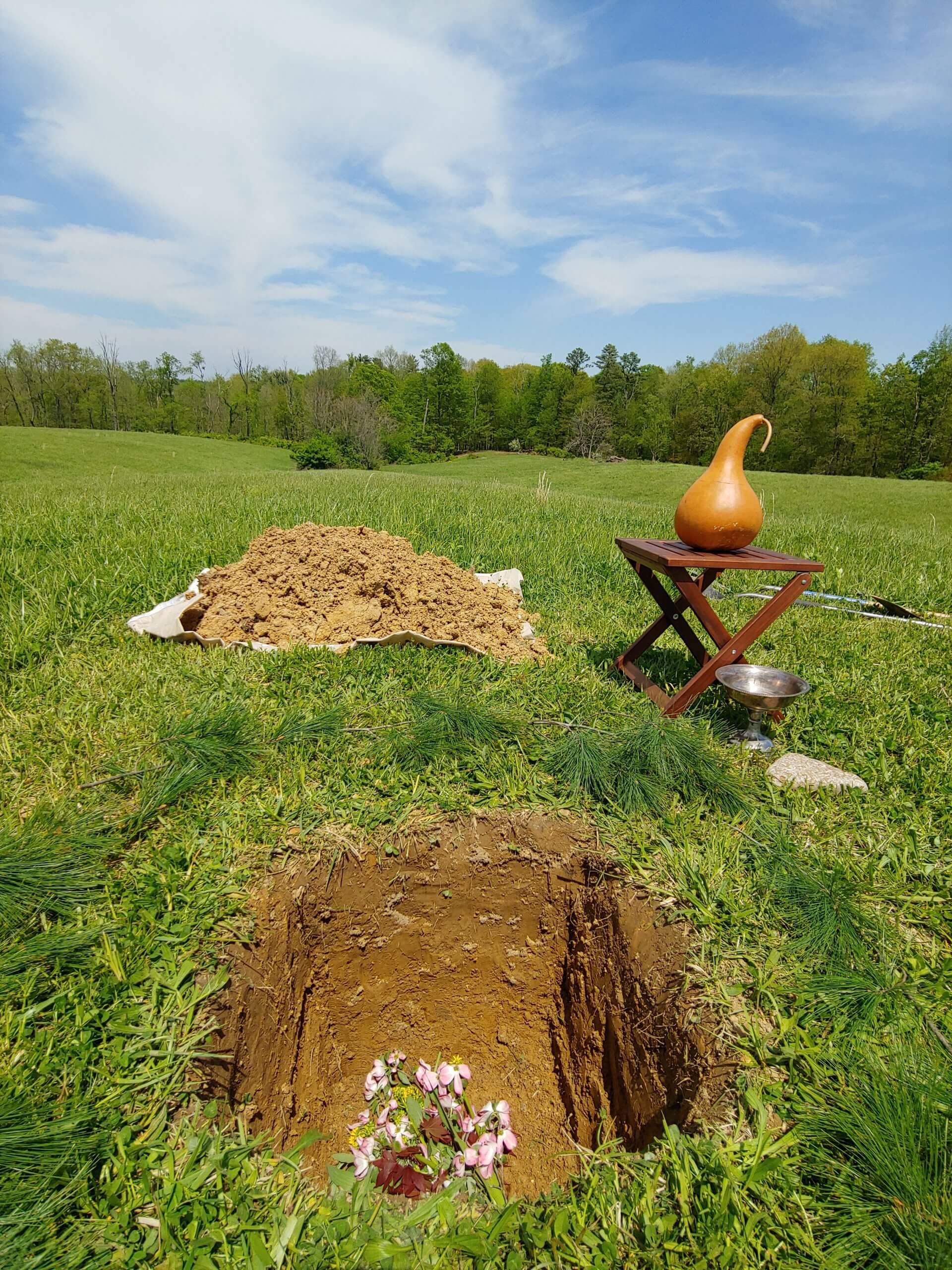
The Western media is currently obsessed with a hole in the ground. For forty days, analysts and newsrooms from London to D.C. have stared at a vacant plot in the Behesht-e Zahra cemetery, wondering why the Islamic Republic has not yet tucked Ali Khamenei into the earth. They see the "40th day" milestone—the Arba'een of his passing—as a symbol of regime paralysis. They see an "unclear burial" as a sign of a leadership vacuum, a state in crisis, or a family in dispute.
They are wrong. They are applying a Western, secular logic of "closure" to a regime that functions entirely on the power of the unfinished.
In the Middle East, and specifically within the hardline clerical circles of Tehran, silence isn't a void. It's a weapon. The ambiguity surrounding Khamenei’s final resting place isn't a logistical failure. It is a calculated masterclass in political survival and the extension of a cult of personality beyond the biological expiration date. While the press waits for a tombstone, the Deep State in Iran is busy making sure the ghost remains the CEO.
The Fetish of the Empty Grave
Every headline you’ve read about the "mysterious delay" assumes the Islamic Republic wants to finish this chapter. Why would they? In the theater of authoritarianism, a buried leader is a historical figure. An unburied leader is a lingering presence.
By refusing to formalize the burial site, the Office of the Supreme Leader (the Beit-e Rahbari) keeps the nation in a state of suspended animation. This isn't about indecision. It’s about legitimacy preservation.
I have watched political transitions in high-stakes environments for decades. When a dictator dies, the successor has two choices: bury the predecessor quickly to start a new era, or keep the predecessor "alive" through ceremony to mask the successor's own weakness. The Assembly of Experts is choosing the latter. Mojtaba Khamenei—or whoever is currently pulling the strings behind the velvet curtain—knows that the moment the dirt hits the coffin, the aura of the "Imam" begins to fade.
The delay is a stress test. They are watching who complains, who speculates, and who attempts to fill the vacuum. An empty grave is a trap for the ambitious.
Debunking the Infighting Narrative
The "lazy consensus" among pundits is that the burial is delayed because the mullahs are fighting over the body. They imagine a Shakespearean drama in the halls of Qom where brothers and generals are bickering over real estate.
This ignores the structural reality of the Revolutionary Guard (IRGC). The IRGC doesn't care about the theology of the burial; they care about the security of the transition.
- Logistical Hardening: A funeral for a figure like Khamenei is a security nightmare. We are talking about millions of people in the streets during a period of extreme regional tension. The IRGC isn't "confused." They are waiting for a window where they don't get hit by a domestic uprising or a foreign drone strike while the entire leadership is standing in a field.
- The Hidden Successor: If the burial is unclear, the transition remains unofficial. This allows the inner circle to consolidate power without the public pressure of an inauguration.
- Myth Building: In Shia Islam, the concept of the "Hidden" leader is potent. By keeping the burial details vague, the regime is subtly tapping into the religious psyche of its base. They are transforming a dead bureaucrat into a mystical symbol that doesn't need a map coordinate.
Stop Asking Where the Body Is
People also ask: "Who will be buried next to him?" or "Why hasn't the family made a statement?"
These are the wrong questions. You are asking for the details of a funeral when you should be asking about the architecture of the post-Khamenei state. The "Where" doesn't matter. The "Why Now" does.
The regime is currently managing a three-front war: an imploding economy, a restless Gen Z population that despises them, and a regional shadow war with Israel. In that context, a state funeral is a liability. It is a target. It is a moment of extreme vulnerability where a single sniper or a well-placed bomb could decapitate the entire next generation of leadership.
The delay is a security protocol disguised as a mystery. It is a "cold storage" strategy. If you think they are disorganized, you are falling for the play. They are the most organized they have been in years because they are terrified.
The Risk of the Permanent Wait
There is a downside to this contrarian view, and it’s one the regime might be overlooking. You can only hold your breath for so long before you pass out.
By extending the 40-day mourning period indefinitely, the Islamic Republic risks looking like a ghost ship. If the "unclear" status of the burial stretches into months, the aura of mystery turns into a stench of decay. The base—the loyal Basij—needs a shrine. They need a place to weep, to protest their loyalty, and to buy overpriced posters of the deceased.
If you deny the base their shrine, you lose the grassroots emotional connection that keeps the regime's ideology breathing. A ghost can't lead a parade.
The Institutionalization of the Ghost
We see this in corporate structures all the time. When a legendary founder dies, the board often keeps the office exactly as it was. They keep the name on the door. They invoke "what the founder would have wanted" to shoot down any new ideas.
The Iranian state is currently doing this at a national scale. Khamenei’s "unclear" burial is the ultimate "Founder’s Office" tactic. It allows the hardliners to veto any reforms by claiming they are still in the mourning period, still bound by the immediate directives of the departed. It is a veto from the grave.
Stop looking for a casket. Start looking at the decrees being signed in the dark. The burial isn't "unclear" because they don't know where to put him. It’s unclear because, as far as the power structure is concerned, he is more useful to them as a question mark than a period.
The West waits for a ceremony to signal the end of an era. The Islamic Republic is using the absence of that ceremony to ensure the era never ends. They aren't mourning a man; they are weaponizing his remains.
When the burial finally happens—and it will be sudden, likely in the middle of the night, with minimal footage—it won't be because the "confusion" was resolved. It will be because the new power brokers have finished cleaning the house and no longer need the ghost to protect them.
Until then, the empty plot is the most powerful piece of land in the Middle East. It is a vacuum that sucks in all the attention of the world while the real transition happens in the basements of the IRGC headquarters.
Get used to the silence. It’s the loudest thing in Tehran.