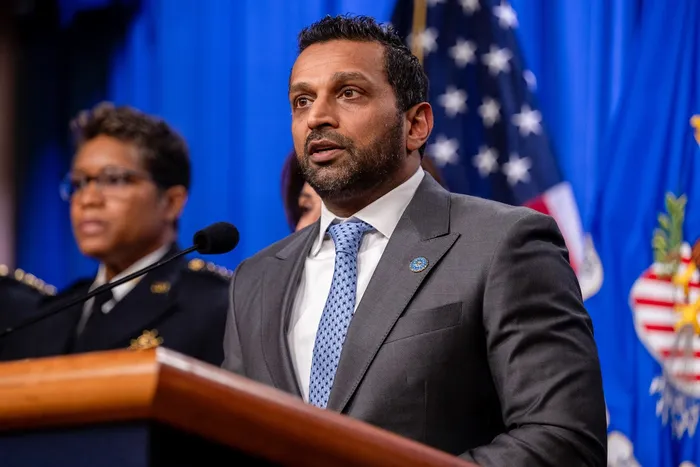
The breach of FBI Director Kash Patel’s personal communications by an Iranian-linked threat actor represents more than a singular intelligence failure; it is a definitive case study in the collapse of the "Air-Gap Myth" within high-stakes executive security. While traditional counterintelligence focuses on securing the office, modern state-sponsored adversaries exploit the friction between an official’s public persona and their private digital footprint. This incident confirms that the perimeter of national security now extends to the personal device of every high-value target, where the security protocols are often decoupled from the rigor of the agency they lead.
The Vector Mechanics of State-Sponsored Social Engineering
Iranian cyber operations, specifically those attributed to groups like APT42 or Charming Kitten, do not rely exclusively on sophisticated zero-day exploits. They operate on a high-volume, high-precision model of social engineering that targets the psychological profile of the individual. In the case of a high-profile political figure like Patel, the "Surface Area of Attack" is expanded by a history of public-facing media engagements and a known network of associates.
The mechanism of the hack likely followed a three-stage escalation:
- Reconnaissance and Pattern Mapping: Adversaries aggregate data from public records, previous data leaks, and social media to identify "Soft Targets" within the Director’s immediate circle—family members, aides, or close political allies.
- Credential Harvesting via Multi-Channel Phishing: By masquerading as trusted entities (journalists, legal advisors, or government colleagues), attackers deliver tailored lures via encrypted messaging apps or personal email. These lures often bypass standard enterprise filters because they originate from legitimate, albeit compromised, third-party accounts.
- Persistence and Data Exfiltration: Once access is gained to a personal account, the objective shifts from theft to "Silent Presence." This involves monitoring real-time communications to map out upcoming schedules, non-public locations, and sensitive but unclassified (SBU) strategic discussions.
The Strategic Asymmetry of Personal vs. Professional Infrastructure
The core vulnerability lies in a structural mismatch between the security of government-issued hardware and the relative insecurity of personal digital life. Government agencies utilize Managed Service Providers (MSPs) and internal Security Operations Centers (SOCs) that enforce strict Multi-Factor Authentication (MFA) and endpoint detection. However, these protections often stop at the edge of the official device.
This creates a "Security Paradox": the more secure the official channel becomes, the more the adversary is incentivized to target the personal channel. The Iranian group exploited this by identifying that while the Director’s FBI workstation is hardened, his personal smartphone—likely containing synchronized contacts and legacy email archives—serves as a secondary, vulnerable node.
The Latency of Detection
In state-sponsored breaches, the "Dwell Time"—the duration an attacker remains undetected—is the primary metric of success. For Iranian actors, the goal is rarely immediate disruption; it is long-term intelligence collection. By the time a breach is publicly acknowledged, the adversary has likely mapped the target’s social graph and moved laterally into the accounts of their contacts. This creates a "Contagion Effect" where one compromised executive puts the entire leadership hierarchy at risk.
Categorizing the Intelligence Value of the Breach
The data compromised in such an operation falls into three distinct utility tiers for a foreign adversary:
- Tactical Intelligence: Real-time location data, travel itineraries, and meeting participants. This is used for physical surveillance or planning "Chance Encounters."
- Strategic Insight: Understanding the Director’s priorities, internal friction points within the Bureau, and personal biases. This allows the adversary to predict future policy shifts or institutional responses.
- Leverage and Influence: Access to private, non-professional communications provides material for "Kompromat" or information operations designed to undermine the individual’s public standing or psychological stability.
The Iranian strategy here is not just about theft; it is about "Information Dominance." By demonstrating the ability to reach the head of the United States’ primary domestic intelligence agency, Tehran sends a signal of parity and capability to both domestic and international audiences.
The Failure of Current Executive Protection Protocols
The existing framework for protecting high-ranking officials is largely reactive. It assumes that the individual will adhere to "Best Practices," which often fail when confronted with the convenience of personal devices. The "Director-Level Breach" highlights three systemic bottlenecks in current protection strategies:
- The Privacy-Security Trade-off: High-level officials often resist the "Sanitization" of their personal lives, leading to a refusal to allow agency oversight on personal hardware. This creates a blind spot that state actors are eager to fill.
- MFA Fatigue and Bypass Techniques: Even when MFA is used, Iranian groups have pioneered techniques like "MFA Fatigue" (bombarding a user with push notifications until they approve) or SIM swapping. Without hardware-based security keys (e.g., FIDO2 tokens), software-based MFA is no longer an adequate defense against state-level actors.
- Third-Party Vulnerability: An official’s security is only as strong as the least-secure person they communicate with. If an aide or a family member uses a weak password, that connection becomes a bridge into the Director’s inner sanctum.
Quantifying the Geopolitical Impact
The fallout of this breach is not confined to the FBI. It creates a ripple effect across the Five Eyes intelligence community. When a high-ranking official is compromised, every piece of intelligence they have touched since the point of initial infection must be re-evaluated for potential "Tainting."
The cost of remediation includes:
- Forensic Reconstruction: Thousands of man-hours to determine exactly what was accessed.
- Operational Burn: The necessity of changing codes, safe-house locations, and undercover identities that may have been discussed or referenced in compromised threads.
- Diplomatic Devaluation: A perceived lack of internal security reduces the willingness of foreign partners to share highly sensitive "Top Secret/Sensitive Compartmented Information" (TS/SCI).
Operational Hardening: A Required Shift in Executive Conduct
To mitigate the risk of recurrence, the paradigm must shift from "Device Security" to "Identity Security." The individual must be treated as a walking node that is always under siege.
The first step is the mandatory adoption of "Zero-Trust" principles for personal communications of high-value targets. This requires the total separation of professional and personal identities at the hardware level—not just the software level. Every executive should utilize a hardware-isolated environment for any communication that involves sensitive subjects, regardless of the platform used.
Second, the "Social Graph" of the official must be mapped and hardened. This involves extending defensive resources to the immediate family and staff of the Director. If the adversary uses the "Flank Attack" method—targeting the spouse to get to the official—then the spouse’s digital footprint is a national security concern.
Finally, there must be a shift in how we handle "Digital Exhaust." High-ranking officials must adopt a "Data Minimalism" approach, actively scrubbing their public presence and rotating accounts to prevent adversaries from building a stable profile over time. The era of the "Public-Private Executive" is over; in the context of state-sponsored cyber warfare, privacy is a luxury that security can no longer afford to ignore.
Immediate implementation of hardware-backed authentication across all personal accounts belonging to the executive branch leadership is the only viable path forward. Relying on "Policy Compliance" is a failed strategy. Security must be baked into the hardware, making the cost of a breach higher than the value of the intelligence gained. Until the FBI and other agencies treat personal digital life with the same clinical rigor as a SCIF, the "Personal Device Loophole" will remain the primary entry point for foreign intelligence services.
The strategic play is simple: Eliminate the choice of convenience. Every communication link associated with a Cabinet-level or Director-level official must be monitored by an independent, automated threat-hunting layer that operates outside the individual's control. Only by removing the human element from the security chain can the structural integrity of the office be restored.