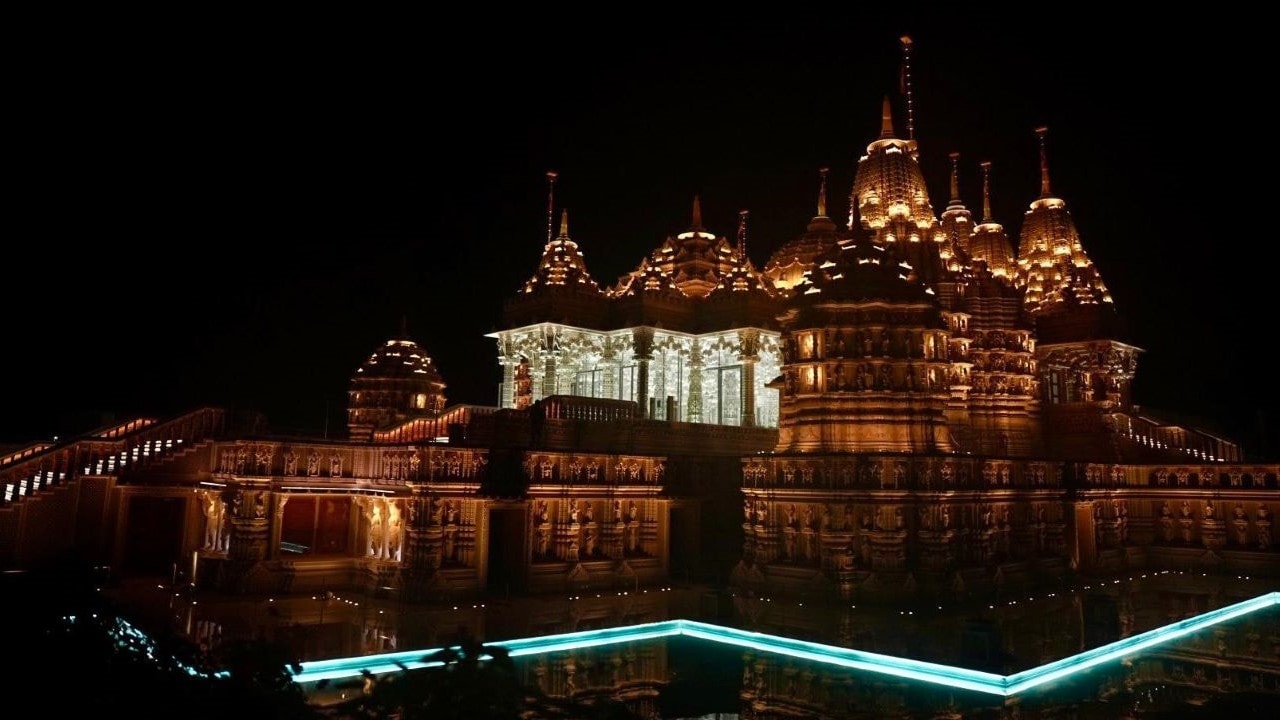
The media is currently obsessing over the 40-day shutdown and subsequent reopening of the BAPS Hindu Mandir in Abu Dhabi. They treat it like a local church renovation or a standard parish administrative hurdle. They are looking at the calendar when they should be looking at the map.
This isn't about "worshippers" getting their Sunday back. It’s about the surgical precision of soft power in the Middle East. If you think the 40-day closure was just for "logistics" or "heat management," you’ve bought the brochure. In reality, the management of this site is a masterclass in controlled scarcity and geopolitical signaling.
The Myth of the Sacred Pause
The official narrative suggests the temple closed to manage the massive influx of visitors and prepare for the summer heat. That is a convenient, sanitized explanation. I’ve watched multi-billion dollar infrastructure projects in the UAE operate through 50-degree Celsius peaks without blinking. Closing a $100 million site for 40 days isn't an admission of logistical defeat; it's a recalibration of the brand.
By shutting the doors, the BAPS organization and the UAE government transformed a physical site into an exclusive destination. In the world of high-stakes cultural diplomacy, availability is the enemy of prestige. When you reopen after a period of forced absence, you don't just have visitors; you have a pilgrimage.
This is Not Your Neighborhood Temple
Standard news outlets want to frame this as a win for "interfaith harmony." While that makes for a nice headline, it misses the cold, hard mechanics of how the UAE operates. This temple is a massive piece of diplomatic hardware.
- The India-UAE Economic Corridor: The temple is a physical manifestation of the Comprehensive Economic Partnership Agreement (CEPA). It’s a stone-and-marble guarantee of safety for Indian capital.
- The "Tolerant" Export: The UAE is aggressively rebranding itself as the capital of coexistence to distance its image from the regional volatility of the last two decades. The Mandir is the crown jewel of this campaign.
- The Data of Devotion: Every visitor who registers, every bus that arrives from a labor camp, and every high-net-worth tourist from Mumbai provides data. The reopening isn't a religious service; it’s the restart of a massive cultural data engine.
The Logistics of Control
The competitor articles talk about "improved facilities." What they mean is "tighter crowd control." I’ve seen how these sites are managed. When you have a site that attracts 65,000 people on a single Sunday, you aren't managing a religion; you are managing a stadium.
The "nuance" the mainstream press misses is that the 40-day closure allowed for the implementation of a more rigid hierarchy of access. The reopening introduces pre-booked slots and stricter "community" guidelines. This isn't about making it easier for everyone to pray; it’s about ensuring the experience remains "orderly"—a euphemism for predictable and photogenic.
Imagine a scenario where the doors never closed. The site would have eventually succumbed to the chaotic, organic energy of a typical South Asian pilgrimage site. That is exactly what the Abu Dhabi authorities do not want. They want the aesthetics of the East with the clinical efficiency of the West.
Why the "Interfaith" Angle is a Distraction
People keep asking: "Does this mean the Middle East is changing?"
Wrong question. The Middle East isn't "changing" in some organic, grassroots way. It is being re-engineered from the top down. The reopening of the Mandir is a signal to the West that the UAE can host any culture, provided that culture adheres to the state's rules of engagement.
If you go there looking for a raw, spiritual experience, you’re in the wrong place. This is a monument to the state’s ability to curate religion. It is "Faith as a Service" (FaaS).
The Hidden Cost of the Reopening
The downside to this contrarian reality? The sterilization of the sacred.
When a religious site becomes a "must-see attraction" on a government-mandated itinerary, something dies. The grit, the noise, and the spontaneous fervor that characterize the great temples of India are scrubbed away in Abu Dhabi. You get pink sandstone, hand-carved pillars, and an air-conditioned gift shop.
The reopening is a victory for the UAE’s Ministry of Possibility, but it’s a complicated moment for anyone who thinks religion should be messy, loud, and independent of state branding.
Stop Looking at the Statues
The media will focus on the carvings of camels and elephants coexisting on the friezes. They’ll talk about the "Seven Emirates" represented in the architecture. That’s the distraction.
Look instead at the timing. Look at the VIP guest lists. Look at the pre-registration apps.
The BAPS Hindu Mandir didn't reopen because the heat subsided or the floors were polished. It reopened because the "cool-down" period for its launch phase ended. The product has been tested, the crowds have been measured, and the state is ready to resume its broadcast of a perfectly curated, high-definition version of pluralism.
Stop calling it a reopening. Call it a relaunch.
Don't go there to pray. Go there to see how a nation-state builds a monument to its own future.